A score that sets a frame, not a melody
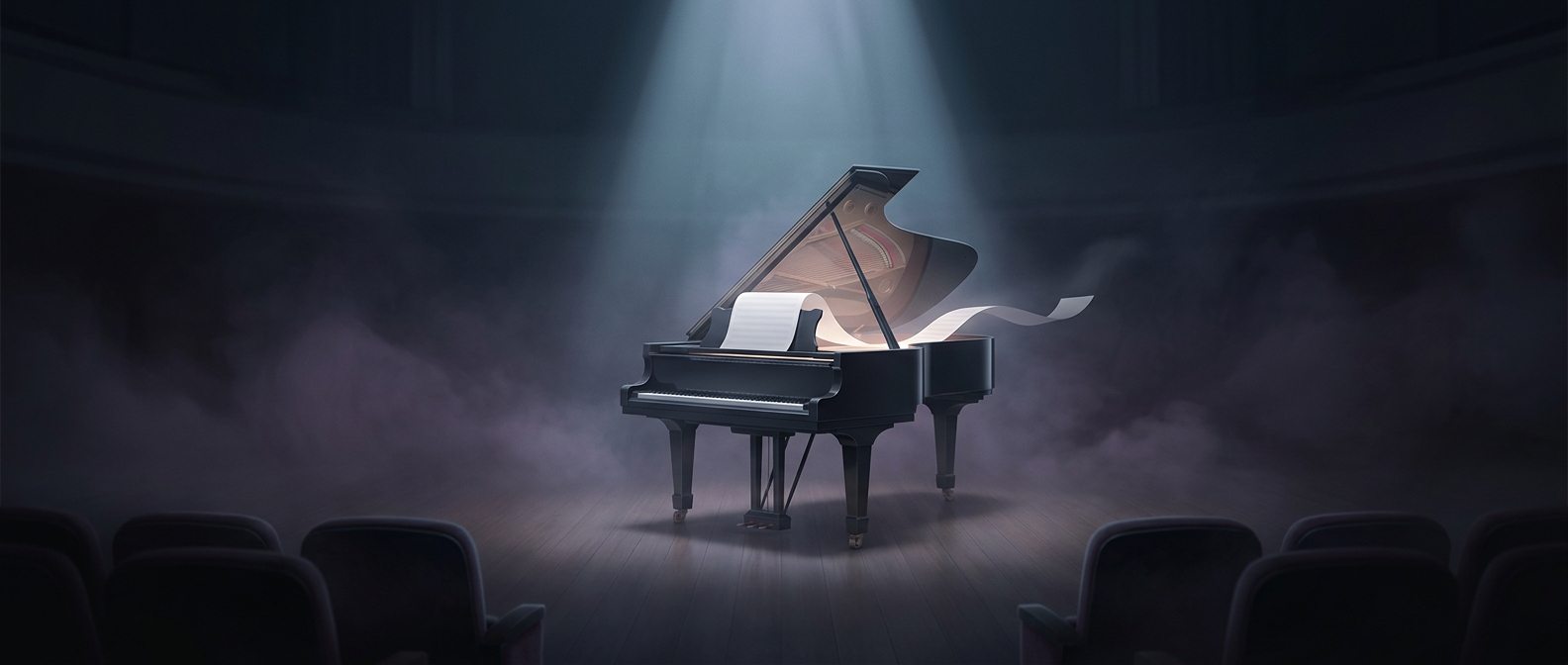
John Cage’s 4′33″ is organized as a performance in three movements. The performer marks each movement’s beginning and end but plays no deliberate notes. That structure matters: the piece is not simply a musician forgetting to play. Its measured duration and clear divisions ask the audience to attend to what usually sits outside a concert’s main event.
The room supplies the changing material
Once the expected music does not arrive, small sounds become easier to notice: a cough, a rustle, footsteps, or sounds from outside. These are not fixed in the score, and they differ from one performance to another. The room, the audience, and the circumstances of the moment provide the audible material; Cage’s composition determines when listeners are invited to notice it.
This makes the work an unusual collaboration. Cage sets limits, but he cannot choose every sound that fills them. Even an audience trying to stay quiet contributes to the experience: the effort of listening reveals how difficult complete quiet is in a lived-in space.
What counts as composing?
The piece shifts attention from inventing a sequence of pitches to shaping the conditions for hearing. A concert hall normally encourages listeners to treat performer-made sounds as music and everything else as interruption. Cage’s work reverses that priority for a few minutes. The cough does not become a note in the conventional sense, but it can become part of what the audience hears as the piece.
The practical implication is simple and striking: the same score cannot produce exactly the same listening experience twice, because no two rooms—or audiences—are acoustically identical.