Why the cup changes the comparison
Caffeine moves from coffee grounds into water during brewing. How much ends up in the drink depends on the beans, grind, water, contact time, and amount brewed—not simply on how strong the coffee tastes. Espresso forces hot water through finely ground coffee, producing a concentrated liquid quickly. Drip brewing uses more water and typically makes a much larger drink, giving it more room to accumulate caffeine overall.
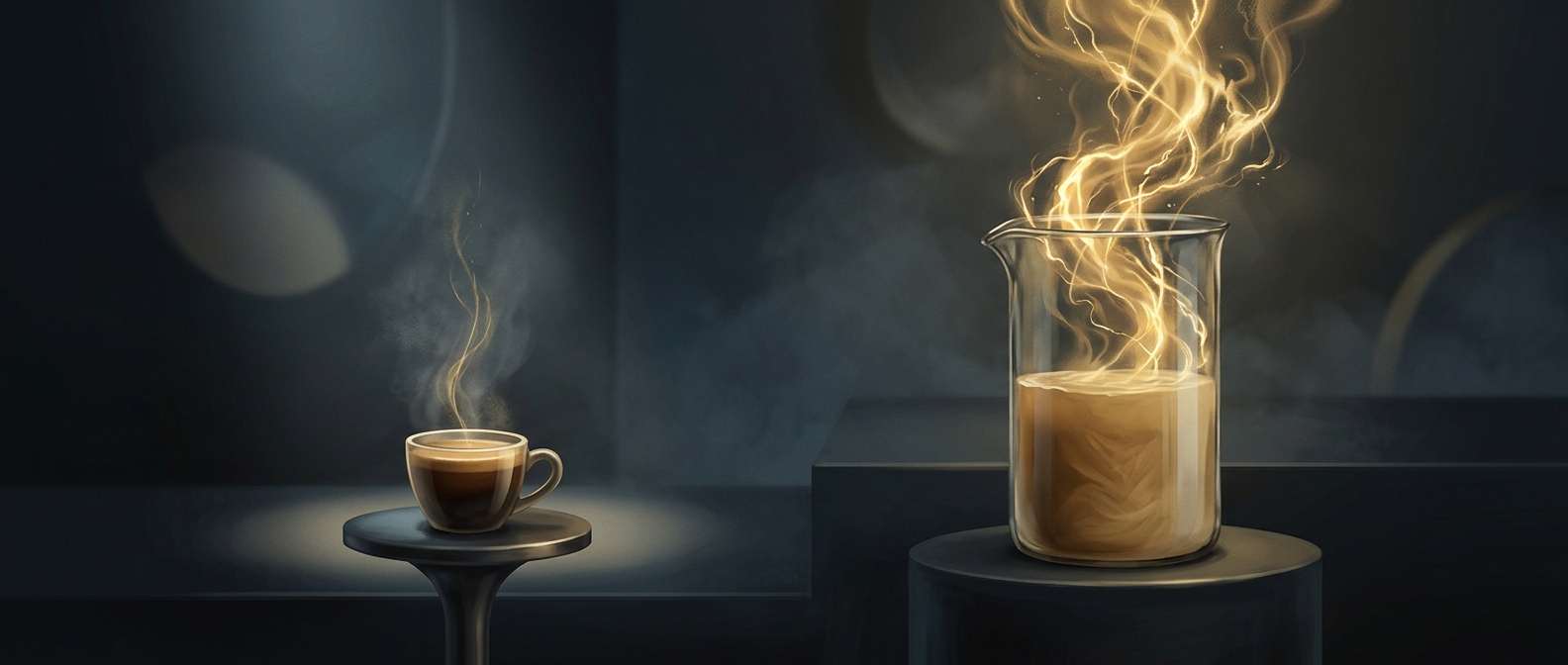
That makes serving size the crucial part of the comparison. A single espresso shot is a small dose; a full mug of drip coffee can contain more caffeine even when it tastes milder. A double shot, a small mug, or a particularly strong batch can change the result, so the comparison describes common servings rather than a fixed rule for every cup.
What this means when choosing a drink
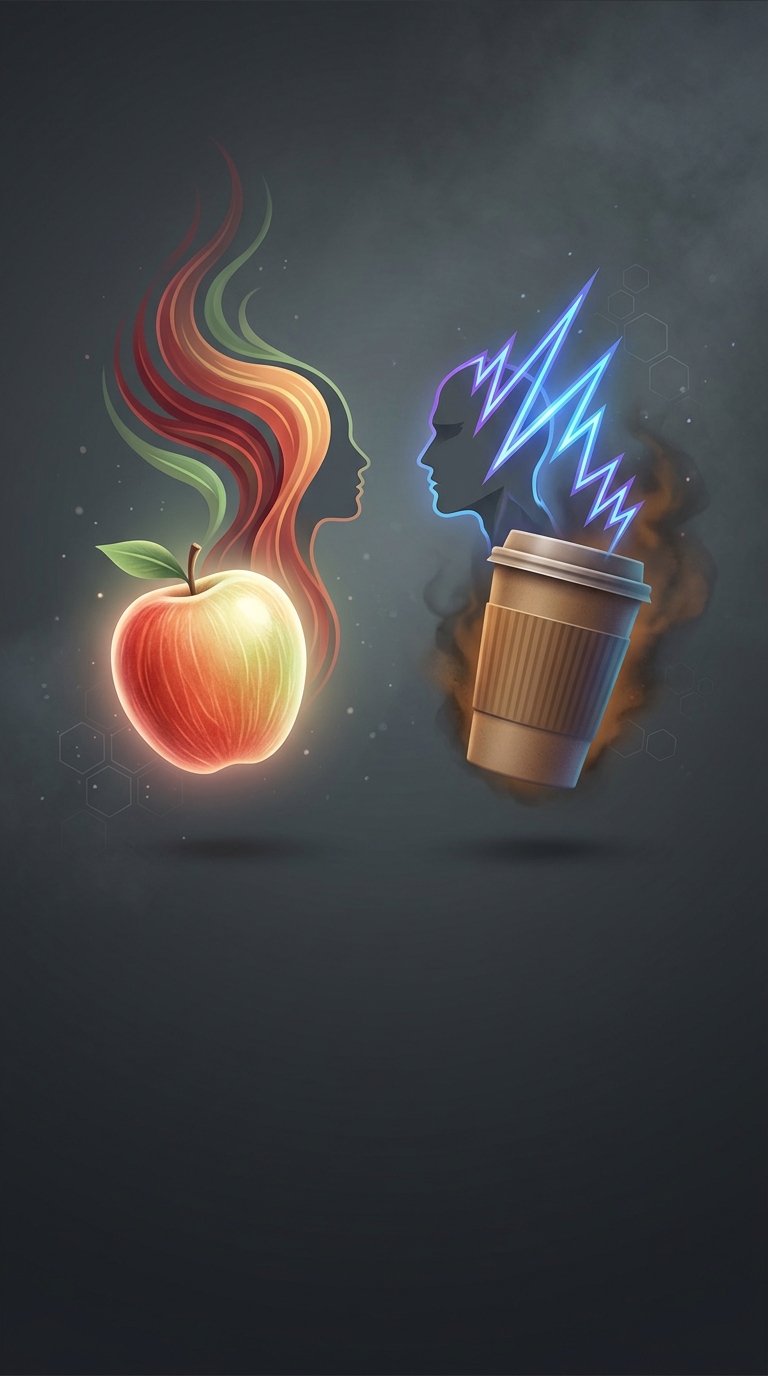
Bitterness and intensity are poor guides to caffeine dose. Espresso’s dense flavor can make it seem like the stronger stimulant, while a large, easy-to-sip drip coffee may deliver more caffeine simply because there is much more of it. If you are tracking intake, count the size and number of servings—and remember that café recipes and brewing methods vary—rather than judging by taste alone. A small espresso may feel more intense, but the larger coffee can be the bigger dose.