Why a Zoo Cheetah Might Follow a Dog’s Lead
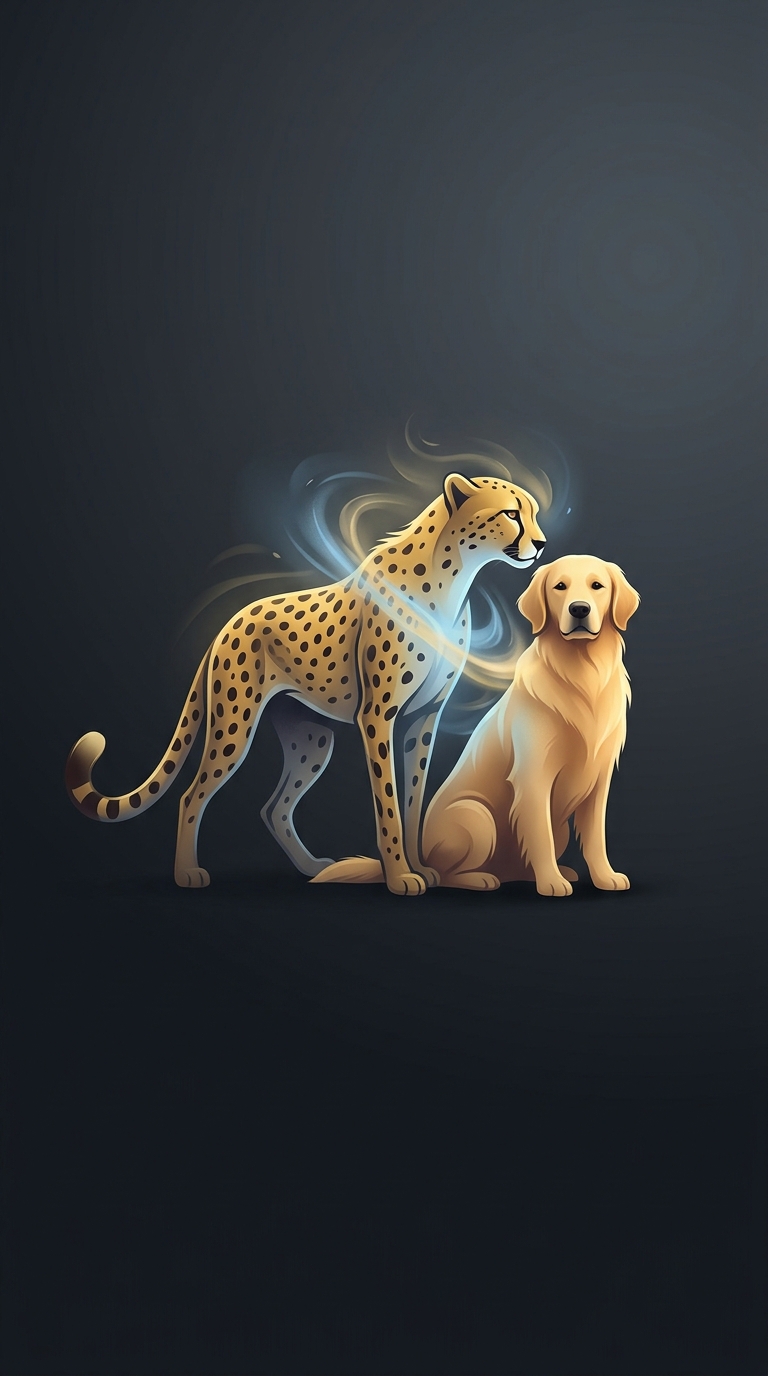
Cheetahs are built for speed, but in captivity some can be wary of unfamiliar sights and sounds. A cheetah raised by people may also have had fewer chances to learn from adult cheetahs. In some cases, caretakers introduce a steady, dog-friendly companion—often a golden retriever—whose relaxed behavior gives the cat a nearby example to observe.
This is behavioral modeling: animals can use another animal’s reactions as information about whether a situation is safe. If the dog remains calm around people or routine activity, a cheetah may be more willing to investigate rather than retreat. The dog is not treating the cheetah or actively training it; its presence can simply make an uncertain setting feel less threatening.
A Carefully Chosen Pairing, Not a Cure
The arrangement depends on both animals. Caretakers look for a dog with a calm temperament and a cheetah that tolerates its presence, then introduce them gradually and supervise their interactions. A dog that is excitable, or a cheetah that seems stressed by the contact, would not provide the same benefit. The animals also need space to withdraw from one another.
A companion can support confidence, but it cannot erase an individual cheetah’s fears or replace skilled care and appropriate surroundings. The practical value is smaller and more specific: a calm animal can offer a cue that the immediate environment may be safe. That is why the same pairing can help one cheetah while doing little for another.