The muscle that drives the hip backward
The gluteus maximus is generally considered the largest individual muscle in the human body. Its size reflects the work it can do: it is a powerful hip extensor, meaning it pulls the thigh backward relative to the pelvis. That action helps propel the body forward when you rise from a chair, climb stairs, sprint, or push uphill.
It also helps control the trunk and keep the hip stable during forceful movement. But it is not simply switched on to hold the body upright all day. Quiet standing requires less force; the gluteus maximus becomes especially important when the hip must straighten against resistance or absorb and redirect force.
Why bipedal movement needs it
Walking on two legs repeatedly shifts the body's weight from one foot to the other. Running and climbing demand even more: each step can require the leg to push the body upward and forward while the hip and trunk remain controlled. A strong gluteus maximus provides much of that push. Smaller gluteal muscles, especially the gluteus medius, help keep the pelvis from dipping as the opposite leg swings through.
This division of labor matters. The largest muscle contributes force; neighboring muscles help steady the body as that force is applied. Together, they make the hip a powerful and controlled engine for upright movement.
A powerful muscle with a less dramatic daily job
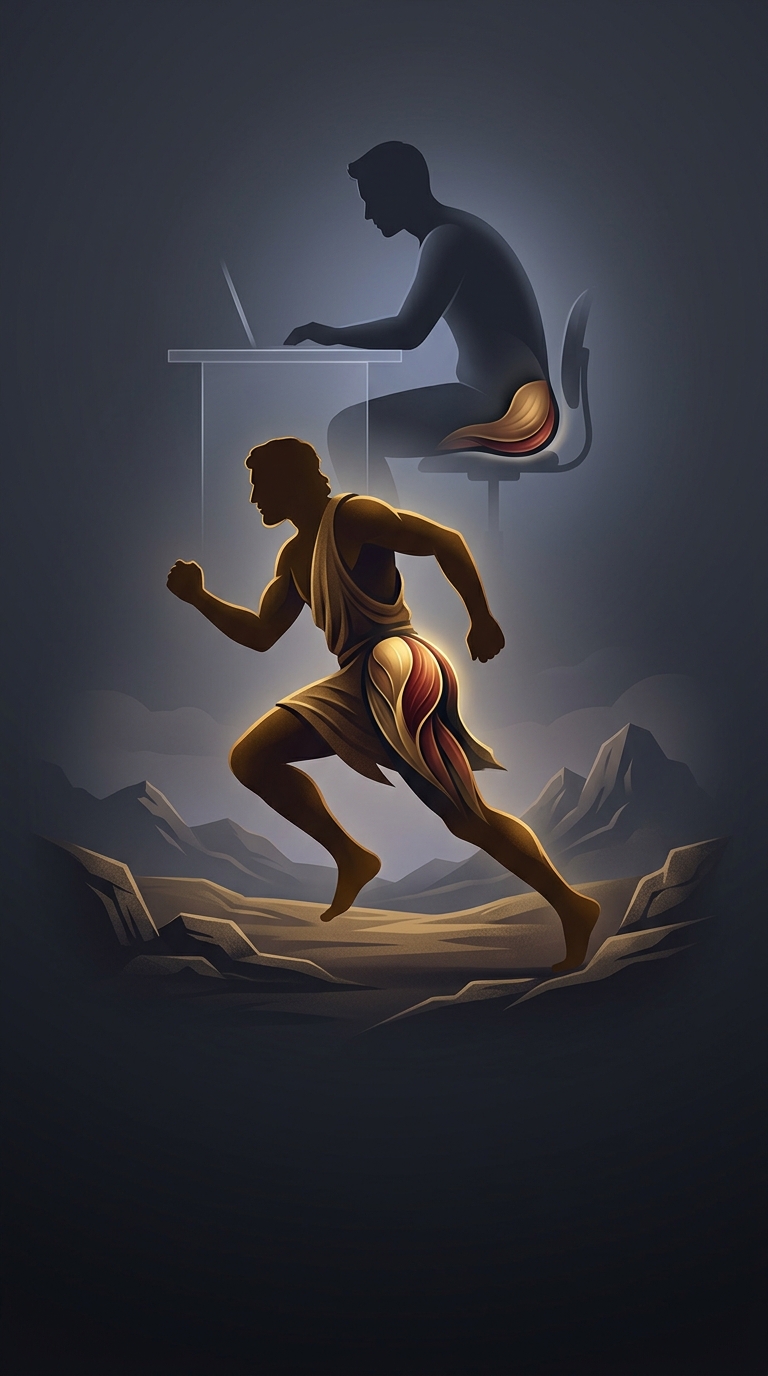
The gluteus maximus is not solely a product of running, nor does its size prove that humans routinely ran prey to exhaustion. It is useful across ordinary movement as well as strenuous activity. Sitting also puts body weight on the buttocks, but the muscle's main importance is not as a cushion: it is the work it performs when the body needs to extend the hip.
That is why a single muscle can seem oversized for a modern desk-bound life. Its design is most apparent not during hours in a chair, but in the moment you stand, take a steep step, or drive into a run.