How a radio echo became a warning at sea
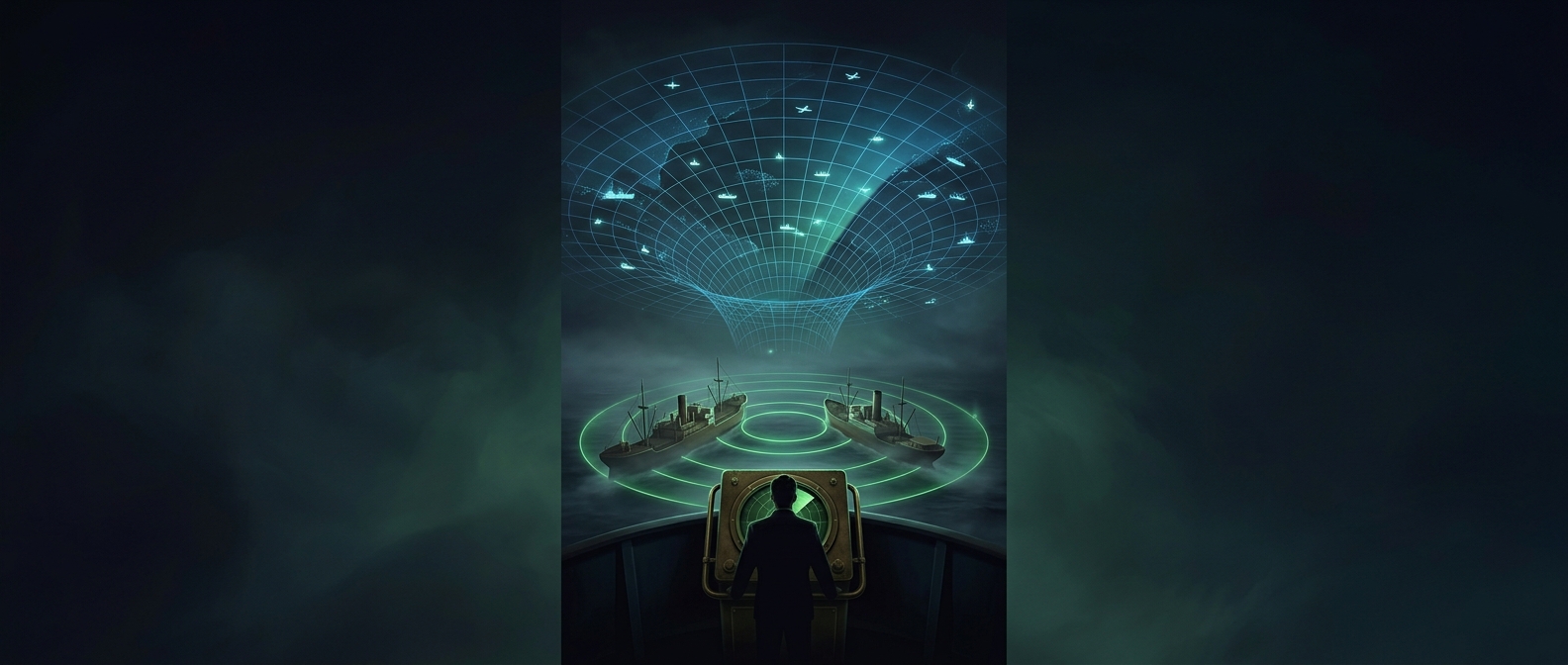
Before radar, a ship in fog depended on lookout reports, sound signals, and instruments that could not show where another vessel was. Radar offered a new kind of sight: it sent out radio pulses and listened for the small fraction that bounced back from a ship’s metal surfaces.
The delay before an echo returned gave the target’s distance. The direction the antenna was pointing when the echo arrived gave its bearing—its angle relative to the observing ship. Together, those clues placed an unseen vessel on a screen, even when fog erased it from view.
From blips to collision decisions
Early radar was not an automatic collision-avoidance system. It showed echoes; a trained operator had to distinguish likely ships from coastlines, waves, and other reflections, then report the information to the bridge. By watching a target’s position change over time, the crew could judge whether it was drawing nearer and consider altering course or speed.
That distinction mattered. Radar did not decide which ship should turn, and a screen image could be confusing or incomplete. But it gave crews something visual navigation lacked in fog: evidence that another vessel was there, where it lay, and how its position was changing. A dangerous encounter could be addressed before the ships were close enough to see one another—or too close to maneuver safely.