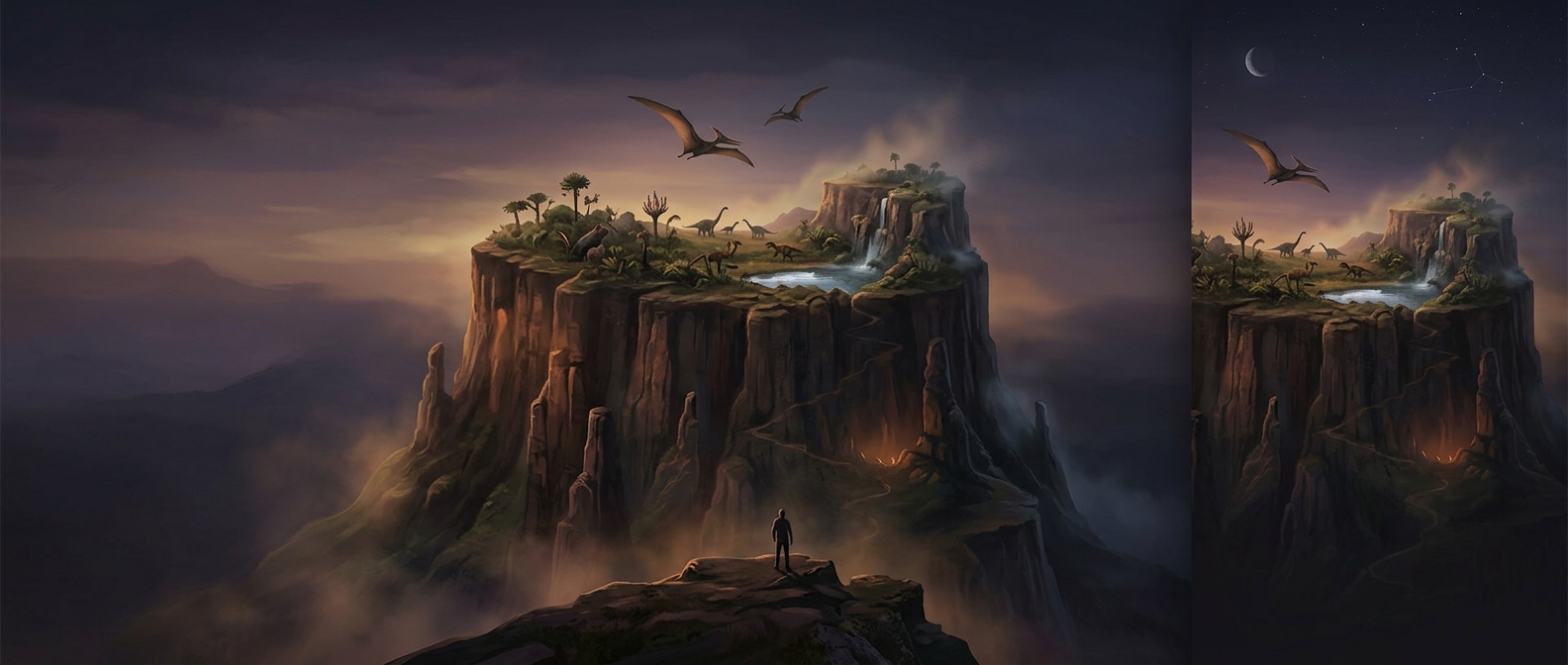
How a mountaintop becomes an island
A tabletop mountain can look like a piece of the landscape simply lifted out of place. Its flat summit may sit above forested slopes, bounded by cliffs steep enough to make movement between the two difficult for plants and animals. Over time, that separation limits which species can reach the top—and which can leave it.
The summit is not merely a colder version of the forest below. Exposed rock, thin soils, wind and frequent cloud cover create a distinct set of conditions. Seeds that arrive from the lowlands may fail to take root, while plants already suited to the summit face less competition from newcomers.
Why some summit plants trap prey
On many such high, wet plateaus, the soil holds few nutrients. Carnivorous plants meet part of that shortage by catching insects and absorbing nutrients from their prey. The traps do not replace sunlight as their source of energy; they help supply minerals that poor soil cannot provide reliably.
Isolation gives those adaptations room to develop in separate populations. Across generations, plants can become suited to the summit’s particular mix of moisture, exposure and scarce nutrients. If the cliffs keep populations apart long enough, those lineages may become distinct species found only on that mountain.
That makes a climb to the top more than a change in elevation: it can be a crossing into a small, living world with its own conditions and its own botanical inhabitants.