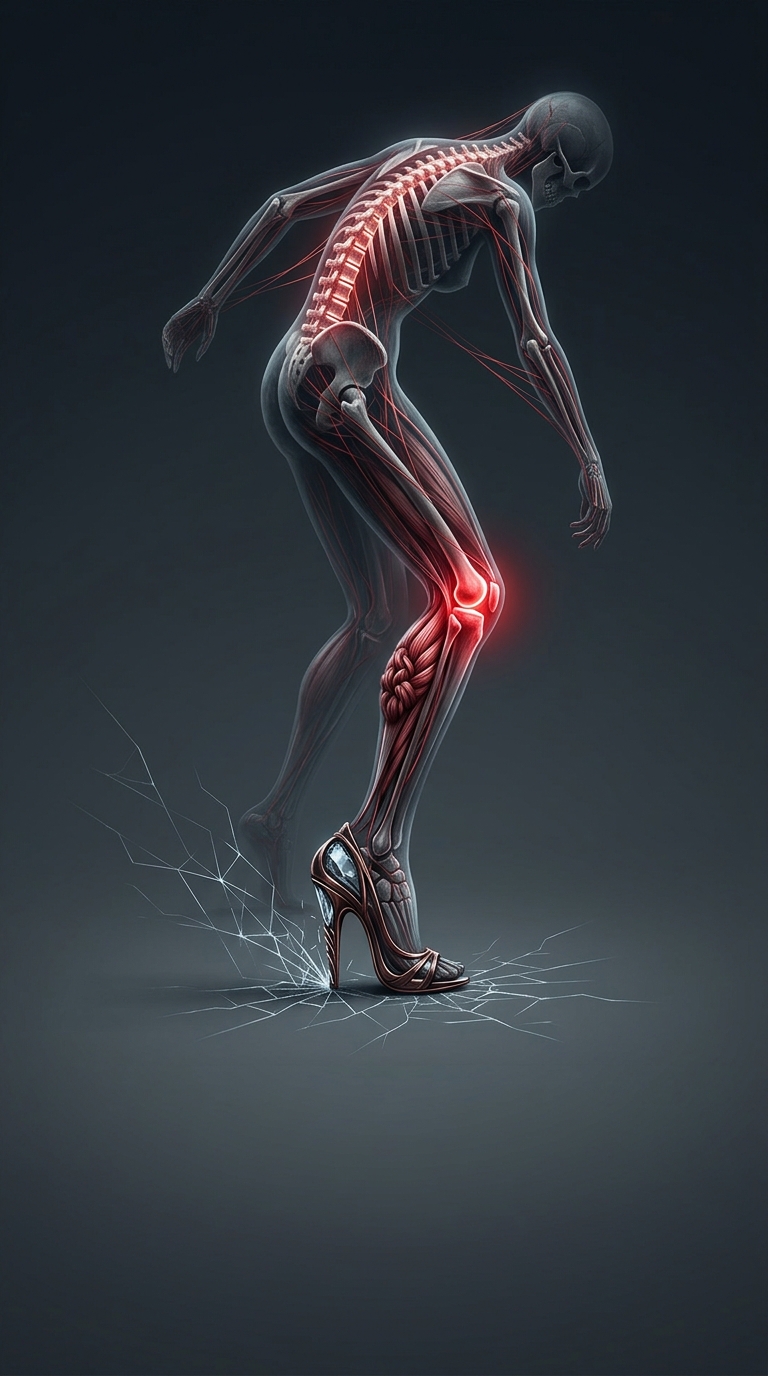
How a raised heel changes each step
A high heel holds the foot pointed downward, a position called plantar flexion. The ankle has less room to move through its usual walking cycle, so the foot cannot absorb and propel the body in quite the same way it does in a flat shoe. The wearer often takes shorter steps, and pressure shifts toward the ball of the foot. The exact effects depend on heel height, shoe shape, walking speed, and the person wearing it.
The change also travels upward. To stay balanced over a narrower, forward-tilted base, the body adjusts how it holds the knees, hips, and trunk. Those adjustments can alter forces at the knee and increase strain in some muscles and joints. The familiar figure of a fixed percentage increase in knee pressure should not be treated as universal: studies measure different forces under different conditions, and no single number describes every wearer or every heel.
Why calves and backs may feel the strain
Because the ankle stays pointed, the calf muscles work in a shortened position and may remain more active during standing and walking. Frequent heel use can also make the ankle less comfortable when it is asked to bend upward, especially after the feet have adapted to spending hours in that restricted position. That is a change in muscle-and-tendon function, not proof that the calf has permanently shortened in every wearer.
The lower back may arch more as the trunk and pelvis adjust to keep the body upright. That posture can feel tiring or aggravate back discomfort, but the response varies: people do not all compensate in the same way, and heel wear does not guarantee lasting spinal damage.
What long-term risk really means
Repeatedly changing joint loading can matter, particularly when combined with long hours on the feet, poor fit, or existing pain. But it is too strong to say that heels directly cause cartilage breakdown or make osteoarthritis inevitable. Osteoarthritis develops through several interacting factors, including age, injury, body mechanics, and individual susceptibility.
The practical consequence is more immediate: a shoe that looks stable can leave the foot with less room to move and the leg working differently for every step. Alternating heel heights and choosing a lower, broader heel can reduce that sustained mechanical demand without requiring anyone to assume that occasional wear has permanently altered their skeleton.