Why a rollerball lays down a wetter line
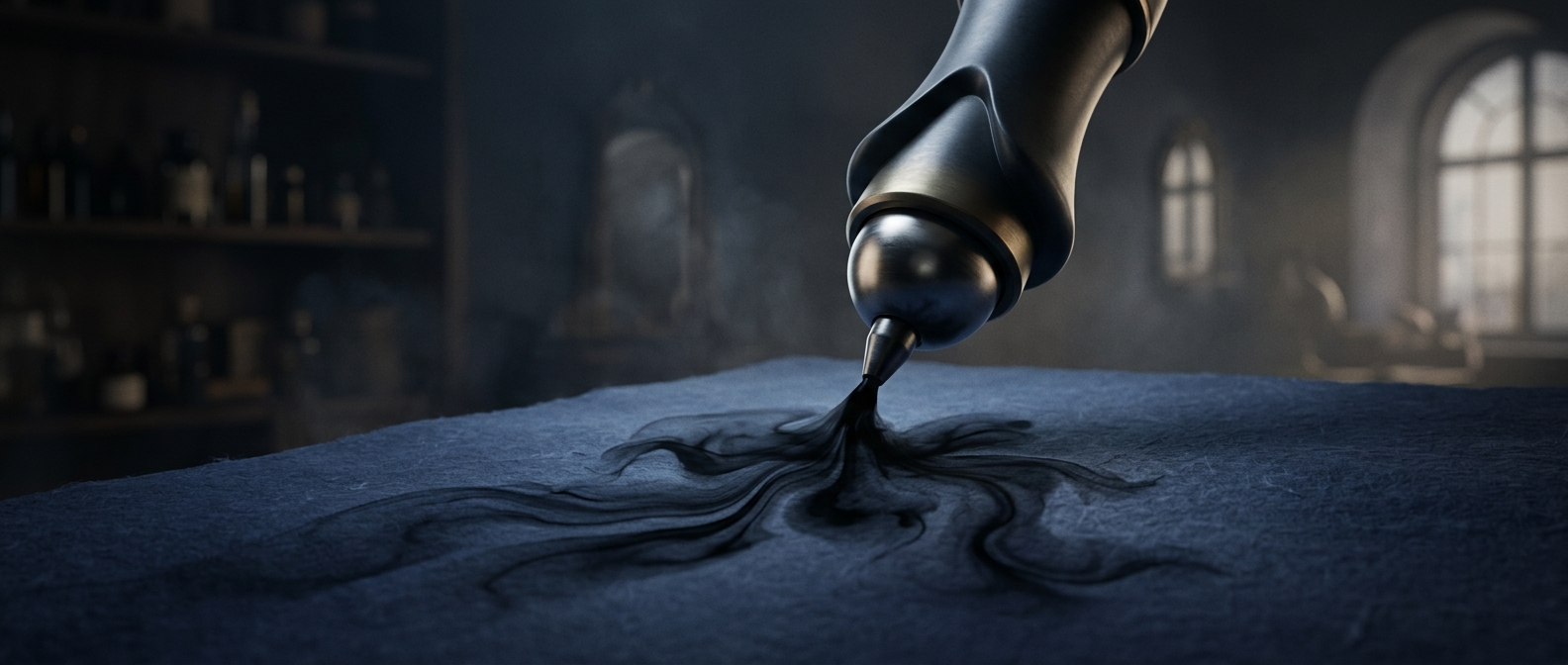
A rollerball’s tip uses a small rolling ball to transfer liquid ink onto the page. Because the ink is relatively fluid, it can spread across the ball and onto paper with little pressure. That easy flow is what makes the pen feel smooth: the writer does not have to push hard to keep the line going.
What happens inside the paper
Paper is a web of tiny cellulose fibers with narrow spaces between them. When wetter ink touches the surface, it can travel into those spaces by capillary action—the same kind of wicking that draws liquid through a paper towel. The ink therefore moves not only along the line but also down into the sheet. If enough reaches the far side, the writing shows through; on thin or absorbent paper, it may even bleed through.
A ballpoint’s thicker, paste-like ink is less inclined to wick, so it often stays closer to the surface. That can reduce show-through, though it may make the pen feel less fluid by comparison.
The paper is part of the tradeoff
The effect depends on both sides of the contact: how much ink the pen delivers and how readily the paper absorbs it. A fast stroke or a heavily inked line can leave more liquid than the sheet can hold near its surface. Thicker, less absorbent paper gives the ink more room to dry before it reaches the back.
That is why the same rollerball can look crisp in a notebook but ghost through a thin page: smoothness comes from ink that moves readily, and paper’s fibers do not always stop it at the surface.