A ship cannot use an ordinary extension cord
A cruise ship’s electrical system is built to handle hotel-scale demand: elevators, kitchens, ventilation, lighting, and passenger services all draw power at once. Shore power must deliver that load at the voltage and electrical frequency the vessel can use. A port may need dedicated high-voltage equipment—and, when the shore grid and ship operate at different frequencies, converters to make the electricity compatible.
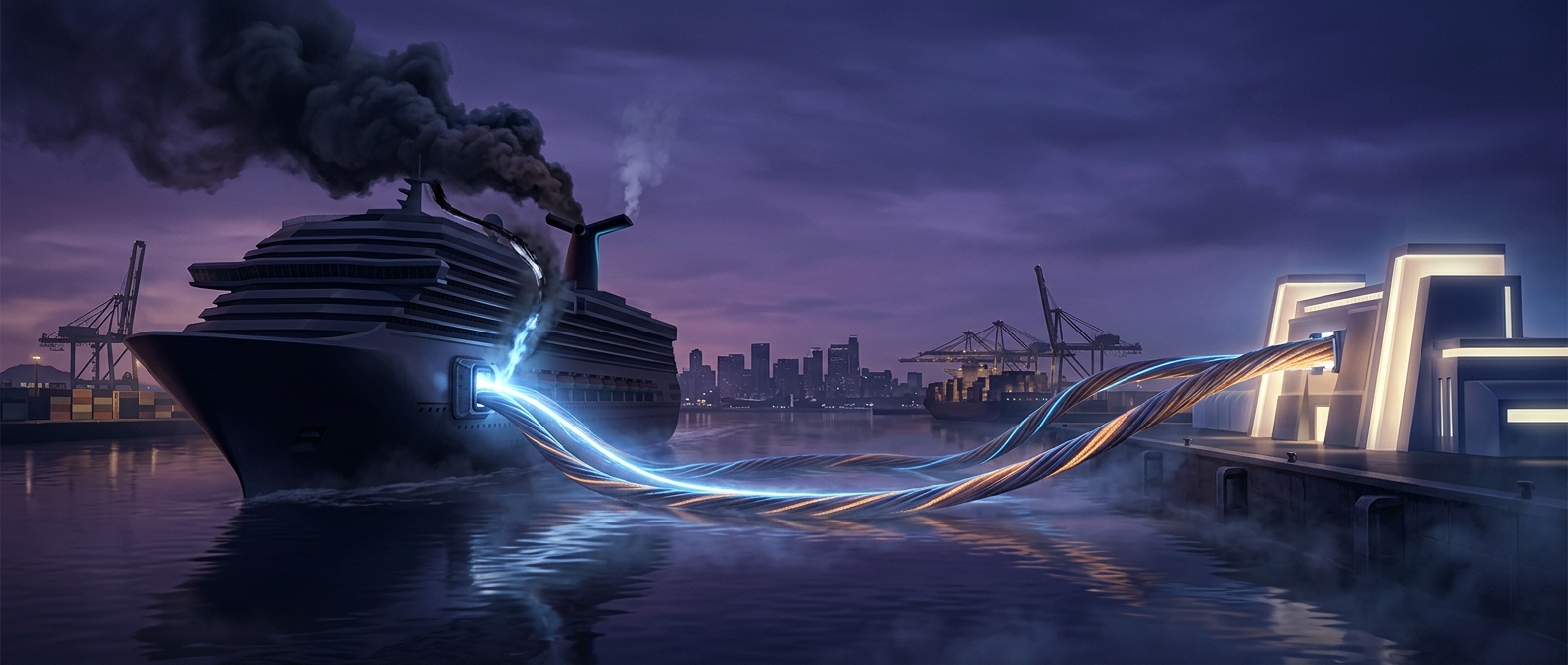
The connection is made through heavy-duty cables and specialized equipment, not a single oversized household plug. Crew and port workers coordinate the transfer so the ship can connect safely, shift its electrical load to shore, and then stop the engines that would otherwise supply power while it is docked.
The terminal becomes part of the ship’s power system
That handoff requires infrastructure on both sides of the dock. The terminal needs a reliable supply with enough capacity; the ship needs compatible connection points and controls. The ship’s demand can change as systems switch on and off, so the arrangement must accommodate a large, varying load rather than simply deliver a fixed trickle of electricity.
This is why shore power is not available at every berth, even when a port has electricity nearby. A working setup depends on the grid, the terminal equipment, and the vessel being designed to connect. The cable is the visible part of a much larger electrical link.
The exhaust moves, but the energy still has a source
Turning off docked engines cuts the ship’s exhaust at the terminal, where people live and work nearby. The electricity, however, has to be generated somewhere. Its overall emissions depend partly on how that power is produced and delivered. The practical payoff is immediate at the waterfront: instead of running onboard engines to keep the ship functioning, the vessel can draw its hotel-sized load through the dock.