A train dream became a book decades later
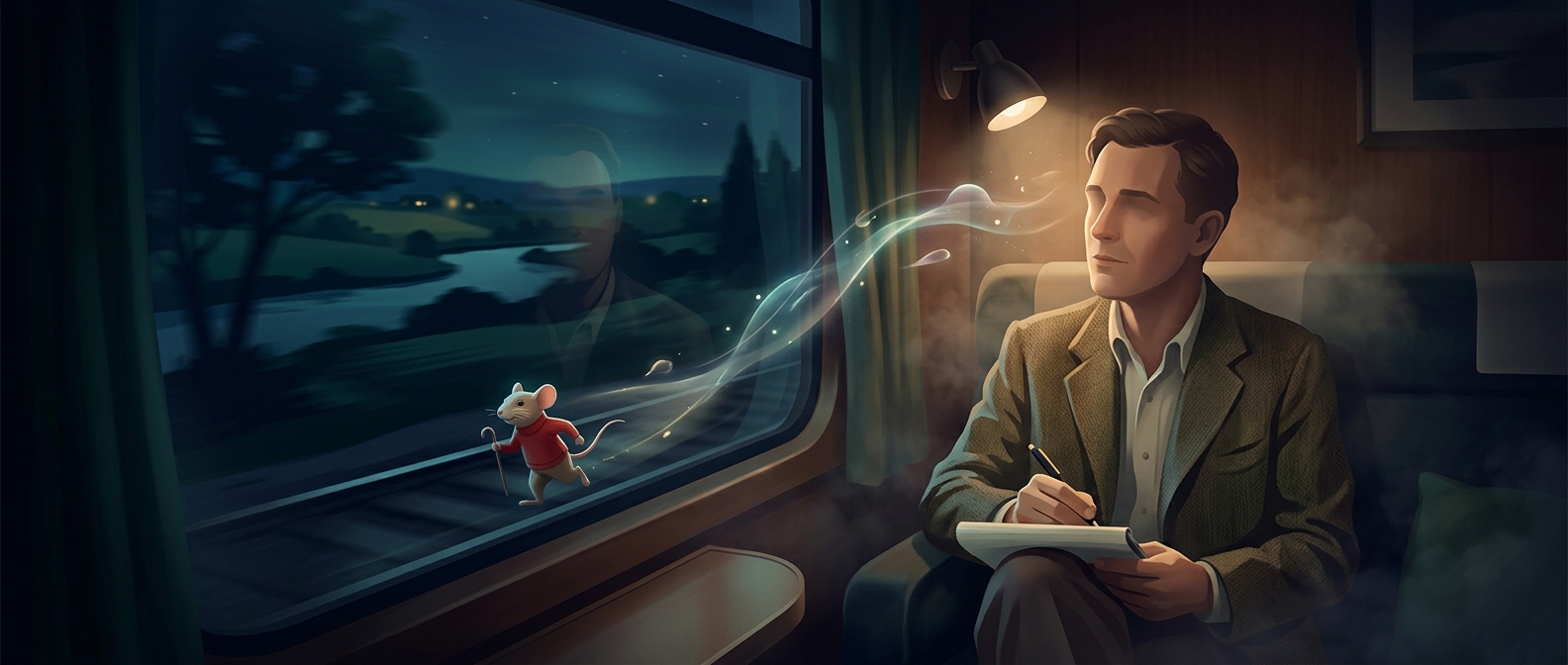
The idea for Stuart Little arrived as a striking image rather than a finished story: a tiny, well-dressed boy with mouse-like features, behaving with impeccable manners. White woke from a dream on a train in the 1920s and wrote the idea down. That note preserved the character’s central contrast—his small, unusual appearance set against his polished, human behavior.
From character sketch to children’s novel
White did not turn the idea into a book right away. More than two decades passed before Stuart Little appeared in 1945. The interval is a reminder that a memorable premise and a completed story are different things: an image can stick in a writer’s mind long before it finds its plot, scenes, and shape on the page.
The premise also gave the eventual story a built-in source of friction. Stuart’s mouse-like size makes ordinary human surroundings—rooms, objects, and journeys—feel unusually large, while his manners and ambitions invite readers to take him seriously as a person. The dream supplied the character’s defining contrast; the book made that contrast a story.