Why the Bright Flash Travels Upward
A lightning strike is built in stages. Inside a storm cloud, separated electrical charges create a strong electric field between the cloud and the ground. That field can push a narrow, faintly glowing channel of ionized air—air whose atoms have been stripped of some electrons—downward in short, branching steps. This descending path is called a stepped leader. It is usually too dim to see against daylight and may be hard to notice even at night.
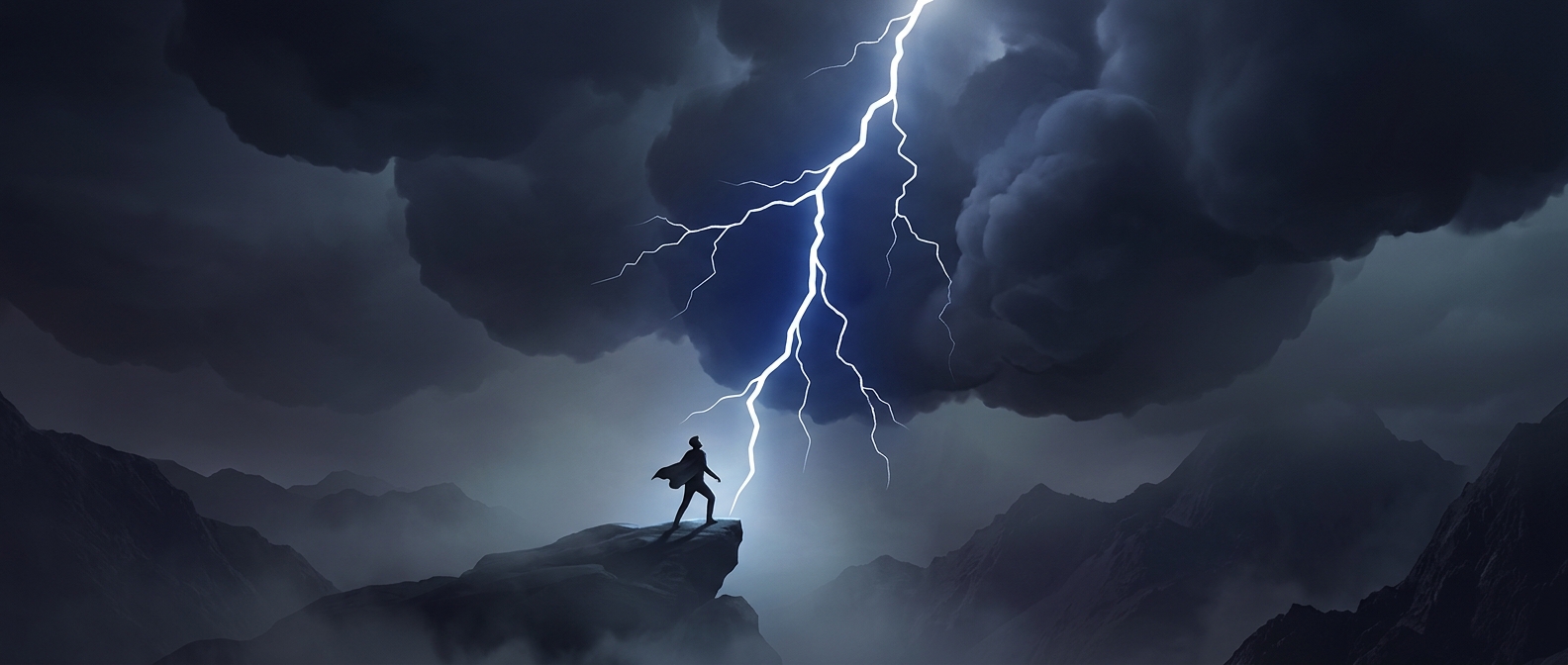
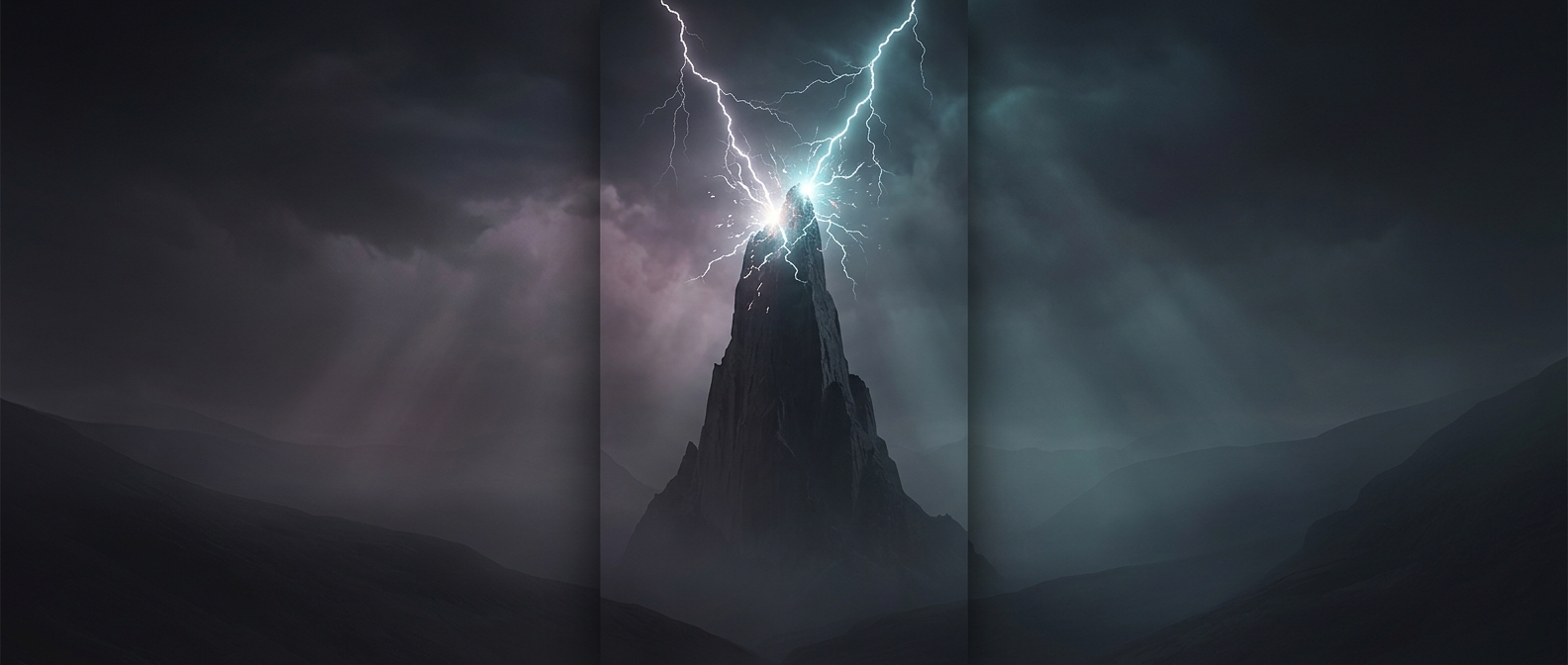
As the leader approaches the ground, its electric field becomes especially strong near protruding objects. Trees, poles, buildings, and sometimes people can launch upward-reaching channels called streamers. When one streamer connects with the descending leader, the cloud-to-ground route is complete.
The Connection Triggers the Visible Surge
That connection allows a much larger current to travel through the newly formed channel. The intense surge heats the air so rapidly that it expands explosively, producing the thunder that follows the flash. The bright, fast-moving surge is known as the return stroke: it propagates upward along the channel, from the ground toward the cloud, even though the electrical discharge involves the entire connected path.
The return stroke is what makes the bolt appear brilliantly lit. So the first event is not the dazzling streak but a dim path reaching down and a streamer reaching up to meet it. The flash marks the moment the route is completed and the powerful current races back up it.