Why a slower meal can feel more filling
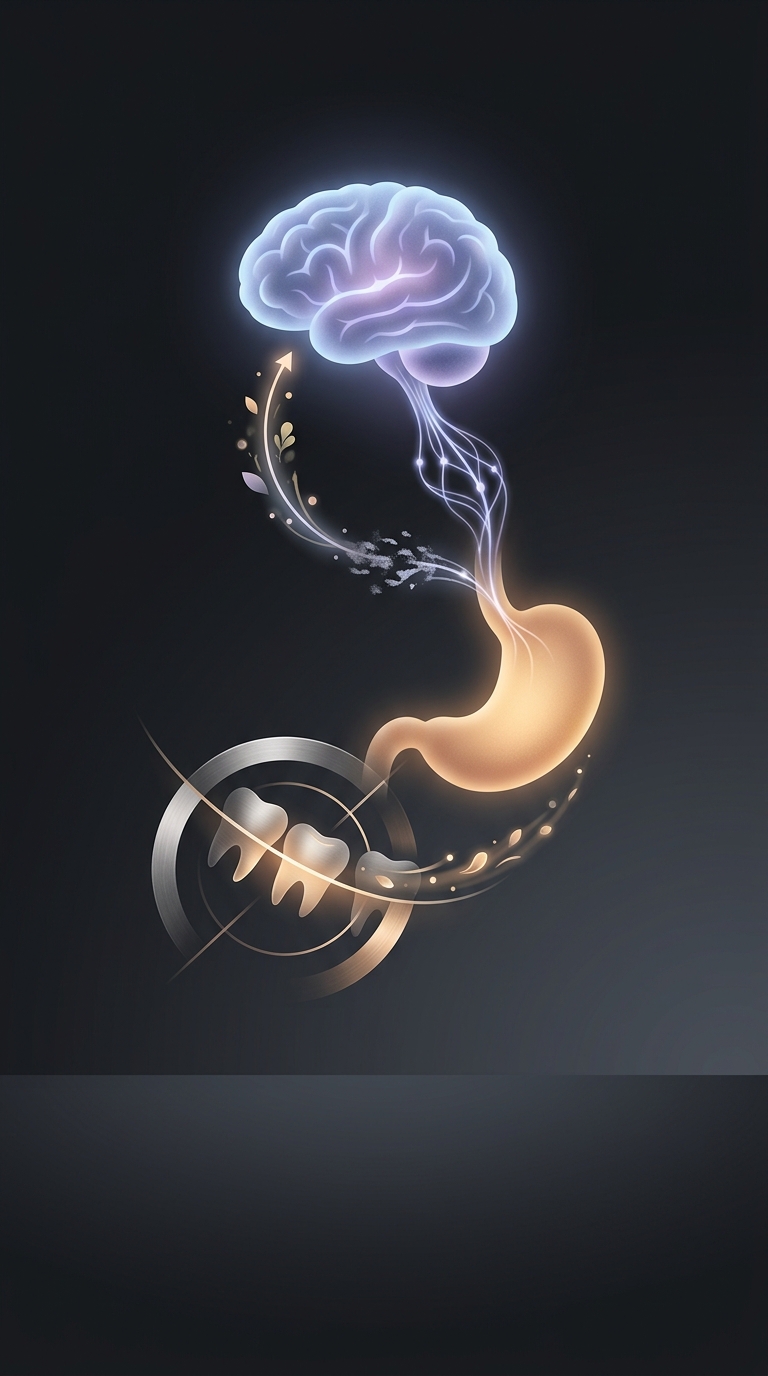
Satiety—the feeling that you have had enough—builds through several signals, not one sudden message from the stomach. Chewing stretches out the early part of a meal, giving the digestive system more time to register incoming food while you are still eating.
As food reaches the stomach and small intestine, sensors respond to its volume and nutrients. The gut releases hormones, including cholecystokinin (CCK), that help relay fullness information to the brain through the bloodstream and nerves. These signals develop over time, so a fast meal can be nearly finished before they have much chance to shape how much you eat.
Chewing changes the pace, not just the texture
Thorough chewing breaks food into smaller pieces and keeps each bite in the mouth longer. That extra time can slow the meal and give the brain more opportunity to register taste, texture, and the growing sense of fullness. In studies of eating behavior, people who chew more or eat more slowly often consume less during a meal, though the effect can vary with the person and the food.
This is not because chewing alone cancels calories or guarantees a smaller meal. It is a timing advantage: fullness signals have a better chance to arrive before you take another serving. A practical consequence is that pausing between bites can help make those gradual signals easier to notice—before the meal is over.