A ferry’s clock starts before departure
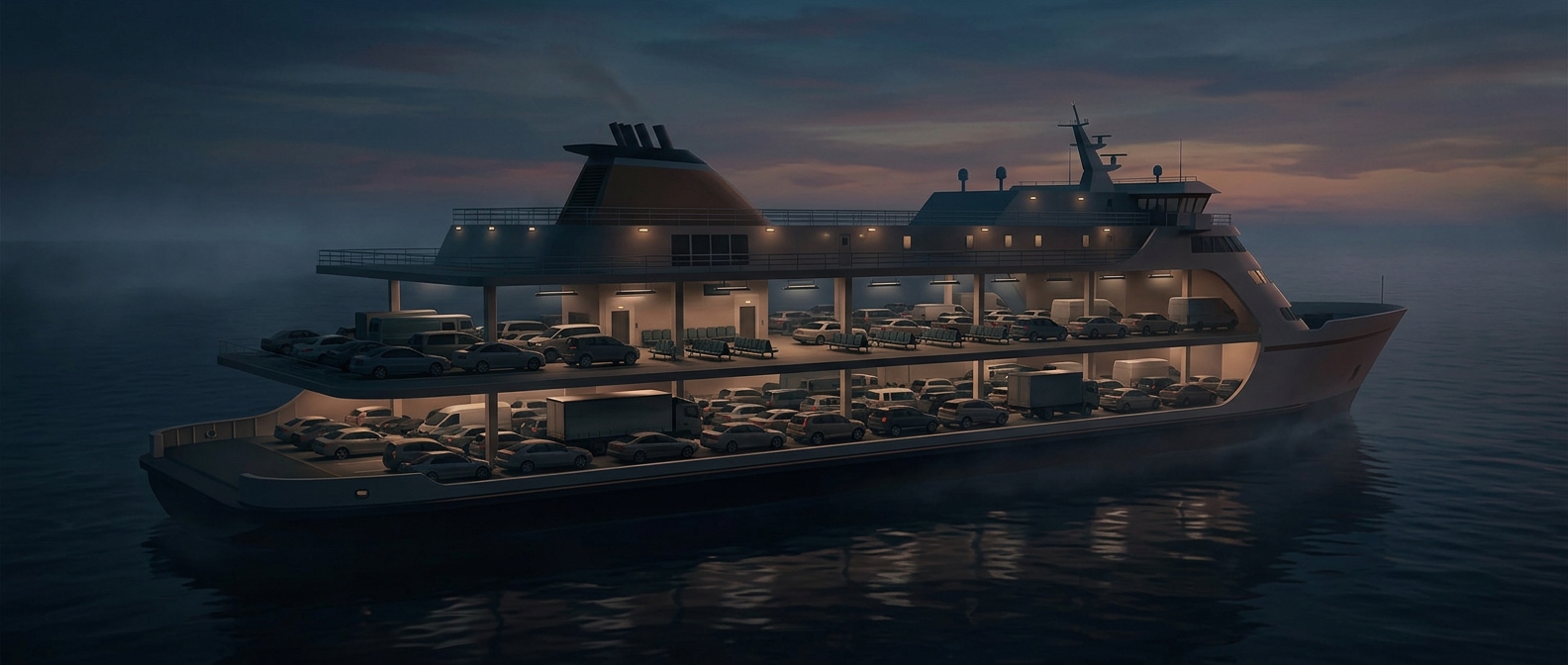
A short crossing uses only a little fuel and time underway, but the operator’s costs do not begin and end at the shoreline. A vessel has to be maintained, inspected and available; a crew must be scheduled; and terminals need upkeep. These costs accrue even when a boat is waiting or making a brief trip.
That makes ferry pricing different from a simple fare-per-minute calculation. The ride may be brief, but the service has to be ready to run on a timetable—and readiness is part of what passengers are paying for.
Passenger volume changes the fare math
The operator spreads much of that standing expense across the people and vehicles using the route. A busy sailing can distribute the cost among many fares. A lightly used one has fewer customers to share it, even if the boat covers the same stretch of water.
Frequency matters, too. More departures can make a route more useful, but they also require more operating time and crew availability. Cutting trips may reduce some costs, yet it can make the service less convenient and drive away riders. The fare therefore reflects a balancing act between keeping the route available and collecting enough revenue from its users.
The crossing is only one part of the service
For a passenger, the most visible product is the minutes spent on the water. For the operator, the product is a dependable connection: a vessel, crew and terminal ready to move people across whenever the schedule calls for it. A ten-minute crossing can carry the costs of an entire transport system in miniature.