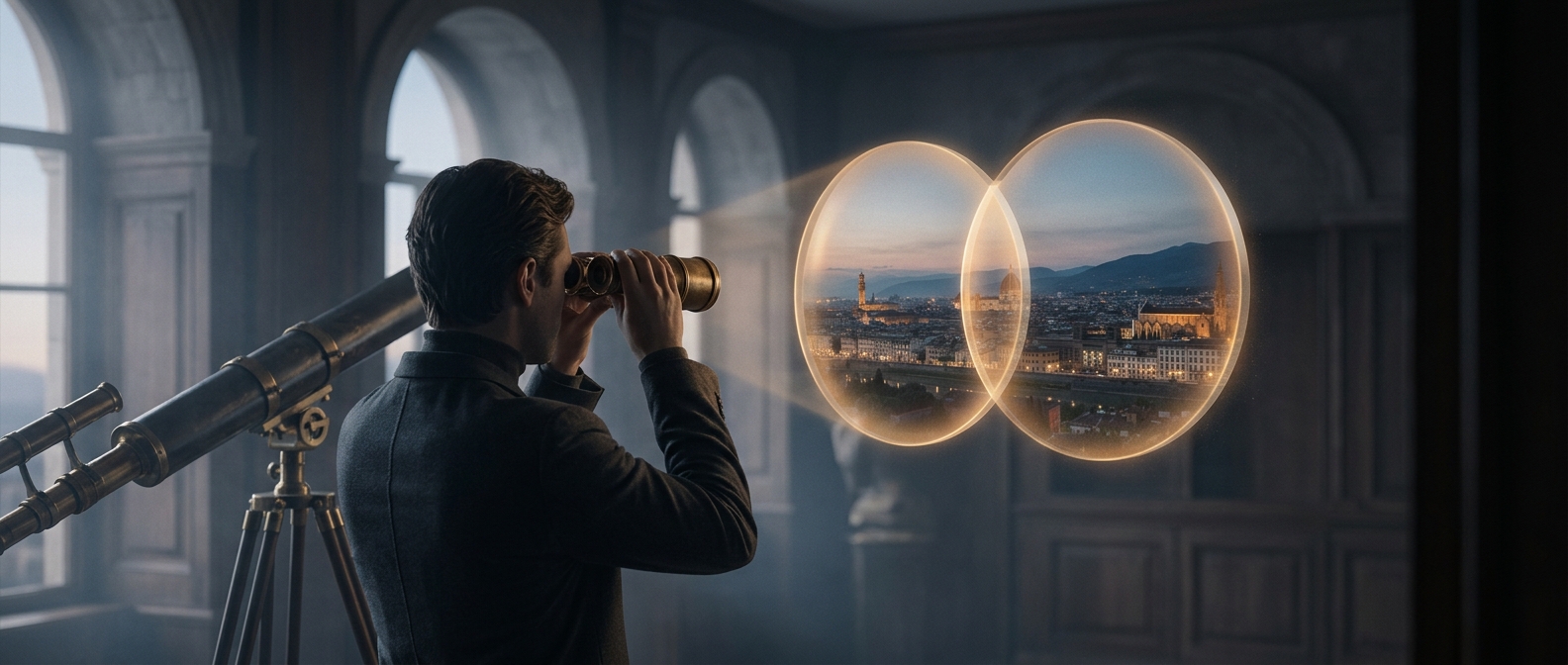
Why TV binoculars look like a figure eight
A pair of binoculars has two optical tubes, one for each eye. Showing two circles joined in the middle makes that construction instantly legible on screen: viewers can recognize the object even in a quick shot or a simple drawing. It is a visual shorthand, not a literal view through the eyepieces.
Your eyes combine the two views
Each tube sends a magnified image to one eye. The brain ordinarily brings those images together into one view, much as it combines the slightly different images from your two eyes when you look without binoculars. When the eyepieces are positioned correctly in front of your eyes, their circular fields overlap, so what you see is generally one round image—not two separate circles.
The circles can remain partly separate if the binoculars are held at the wrong angle or the eyepieces are too far apart for the viewer’s eyes. But that is a matter of alignment, not the normal binocular view.
A drawing has to do more than optics
A camera showing a real person looking through binoculars can rely on context to identify the device. A flat illustration has fewer clues, so artists often draw the paired circles themselves. The familiar figure eight communicates “two lenses” at a glance, even though the user experiences a single combined field.