A Roman Victory Parade for an Ocean
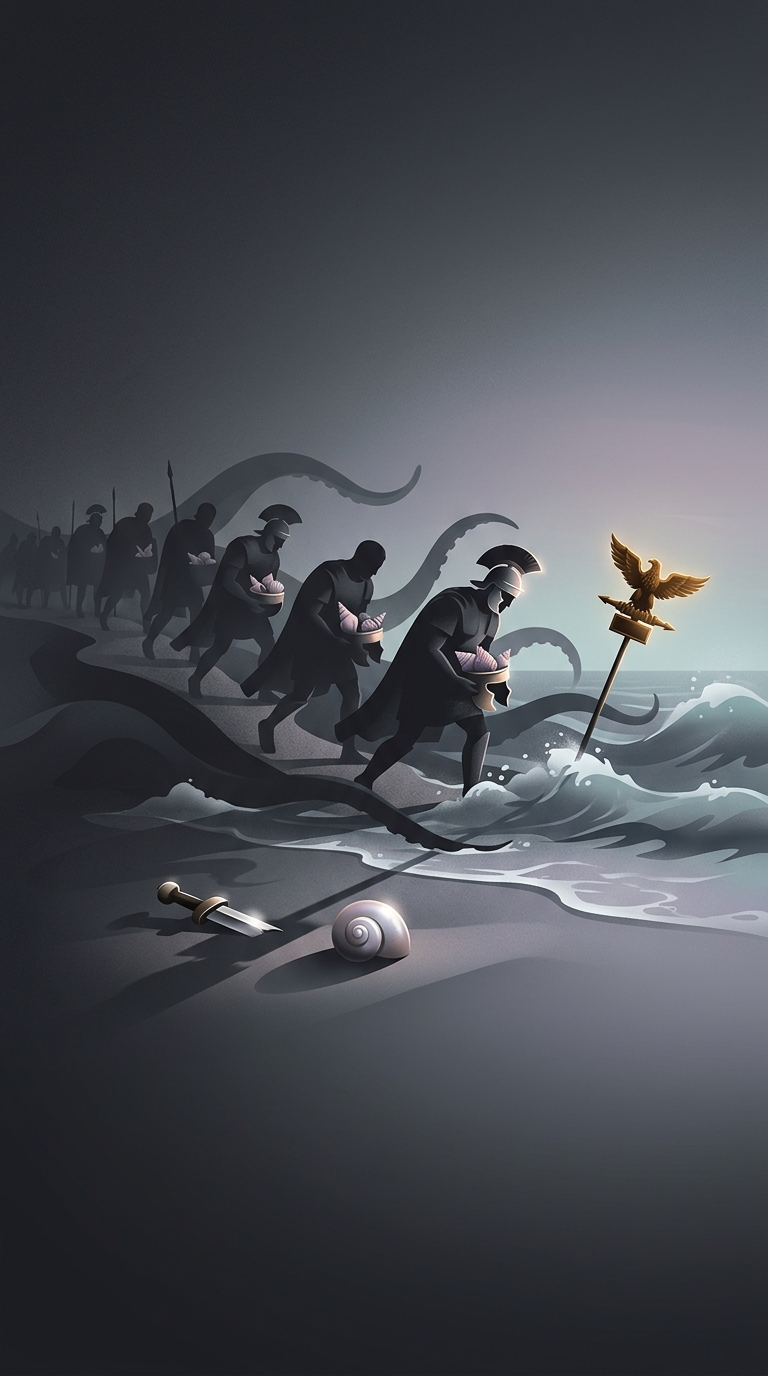
In 40 CE, Caligula brought Roman troops to the coast of Gaul, facing the English Channel. Ancient accounts describe him ordering the soldiers to attack the water and then gather seashells as spoils. The scene is memorable because it turns a military campaign into a contest with something no army could conquer.
What the Shells Were Supposed to Mean
For Roman soldiers, plunder was tangible proof of victory: captured goods showed that a campaign had produced a result. Seashells could be presented as the ocean’s “spoils,” making a failed or impossible conquest look like a triumph. Caligula reportedly planned to claim a formal victory celebration in Rome, where a triumph—a public procession honoring a successful commander—was among the highest honors a Roman leader could receive.
The gesture also made the army perform the claim. The soldiers were not merely watching their emperor declare victory; they were ordered to enact it, striking the waves and filling their helmets with the only trophies the shore could provide.
A Campaign Without a Conquered Shore
Caligula had brought the army to the Channel amid preparations connected with Britain, but no Roman invasion followed. The shell-gathering story survives in accounts written by ancient authors, who often depicted the emperor as erratic. Whatever the precise circumstances, the episode captures a sharp contrast: Rome’s military power could conquer territory, but it could not make the sea into a province.
The helmets of shells turned that limit into a portable joke—or, in the emperor’s version, a victory prize.