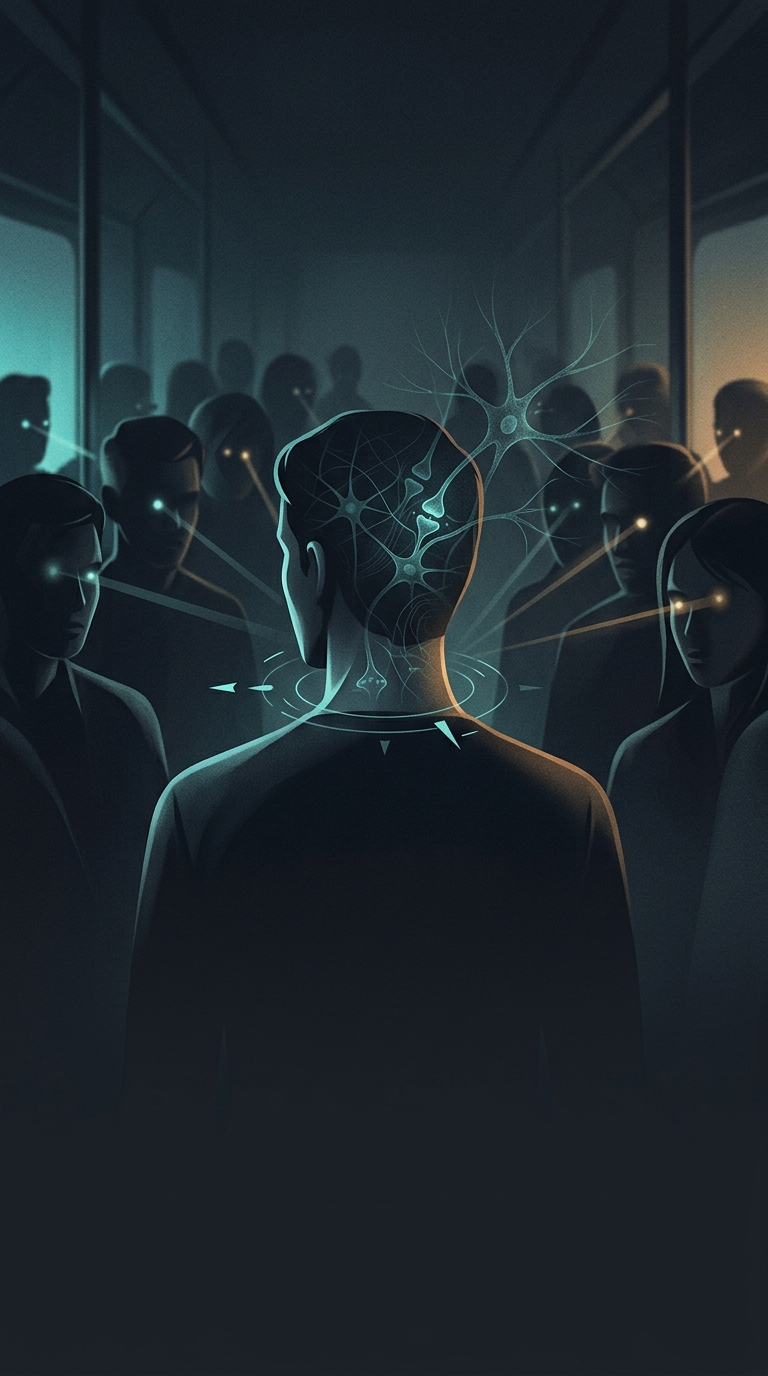
A picture built from memory and attention
When someone with hyperphantasia imagines a familiar room, the mind can assemble its colors, layout, and details with unusual vividness. The scene is not arriving through the eyes. It is generated internally: memory supplies pieces, and attention holds them together as an image.
Visual imagination draws on some of the same brain systems used to process sight, but it is not simply ordinary vision switched on behind closed eyelids. Signals involved in imagining are shaped by goals and memories, rather than by light entering the eyes. That is why a person can picture a red apple while still seeing the real room around them—not a red apple laid over it.
Vividness is not the same as accuracy
A mental image may feel sharp without being a perfect record. Imagining a face or place can combine remembered features, expectations, and details filled in from experience. The strength of the picture describes how it feels to the person, not how faithfully it reproduces what they once saw.
People also differ in what they can picture and how readily they can summon it. One person may find it easy to rotate an imagined object; another may experience a strong image but have less control over changing it. Hyperphantasia describes unusually vivid imagery, not a single fixed ability or a guarantee of exceptional memory.
An inner image, not an outside projection
The useful distinction is between vividness and location: the image can be compelling while remaining recognized as a thought. Closing the eyes may make it easier to attend to that inner scene, but it does not turn the scene into something occupying the visible space in front of the person. The mind’s picture can feel richly detailed without becoming part of the room.