Why a railway worker points at a signal
A signal can be easy to see and still fail to register. On a familiar route, repeated checks may become automatic: a worker looks toward the signal but does not fully attend to what it shows. Japanese railway workers use shisa kanko—“pointing and calling”—to make that check deliberate and observable.
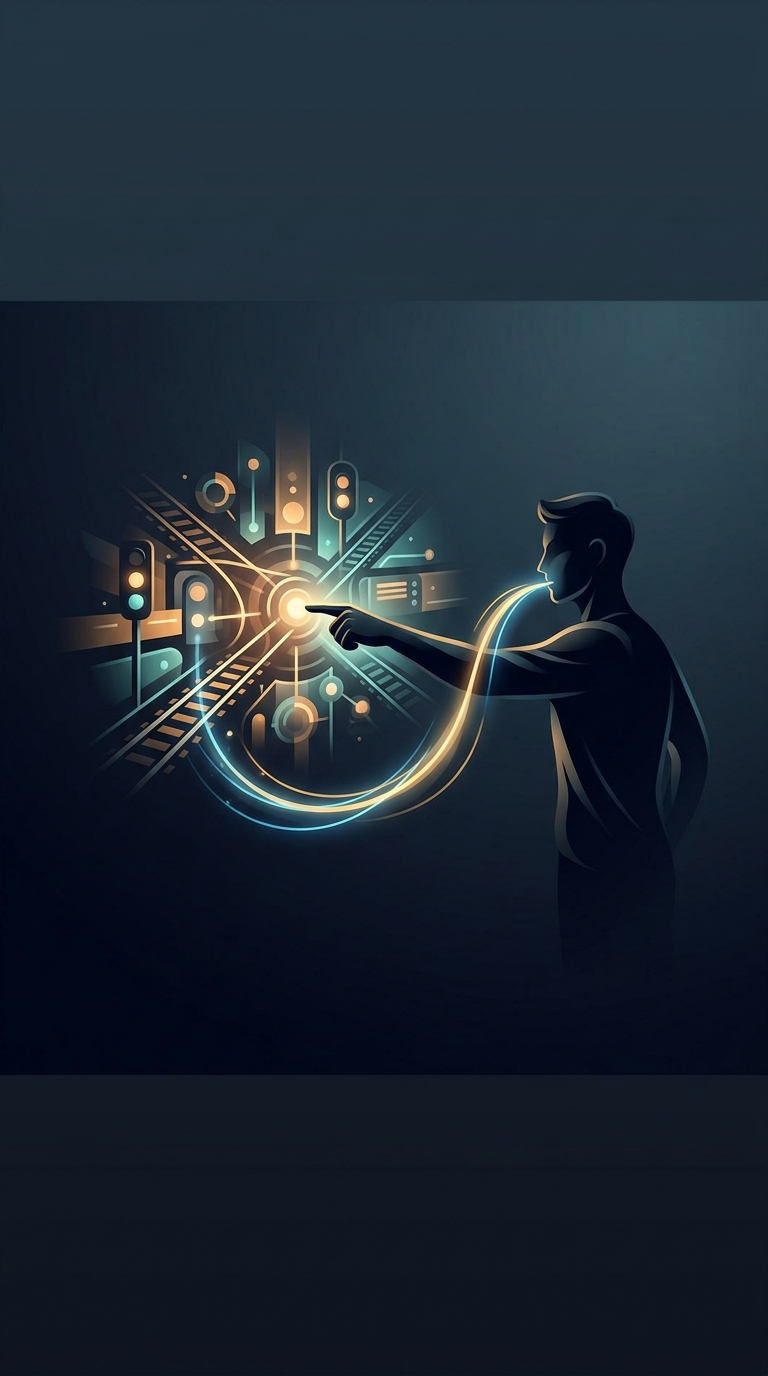
The worker points toward the relevant signal or control, reads its state, and says that state aloud. The action links three things: looking, moving, and speaking. Each gives the worker another moment to notice a mismatch, such as a signal displaying something other than what the task requires.
Turning a glance into a check
The technique works by interrupting routine. Pointing directs the eyes to a specific object; naming its status forces the worker to identify what is actually there rather than rely only on expectation. Speaking also makes the check audible, which can help keep attention on the task and make it clearer to colleagues what has been checked.
That does not make a person infallible. A worker can still misread a signal or say the wrong thing. The point is to add deliberate steps to a task that might otherwise be handled as an unexamined habit. In railway operations, where a missed indication can matter, a small physical routine gives attention something concrete to do.
Safety built into the action
Shisa kanko illustrates a broader principle in safety-critical work: procedures can be designed around human limits, not just around equipment. A signal system communicates information, but workers must still notice and interpret it. By making that moment visible and audible, the technique creates a brief pause between seeing a signal and acting on it—the instant in which an unnoticed assumption can be caught.