Why the First USB Plug Had a “Right” Side Up
A USB plug’s one-way fit was a design tradeoff, not an unavoidable feature of sending data. The original connector used an asymmetric shape and contact arrangement, so it could connect only when turned the correct way. Making it work in either orientation would have required additional wiring and raised manufacturing costs—by enough, Ajay Bhatt judged, to threaten the project’s chances of being adopted.
A Small Annoyance, Multiplied Across Millions of Devices
USB was meant to become a common connection for computers and peripherals. That goal made cost important: extra materials and circuitry in every connector could add up across the many devices the standard was meant to serve. A reversible plug would have been more convenient, but it also would have made each connection more expensive to build.
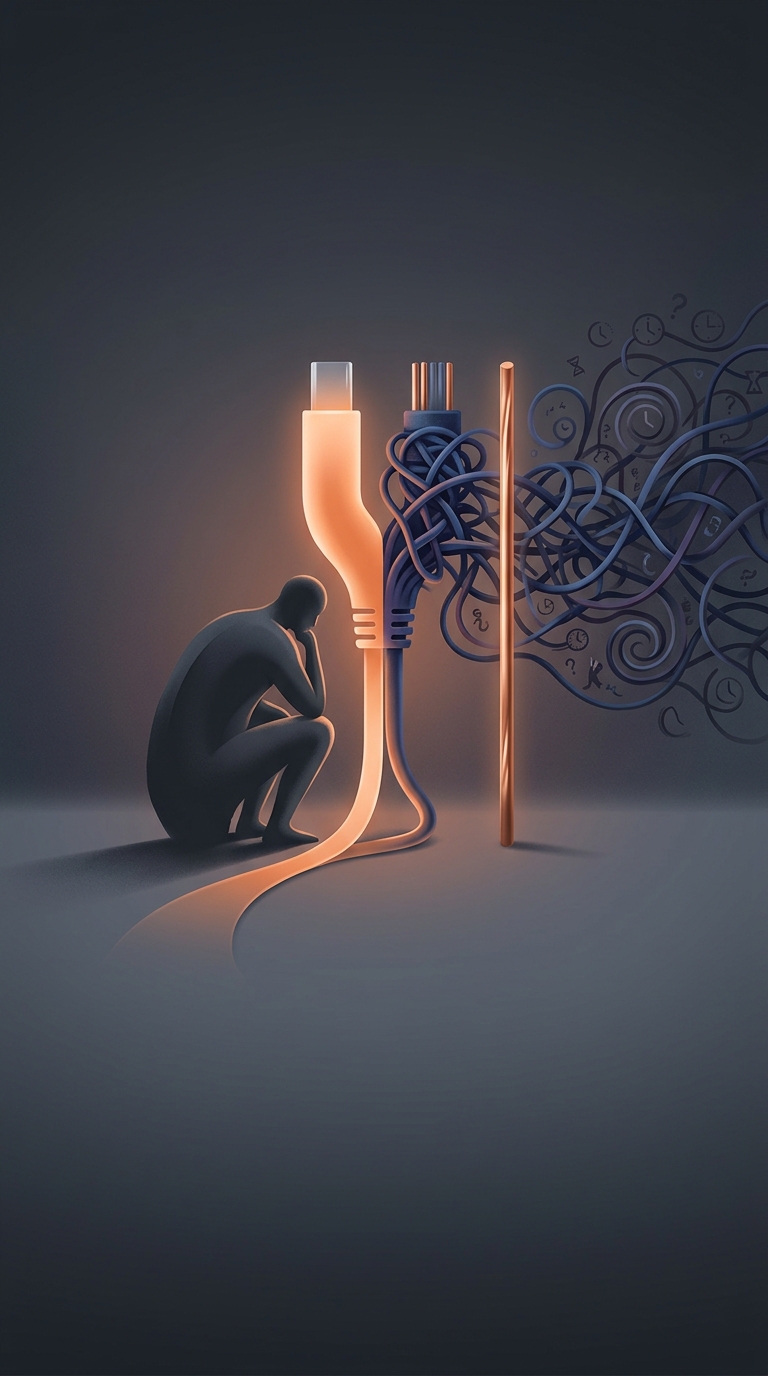
The compromise pushed a small task onto the user. If the plug met resistance, the person had to turn it over and try again. That momentary frustration was accepted in exchange for a simpler, cheaper connector that could help USB spread.
Later USB designs, including USB-C, made orientation irrelevant. The contrast shows what changed: reversibility became worth the added design and manufacturing effort. In the original design, even a tiny inconvenience was part of the calculation of whether a new standard could become ubiquitous.