When an abstract idea became a machine
Time is usually treated in physics as a way to measure when events happen and how they relate—not as a material that can be gathered in one place. Nikolai Kozyrev, a Soviet-era astrophysicist, proposed a more active role for time: he argued that it could have physical effects and might participate in the transfer of energy.
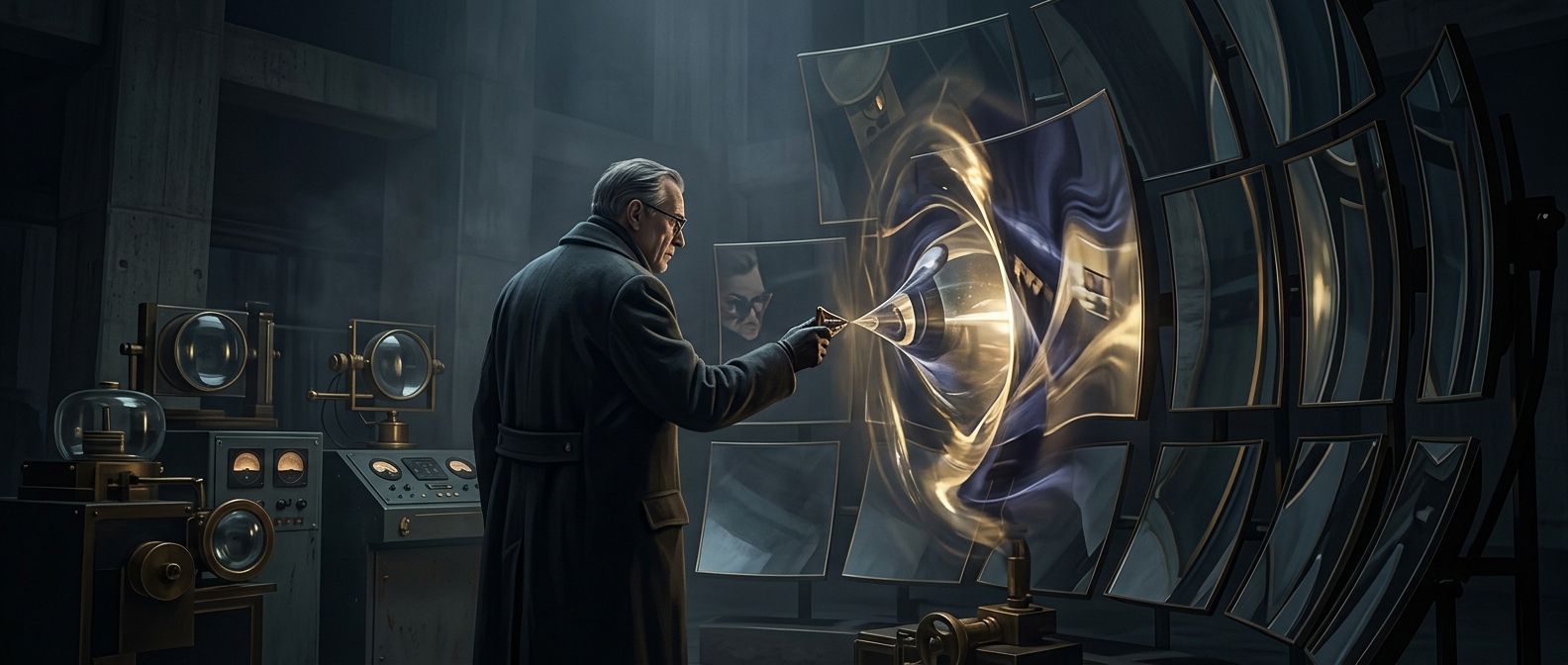
That proposal suggested an unusual experiment. Kozyrev’s “mirrors” were not ordinary glass mirrors for reflecting light. They were curved, polished aluminum sheets arranged around a space, intended to concentrate the supposed influence of time much as a lens concentrates light. The device gave an elusive idea a tangible form: if time had effects, perhaps an instrument could make them easier to detect.
What the apparatus could—and could not—show
Building a device around a hypothesis does not establish that the hypothesized force exists. To support Kozyrev’s idea, experiments would need to produce repeatable observations that could be distinguished from ordinary causes and independently checked. The mirror arrangement itself could not supply that evidence; its shape reflected the theory’s assumptions, not proof of them.
Kozyrev’s experiments did not demonstrate that time sends energy or that the mirrors could predict astronomical events. The episode is a useful lesson in experimental science: an elaborate instrument can make a speculative claim look concrete, but the decisive question is still whether its results reliably reveal something that other methods cannot explain. The aluminum enclosure could focus attention on the theory; it could not, by itself, focus time.