Why a Sound Can Change the Meaning of a Scene
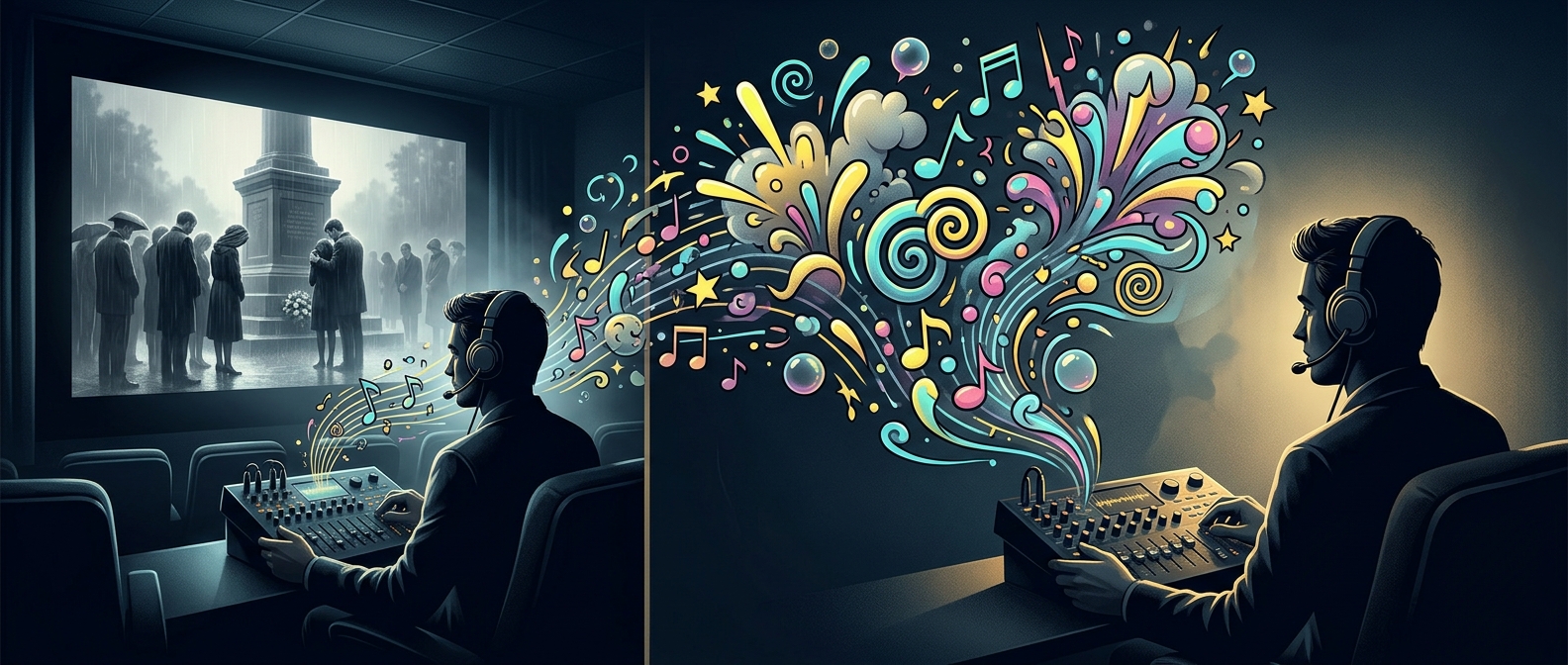
A documentary image does not arrive alone: viewers hear it while they watch. A springy boing over a solemn portrait, for example, supplies a cue the picture itself does not contain. The sound suggests that the moment is playful or ridiculous, and viewers may reinterpret the person on screen through that lens.
This happens because people combine sight and sound into one scene rather than judging each independently. A sound effect can steer attention toward a particular detail, signal how seriously to take it, and shape what viewers expect next. If the audio and image point in different emotional directions, the mismatch itself can become the focus: instead of absorbing a scene as tragic or tense, viewers notice the joke.
The Soundtrack Is Part of the Argument
In a documentary, that shift can affect more than mood. A comic effect may make a subject seem foolish, make a painful event feel trivial, or invite viewers to treat an interview as a punchline. Even without changing the footage, the edit has changed the context in which the footage is understood.
That is why sound design carries responsibility. Music and effects can clarify a scene, but they can also nudge viewers toward an interpretation the images alone might not support. A playful sound over a serious moment does not guarantee that every viewer will laugh; it makes comedy more available as a reading of the scene.
The practical test is to ask what the sound tells the audience to feel about the image. If a single cartoon boing can turn concern into amusement, then removing or changing that effect can restore a scene’s seriousness without altering a frame.