When a Wall Becomes a Gap in the Game’s Rules
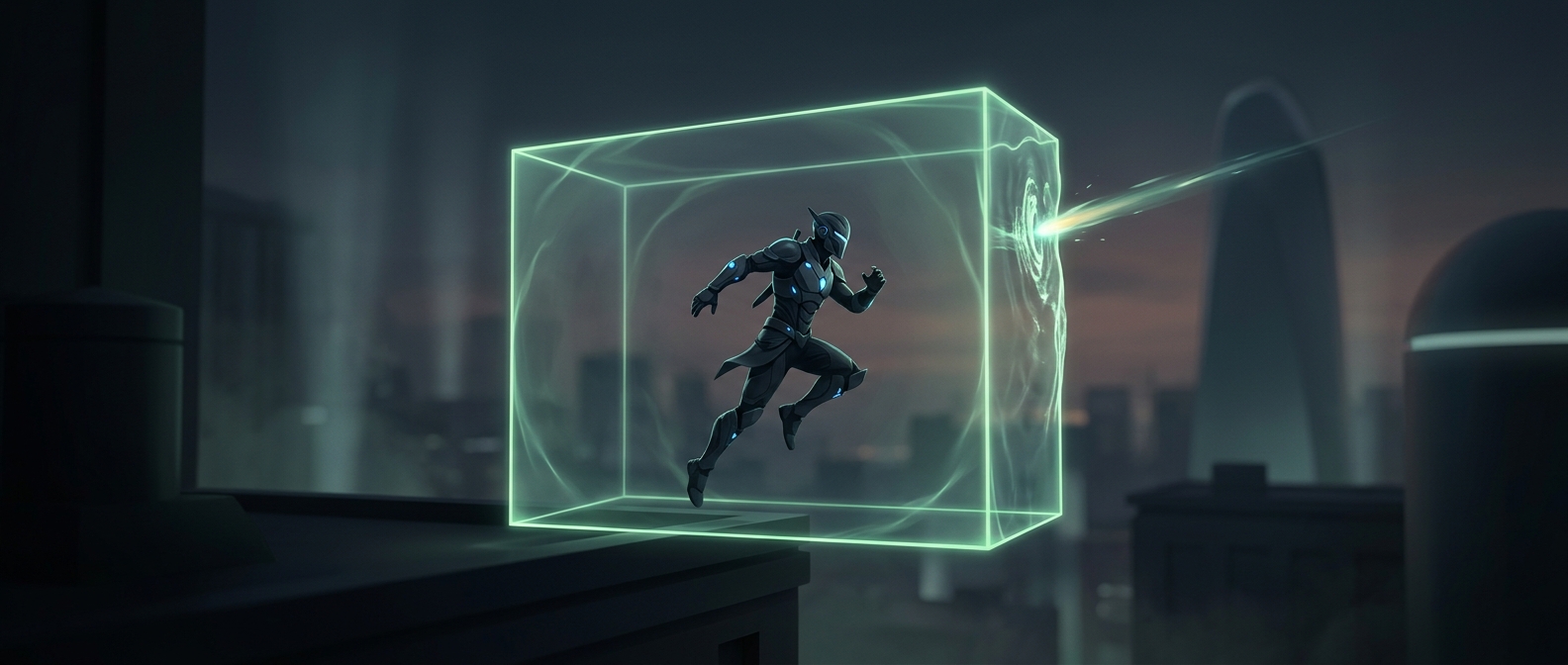
A game world may look continuous, but the program usually represents it as pieces: the player has a collision shape, walls occupy defined regions, and movement is checked in small steps. Collision detection is the process that decides whether those shapes overlap and, if they do, how to stop the player from passing through solid scenery.
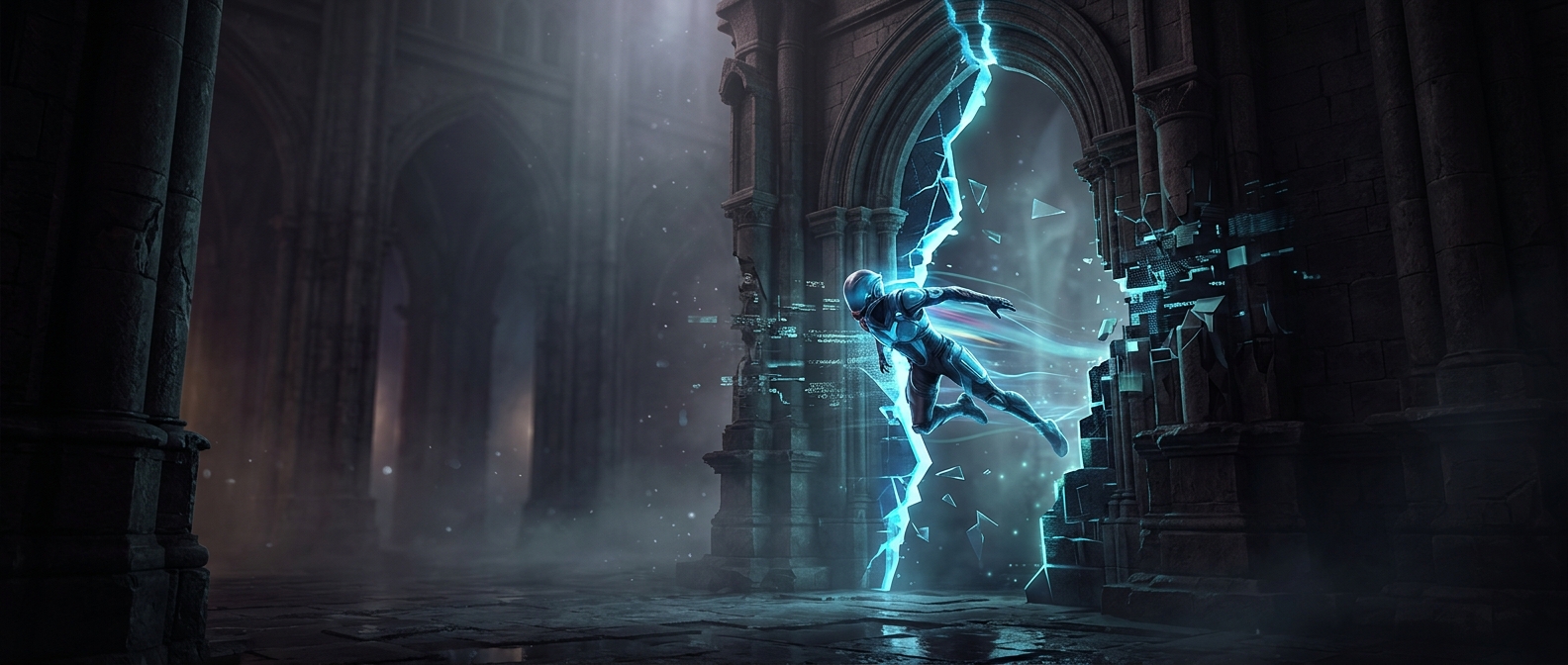
A wall clip happens when that check fails to block movement in a particular situation. The game might check the player’s position in an unexpected order, round a coordinate, or handle a fast movement step imperfectly. If the character ends up on the far side before the collision response catches it, the wall’s visible solidity no longer matters: the game now treats the character as being beyond it.
Turning a Glitch Into a Route
Getting through once is not enough for a speedrun. The runner must learn what conditions make the failure repeatable. A tiny change in position, timing, movement direction, or input can determine whether the character stops at the wall or slips past it. Runners test those conditions and refine the setup, often using the game’s frame-by-frame timing to make attempts consistent.
Once outside the intended path, the character may cross areas the designers meant players to reach later—or skip them altogether. But bypassing scenery does not automatically finish the game. The ending may depend on entering a particular region, activating an event, or setting a required game-state flag. A successful route must reach the condition that actually triggers completion, not merely the place where the ending appears to be.
That is why a seemingly simple shortcut can demand extensive study: the runner is mapping not just where the walls are, but which rules the game applies, when it applies them, and what the game still requires at the finish.