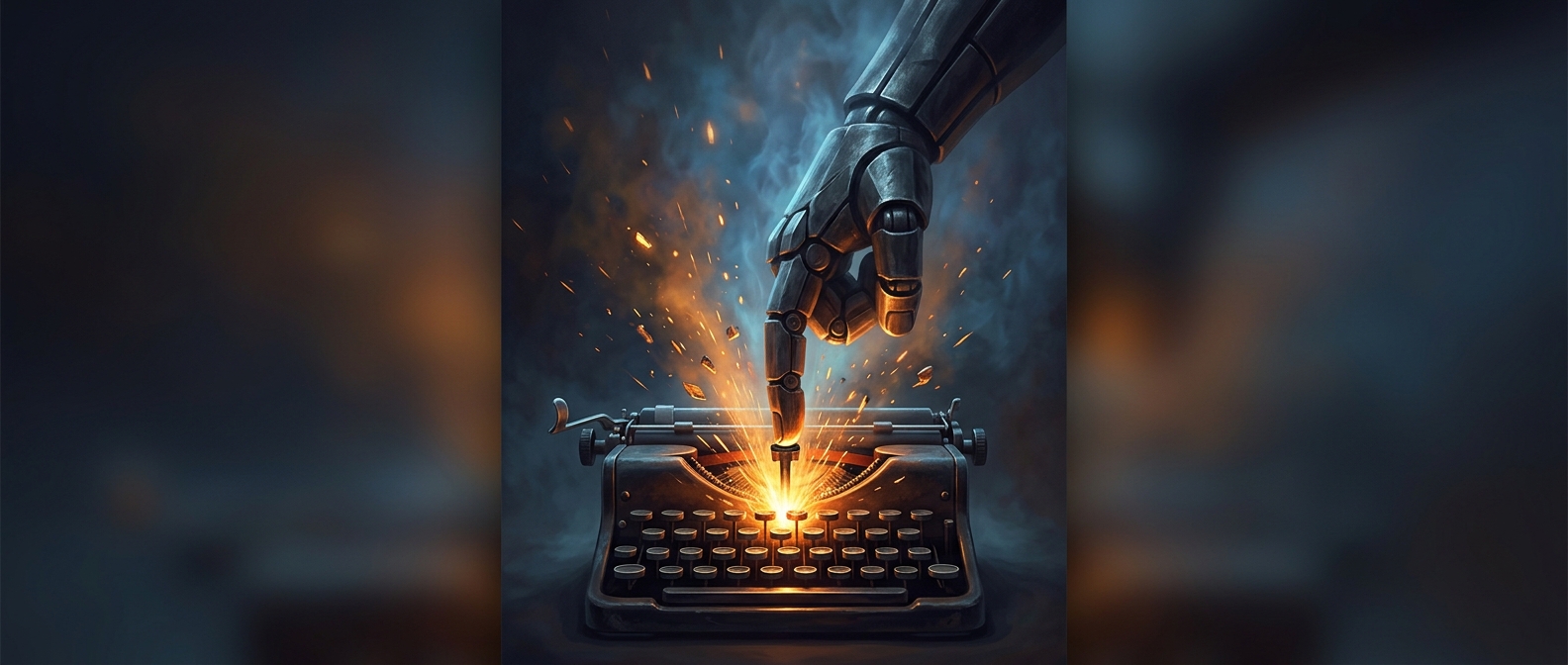
A keypress sets a small machine in motion
On a manual typewriter, a key is not just a switch. Pressing it moves a lever that sends a metal typebar—the arm carrying a raised letter—toward an inked ribbon and the paper-backed roller behind it, called the platen. The impact prints the character. Springs then help return the parts so the machine is ready for another stroke.
That chain of moving pieces gives each press a distinct beginning and end: resistance as the mechanism moves, an impact as the letter hits, and a release as the key comes back up. The clack is the sound of work being done, not an electronic effect added afterward.
Feedback you can feel and hear
The typewriter makes the result of a keystroke unusually easy to sense. A typist feels the key travel and hears the mechanism strike; the mark on the page confirms the action visually. These cues arrive together, so even a rapid run of letters can feel like a sequence of completed physical acts.
A computer keyboard usually sends an electrical signal when a key moves far enough. It may click or offer resistance, but it does not need to propel a typebar into paper. The contrast helps explain the typewriter’s appeal: its feedback comes from the same mechanical action that makes the mark. Even a meaningless string of letters still produces a real, audible event with every press.