The brain reads color by comparison
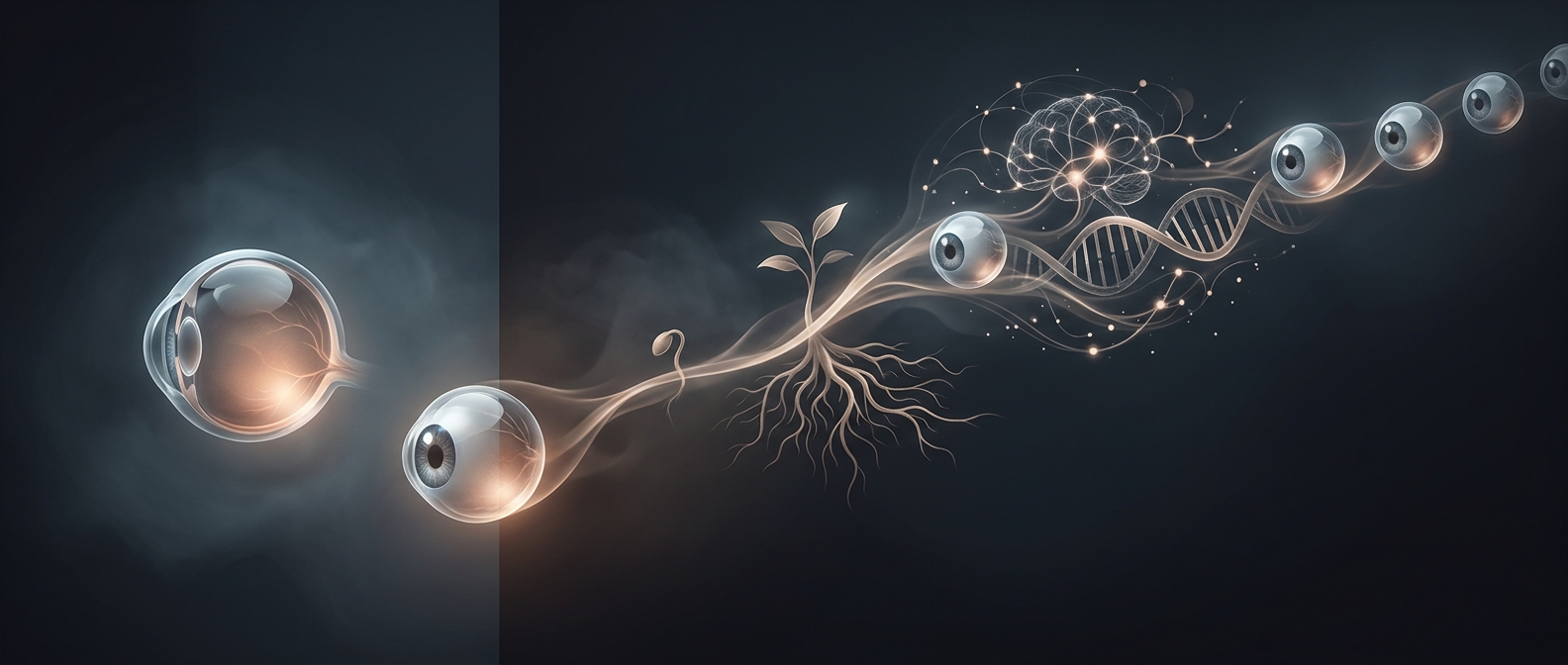
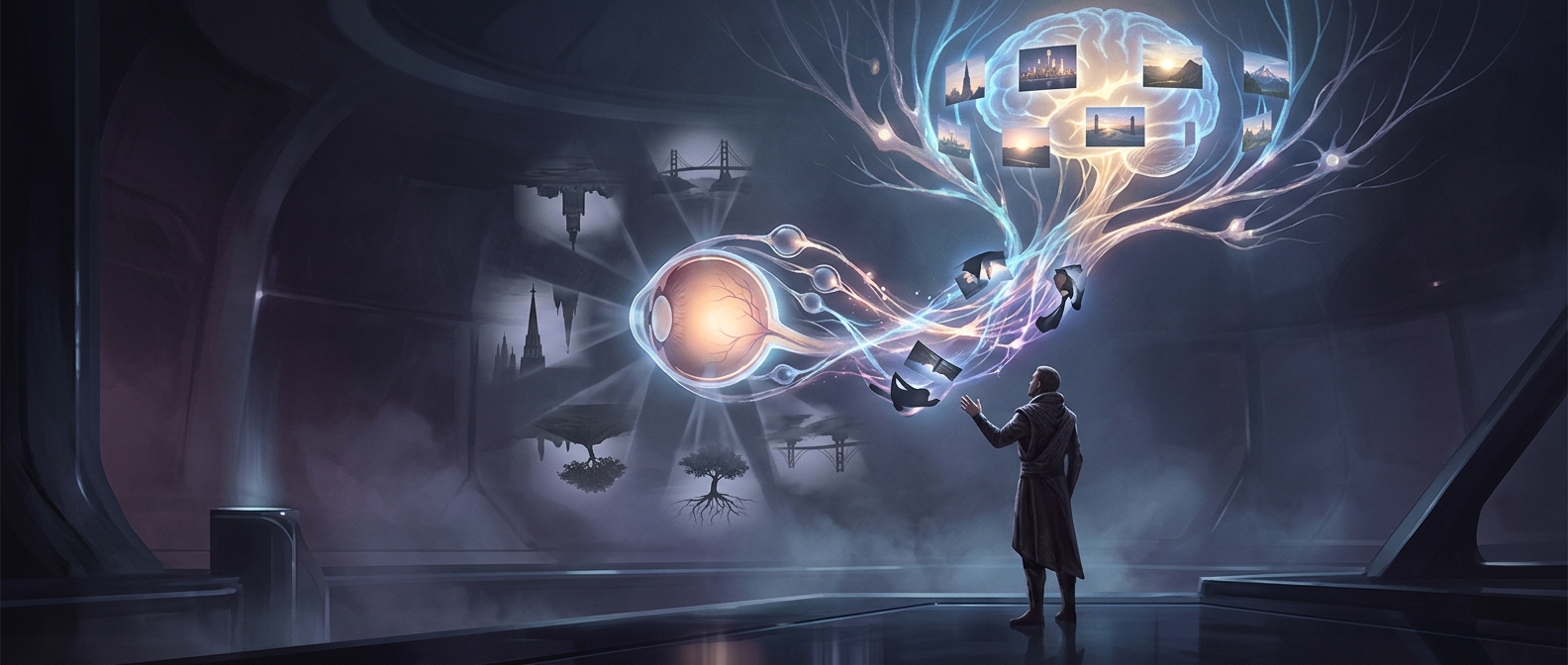
The eye does not label each patch of light with a color in isolation. Signals from different cone cells—photoreceptors tuned to overlapping ranges of light—are compared by neural circuits that help distinguish reddish from greenish and bluish from yellowish signals.
While you fix your gaze on red, the visual system adjusts to that steady input. The red-favoring signal becomes temporarily less responsive relative to its usual level. When your gaze shifts to a white surface, the incoming light activates the cone types together, but their signals are no longer in their usual balance. The brain interprets that imbalance as a tint opposite the red: cyan, a blend of blue and green.
Why the ghost fades
This is a negative afterimage: “negative” means the perceived color tends toward the complement of the original, not that the image is dark or unpleasant. It is related to the same color-opponent comparisons that help make neighboring colors look distinct, but it appears after the original stimulus is gone.
The effect is temporary because the visual system readjusts as the cones and their downstream circuits respond to the new, more balanced input. The ghost usually weakens within seconds, though its strength and duration depend on how bright and how long the original color was, as well as the viewing conditions.
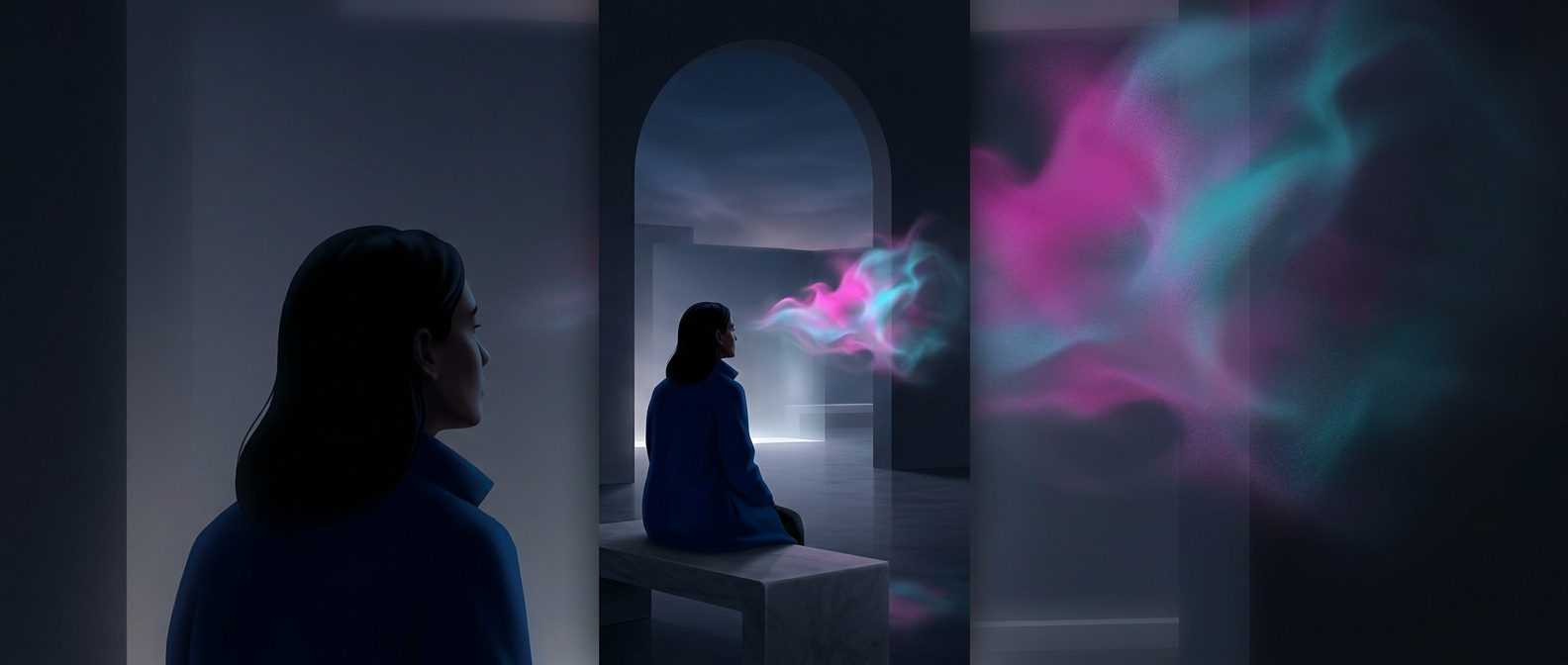
The wall has not changed color. What changes is the balance of signals used to see it—so the afterimage can seem to float on a surface that is, in fact, still white.