A giant from Australia’s marsupial family tree
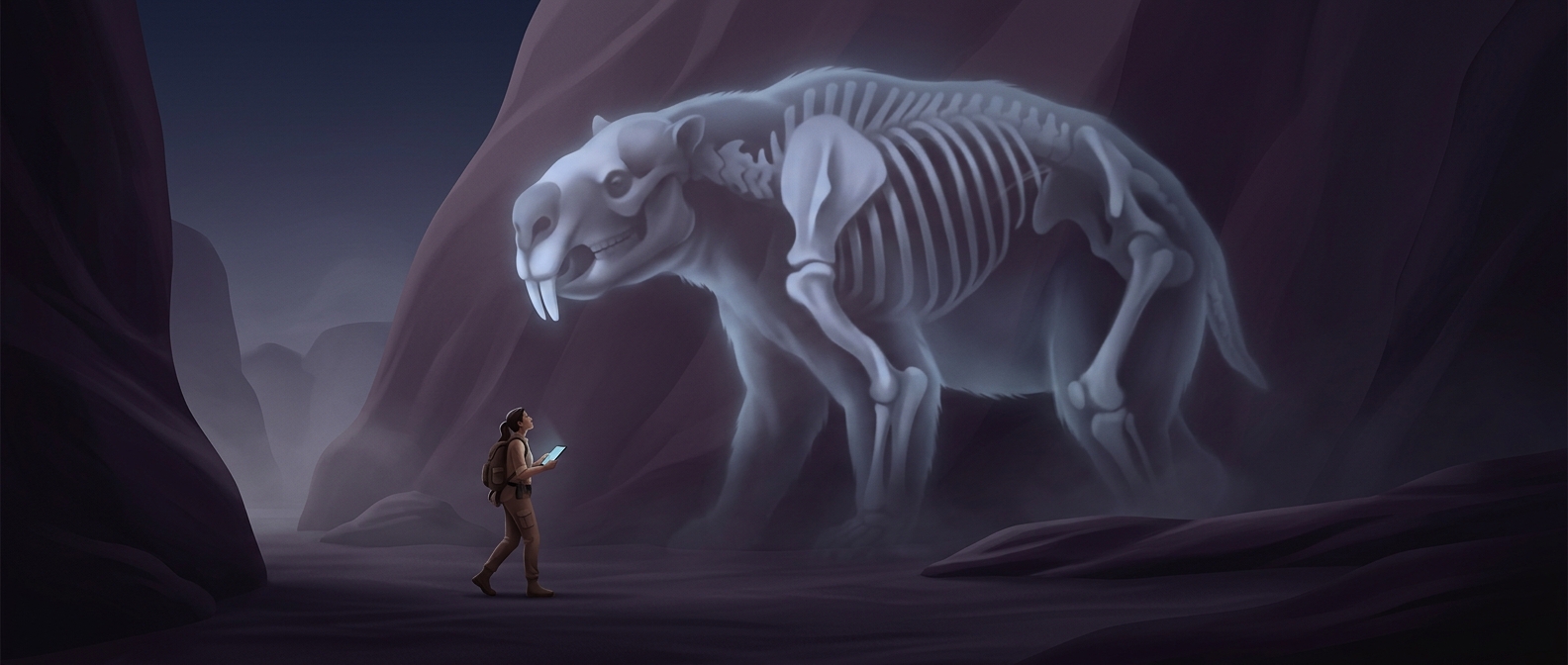
Diprotodon lived in Australia during the Pleistocene, a period when many kinds of large mammals shared the continent with humans. It was a marsupial herbivore: it ate plants and belonged to the same broad mammal group as living wombats, kangaroos and koalas. Its resemblance to a rhinoceros is useful only as a measure of its size; it was not a rhino or a close relative of one.
The connection to wombats is evolutionary, not a claim that Diprotodon was simply an oversized wombat. Both sit within the wider marsupial family tree, but Diprotodon belonged to an extinct group. A family tree can preserve close kinship even when its branches end in animals that look dramatically different.
What a plant-eating giant had to do
A body that large required a steady supply of vegetation. Like other herbivores, Diprotodon would have depended on eating plant material and processing it through digestion to obtain energy. Its enormous size therefore points to a very different way of life from that of the small, burrowing wombats alive today—even though the animals share distant ancestry.
Diprotodon is considered the largest known marsupial. That makes it a striking reminder that Australia’s marsupial lineage once included animals on a scale more commonly associated with large placental mammals. The rhino comparison helps picture the mass; the family tree explains the surprise.