Teeth built for a different kind of cutting
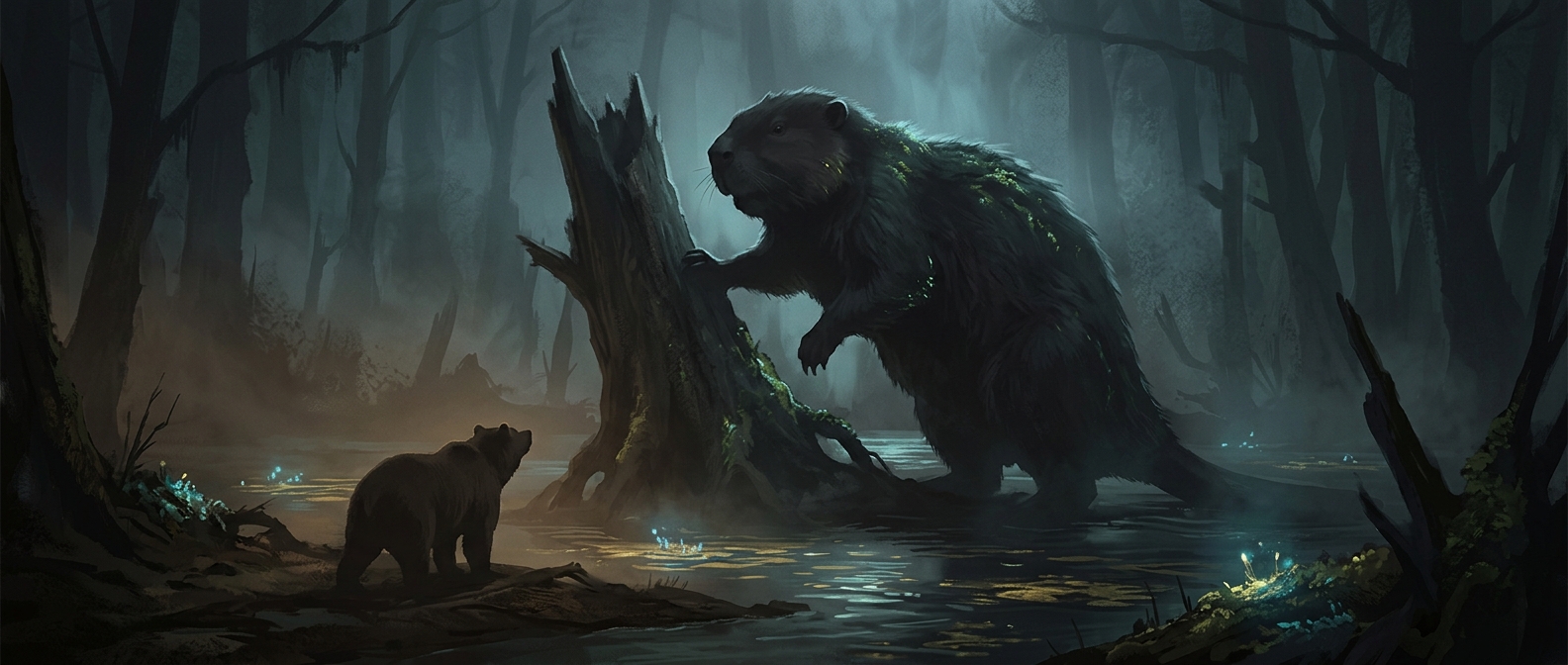
The giant beaver, Castoroides, was a close relative of modern beavers, but its front teeth suggest it did not make a living by chopping down trees. Modern beaver incisors are narrow, curved chisels. Their hard orange front surface wears more slowly than the softer inner surface, so each bite helps keep the edge sharp—like a self-renewing tool.
Fossil incisors from Castoroides were broader and blunter. That shape would have been less effective for slicing through trunks. It does not reveal every item on the animal’s menu, but it makes the familiar image of a colossal lumberjack a poor fit.
A beaver without the dam-builder’s toolkit
The distinction matters because tree cutting is not just a matter of strength. Modern beavers use wood for food and construction, shaping branches and trunks into dams and lodges. A giant animal with less specialized cutting teeth would have had a harder time doing that work. And, unlike modern beavers, Castoroides has left little evidence of dam-building.
Researchers therefore look to its anatomy and fossil setting for a different picture: a large animal living in wetlands, likely feeding on vegetation there rather than routinely felling trees. The exact diet is harder to establish than the tooth shape, so the strongest conclusion is about what it was poorly equipped to do—not a precise menu.
Its size made it look like an oversized version of the beaver we know. Its teeth suggest a more surprising reality: the shared name did not guarantee the same lifestyle.