How the tail became a weapon
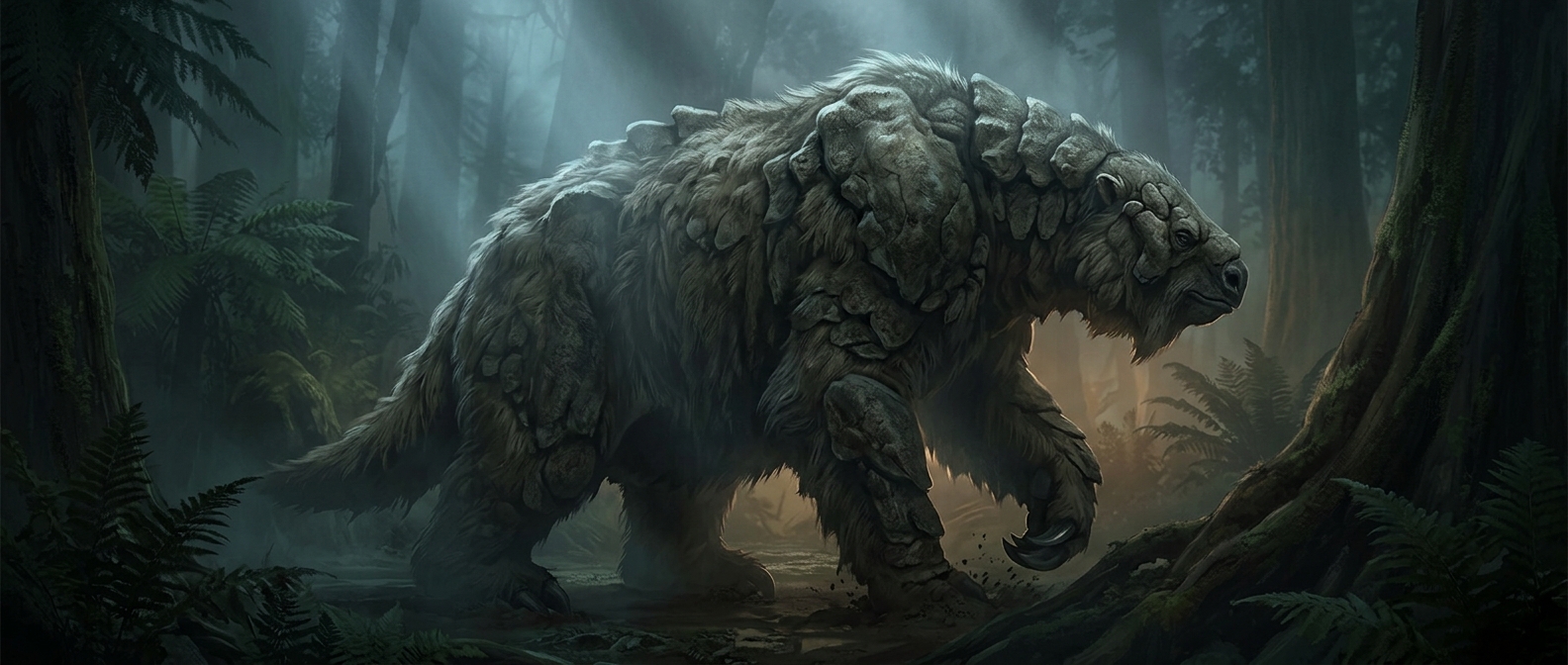
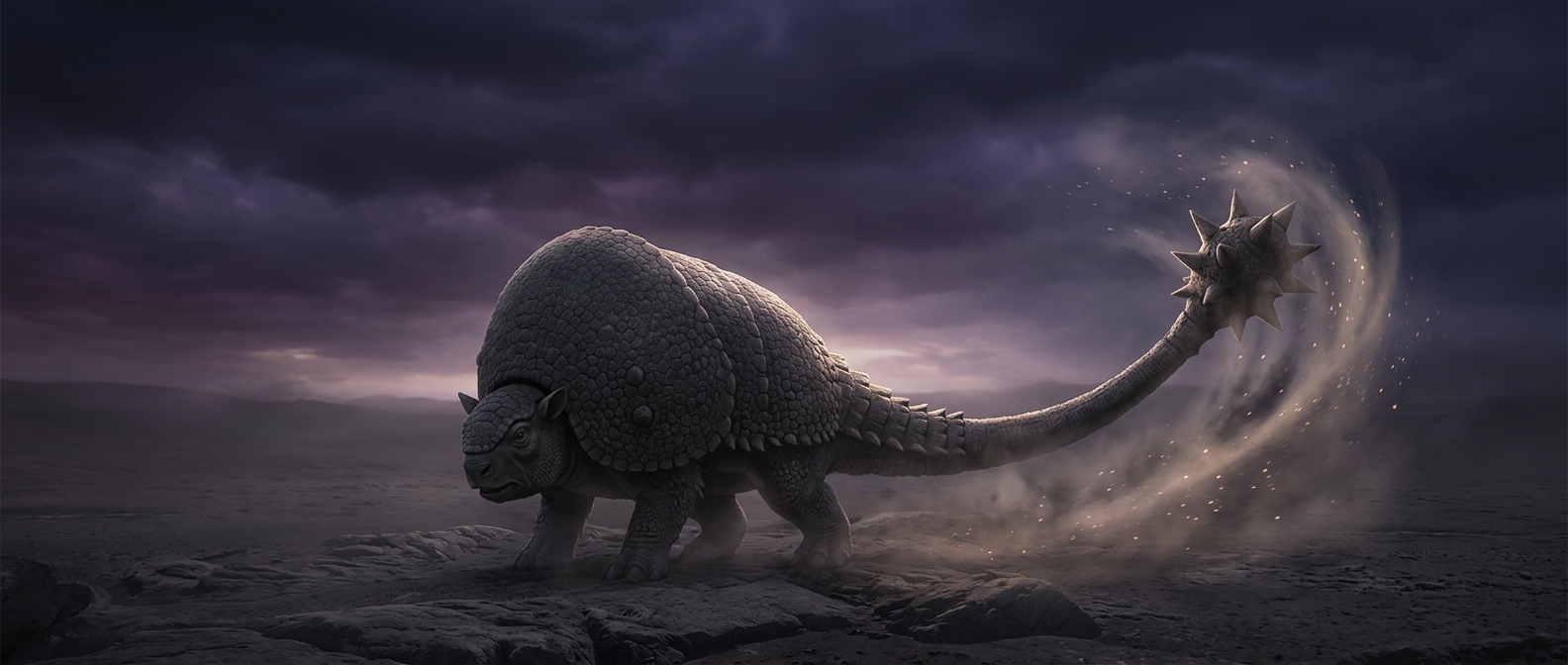
Doedicurus belonged to the glyptodonts, an extinct group of armored mammals related to modern armadillos. Its tail was not simply a bony rod: vertebrae near the tip were stiffened into a heavy club, with a bony outer covering that bore spikes. Strong muscles at the tail’s base could set that mass in motion, turning a short sweep into a forceful blow.
The weight made the weapon effective but also imposed a tradeoff. A clubbed tail could not dart about like a lightweight limb; it worked best when the animal had room to brace and swing. Its protective shell mattered in that encounter, too: armor helped shield the body while the tail supplied the counterattack.
A weapon for encounters, not hunting
A tail club would have been poorly suited to catching food. Its force came from impact, not from grasping or cutting. Paleontologists therefore consider clashes with other Doedicurus—perhaps over access to mates or space—a more plausible use than attacking prey. The fossil anatomy supports the club’s capacity to deliver blows, but it cannot tell us exactly how often the animals fought or what triggered a particular confrontation.
The arrangement made defense active rather than passive. An attacker approaching the armored animal still had to reckon with a swinging, spiked tail. That combination—shield around the body, club behind it—made Doedicurus’ armor more than a barrier: it let the animal absorb danger while striking back.