A closer look
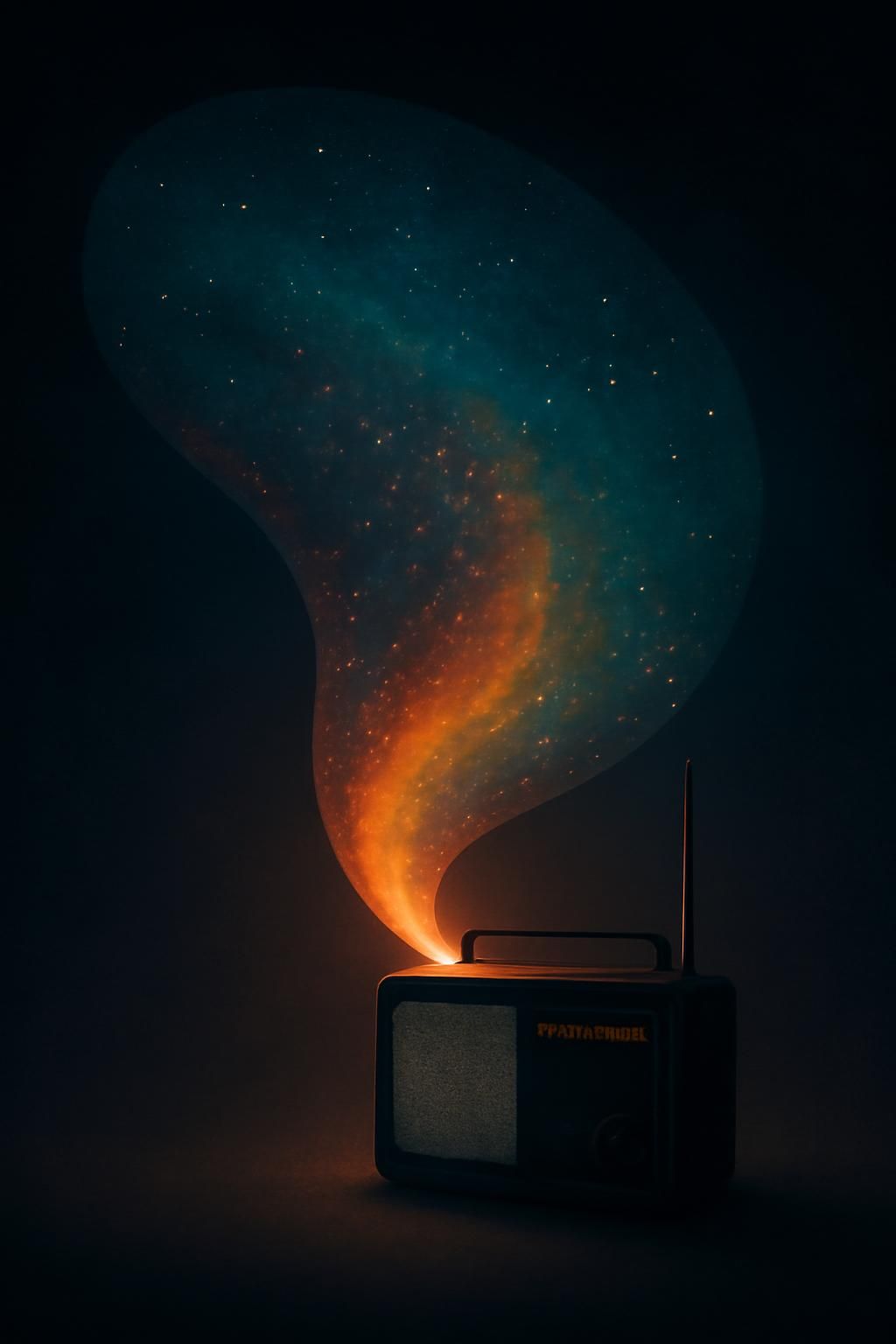
Faint hiss between radio stations is literally the afterglow of creation. Around 380,000 years after the Big Bang, the universe cooled enough for electrons and protons to form neutral atoms, letting light travel freely for the first time. That ancient light has been stretching with the expansion of space for almost 14 billion years, now reaching us as cold microwave radiation from every direction: the cosmic microwave background. It is astonishingly uniform, yet tiny temperature ripples in it map the seeds of all future galaxies, like a baby photo of everything. Satellites like COBE, WMAP, and Planck have turned that hiss into detailed sky maps that let cosmologists estimate the universe's age, composition, and geometry. Next time someone flips past static on an old radio or TV, remember: buried in that noise is a whisper from when there were no stars, no planets, just a hot, dense fog becoming a cosmos.