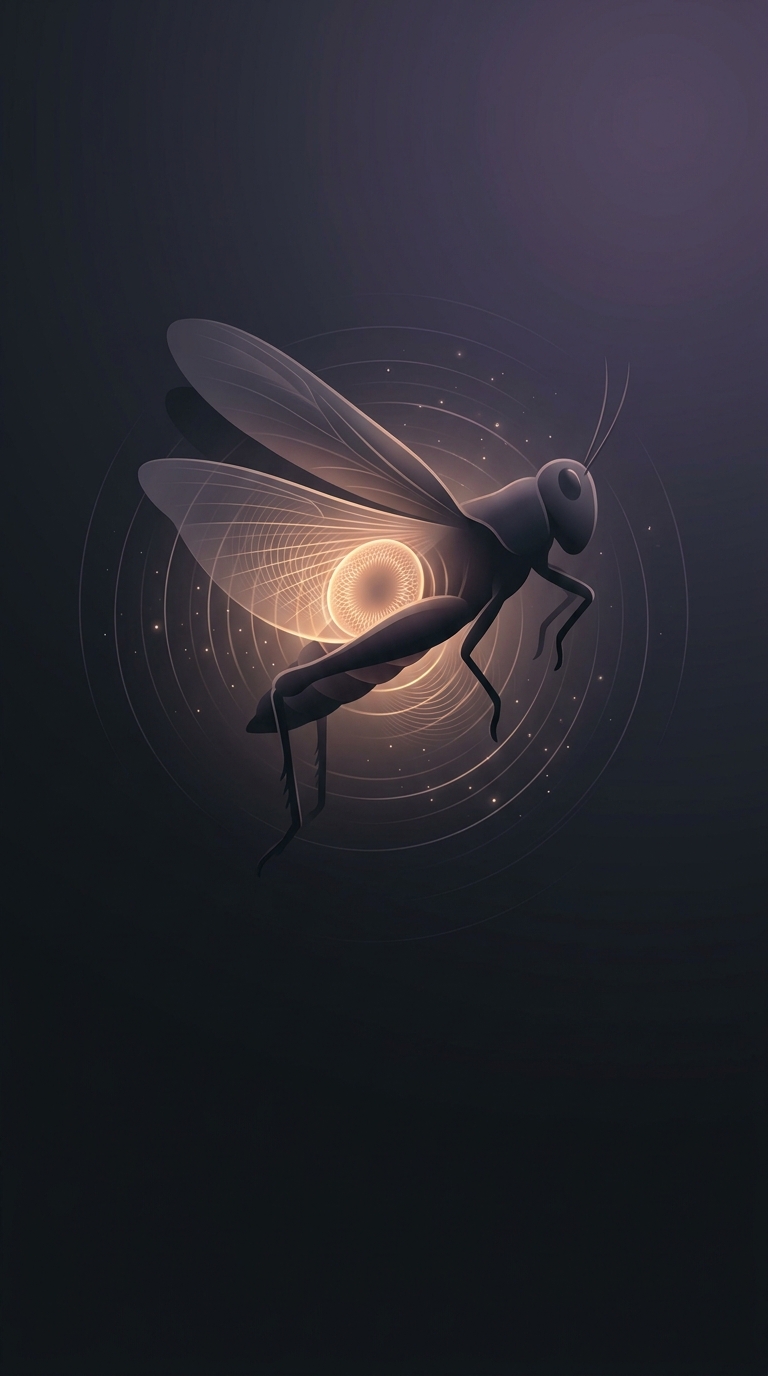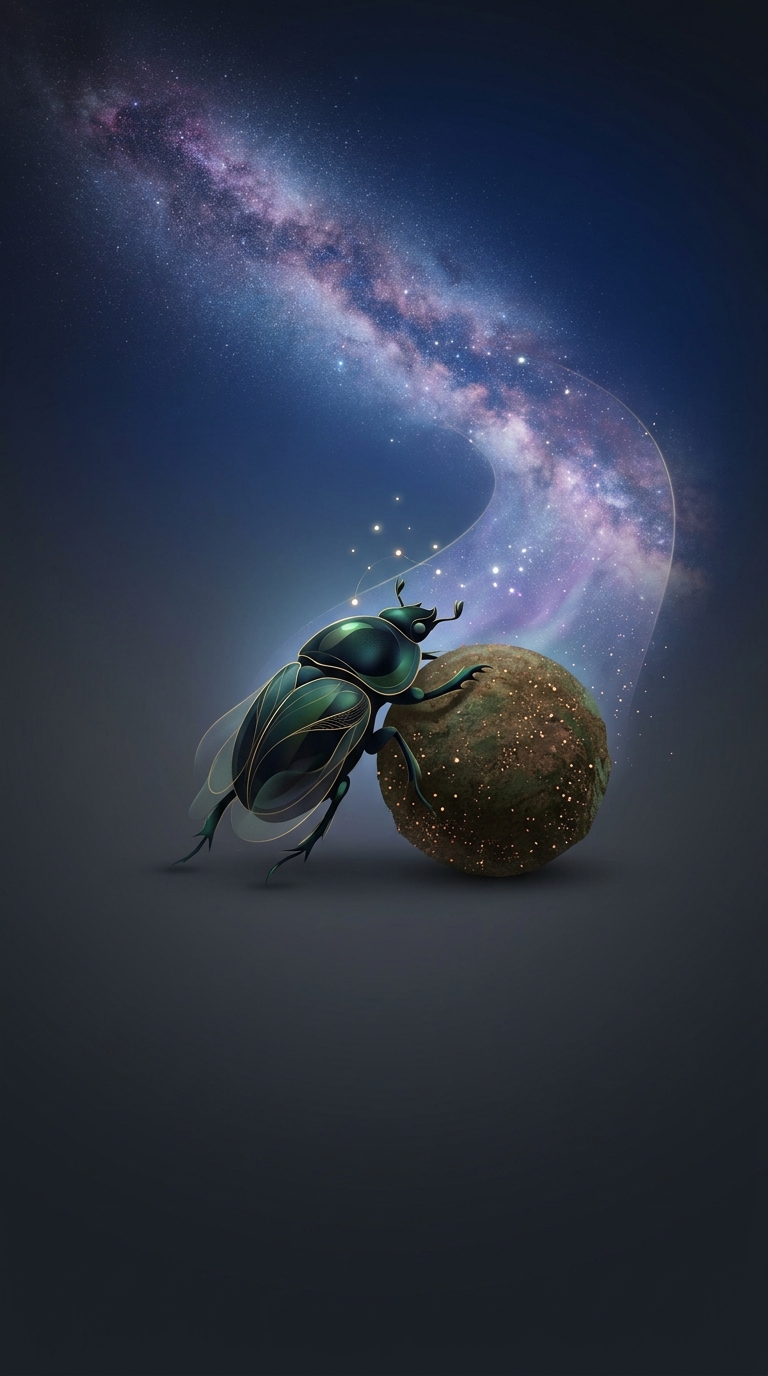
A beetle takes a celestial snapshot before rolling
A dung ball is valuable food, and nearby beetles may try to steal it. The roller’s advantage is speed: once it has shaped a ball, it heads away from the crowded pile rather than stopping to fight over it.
Before setting off, the beetle often climbs onto its ball and turns in place. This brief “dance” gives it a view of the sky and helps establish a heading. As it rolls, the beetle can compare the sky’s pattern with that remembered view, correcting its course when it veers. It is not steering toward a particular destination; it is holding a direction long enough to get clear.
Reading a pattern, not a star map
On dark nights, the Milky Way appears as a broad, faint band across the sky. Its overall orientation can serve as a compass cue even when individual stars are too dim or too numerous to use one by one. That makes the beetle’s task less like locating a named star and more like keeping a recognizable line in view.
Experiments in a planetarium let researchers control that view. With a simulated starry sky, beetles could maintain their headings; when the artificial stars were switched off, their paths became less consistent. The change showed that the sky was doing practical navigational work, not merely providing a backdrop.
A compass for getting away
The trick matters because a rolling beetle cannot easily watch its rivals and keep pushing at the same time. A reliable heading reduces the chance of circling back toward the dung pile, where another beetle could take the ball. Under a dim sky, the Milky Way becomes part of the beetle’s escape route: a distant visual reference helping it carry dinner away in a straight line.