Why stillness can make muscles feel tight
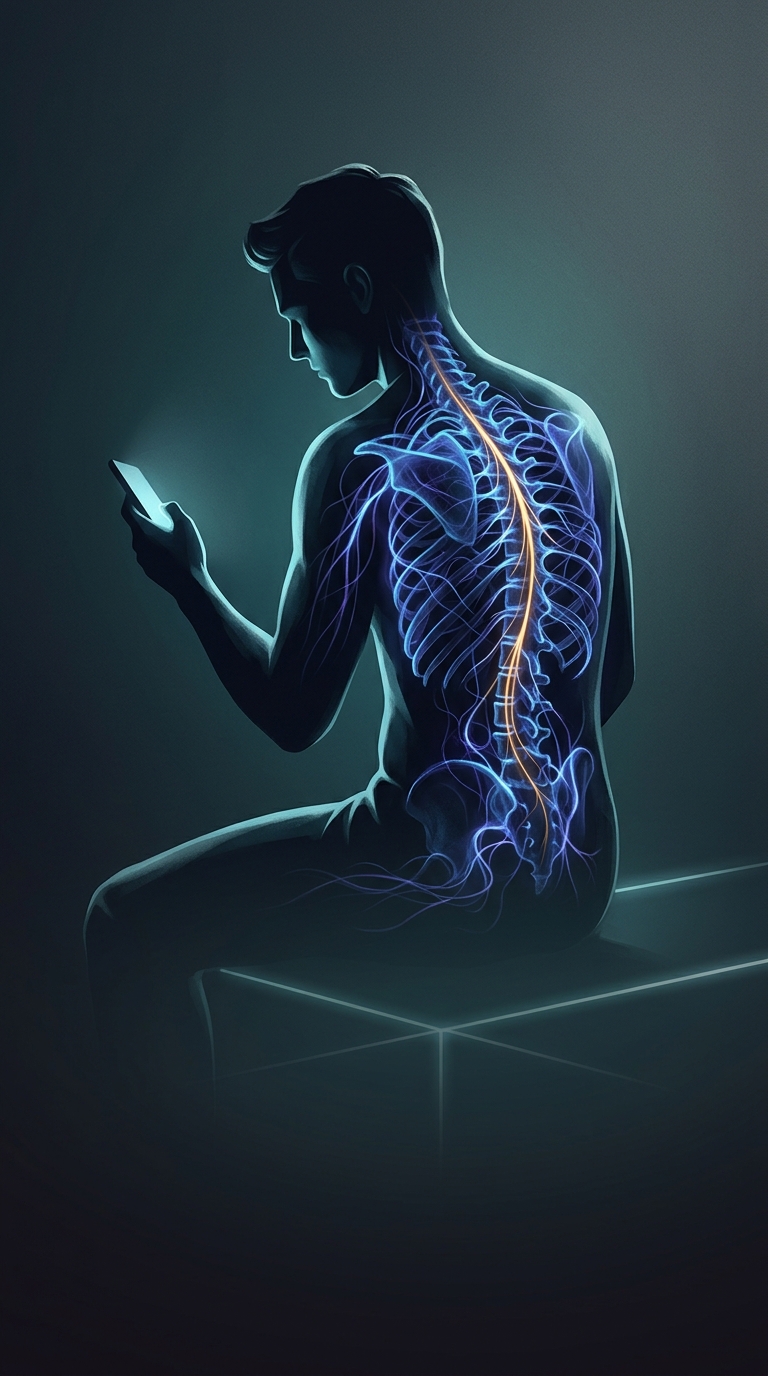
Your body does not hold a seated posture effortlessly. Even when you appear motionless, muscles in your neck, shoulders, and back make small, ongoing contractions to keep your head and trunk upright. If you stay in one position, much of that work falls repeatedly on the same tissues, while nearby joints move through only a narrow range.
What changes when you move
Muscle contractions use energy and briefly compress small blood vessels; relaxing between contractions helps restore circulation and lets the tissue recover. A fixed posture gives working muscles fewer chances to alternate between effort and rest. Meanwhile, joints and surrounding tissues that are not moving may feel less comfortable when you finally shift position. The result can be a dull ache or a sense of stiffness—not necessarily a sign that anything has been damaged.
The sensation often eases when you stand, change how you are sitting, or gently move your neck and shoulders. Those small changes distribute the work across different muscles and take joints out of the same restricted position. The issue is often not sitting itself, but how long the body is asked to hold one shape without a break.
Why a small reset can help
There is no single posture that keeps every muscle relaxed indefinitely. A more useful approach is to vary positions: lean back briefly, adjust your screen or chair, or get up and walk for a moment. These are not corrections for a “bad” posture so much as chances for muscles and joints to change tasks.
That is why a short movement break can make a familiar desk ache fade: it gives the areas that have been holding steady a chance to stop carrying the same load.