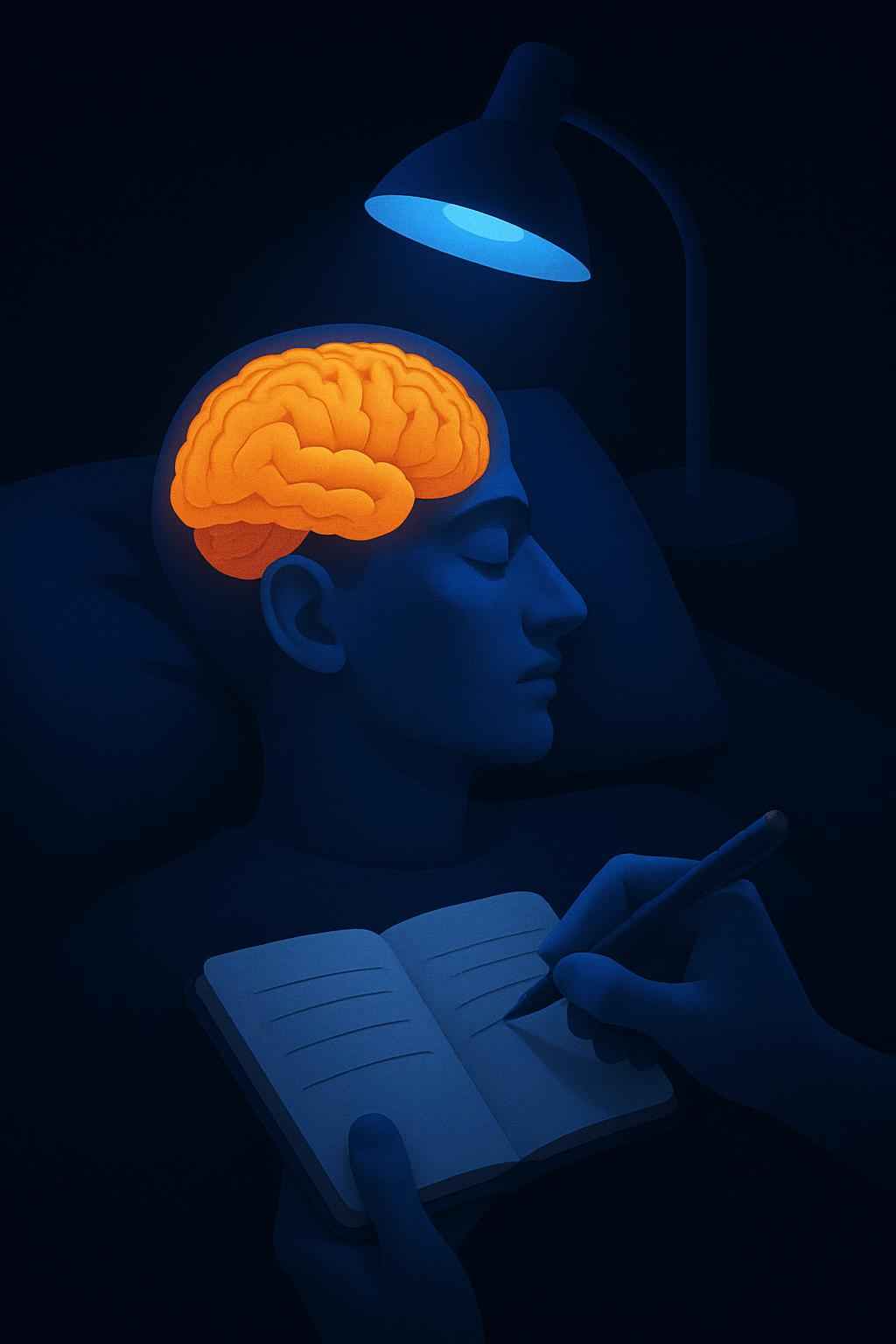
How the brain keeps watch in an unfamiliar room
Sleep is not a single, all-or-nothing state. The brain moves through stages, and during deep sleep it becomes less responsive to the outside world. On a first night somewhere new, that deepening can be uneven: one side of the brain may remain in a lighter, more watchful state than the other. This is the first-night effect.
That imbalance gives the brain a little more opportunity to register a sound that might otherwise be ignored. A door closing, a hallway voice, or an unfamiliar hum can trigger a brief arousal—a shift toward wakefulness—even if you do not fully wake or remember it in the morning. The brain is not deliberately listening for danger; its response is a built-in form of caution when the surroundings are not yet familiar.
Familiarity helps the room fade into the background
At home, repeated nights teach the brain which sounds are ordinary. In a new room, it has less experience separating routine noise from something that might matter. Keeping sleep lighter in part can make that sorting easier, though it may also make rest feel more fragile.
The effect is not the same for everyone, and it does not mean that half the brain stays fully awake all night. As the setting becomes familiar, the brain can treat more of its sounds as predictable background. That is why a room that seemed unusually noisy on the first night may feel quieter after a few nights—even when the sounds themselves have not changed.