Redshift showed motion, not the universe’s scale
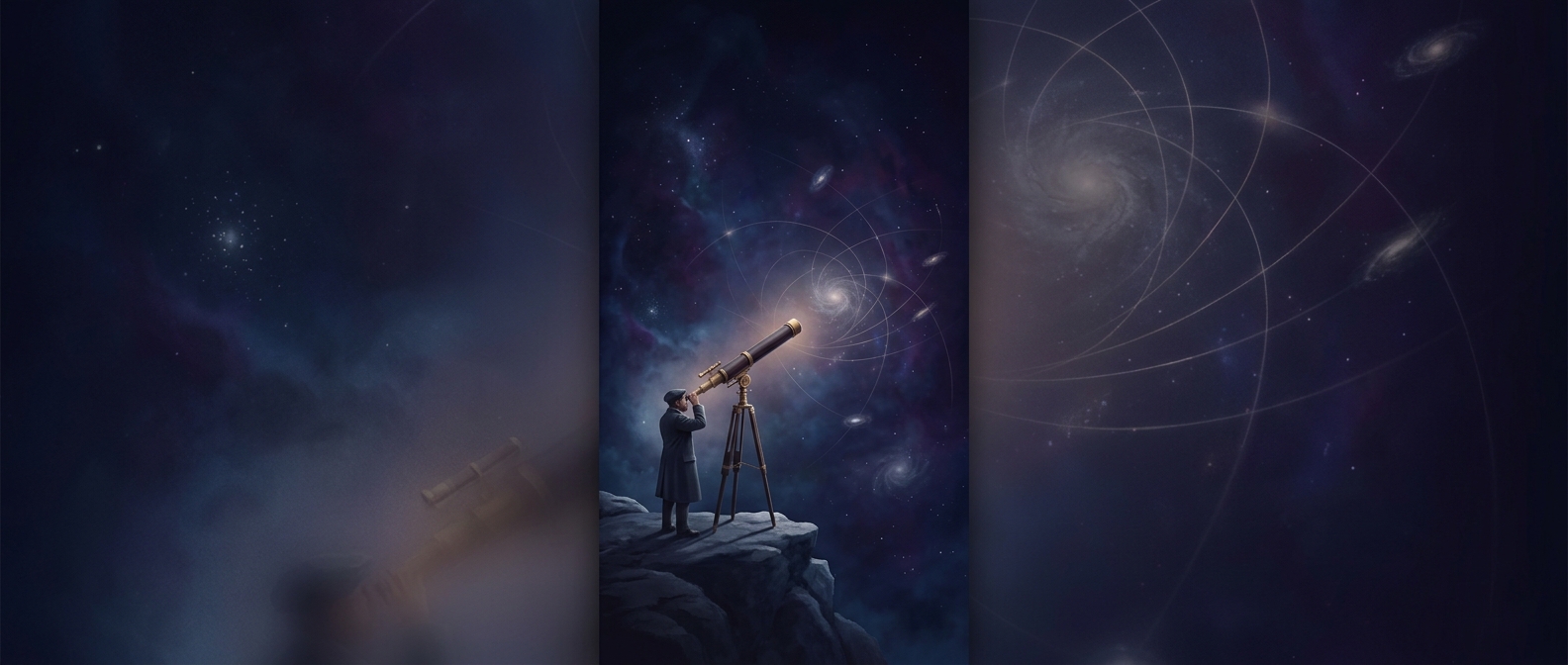
In the early 20th century, many astronomers still debated whether the faint spiral “nebulae” were nearby objects inside the Milky Way or distant galaxies of their own. Vesto Slipher measured the spectra of these nebulae: by comparing familiar patterns of light with their observed positions, he found that many were shifted toward the red end of the spectrum. That shift indicated that the objects were moving away from us along our line of sight.
But a redshift by itself does not say how far away an object is. Nor does it reveal the overall pattern of cosmic expansion. To see that pattern, astronomers needed to pair motion with distance.
Distance completed the picture
Edwin Hubble helped supply that second clue. By identifying particular variable stars in some galaxies, he could estimate their distances; the stars’ changing brightness provided a way to judge how far away they were. When those distances were compared with the galaxy speeds Slipher and others had measured, a broad relationship emerged: the more distant galaxies tended to recede faster.
That relationship was evidence that space itself is expanding, rather than merely showing galaxies flying outward from one special center. As space stretches, light traveling through it is stretched too, shifting toward red. The familiar moving-source analogy helps explain the observed shift, but cosmic expansion is the deeper explanation for the large-scale pattern.
Why the discovery has more than one name
The evidence accumulated through several people’s work. Slipher provided crucial velocity measurements; Hubble connected distance estimates with those measurements and published the well-known observational relationship in 1929. Georges Lemaître had also developed an expanding-universe interpretation and a related distance–speed relationship before Hubble’s publication. The shorthand credit to Hubble can obscure this chain of contributions.
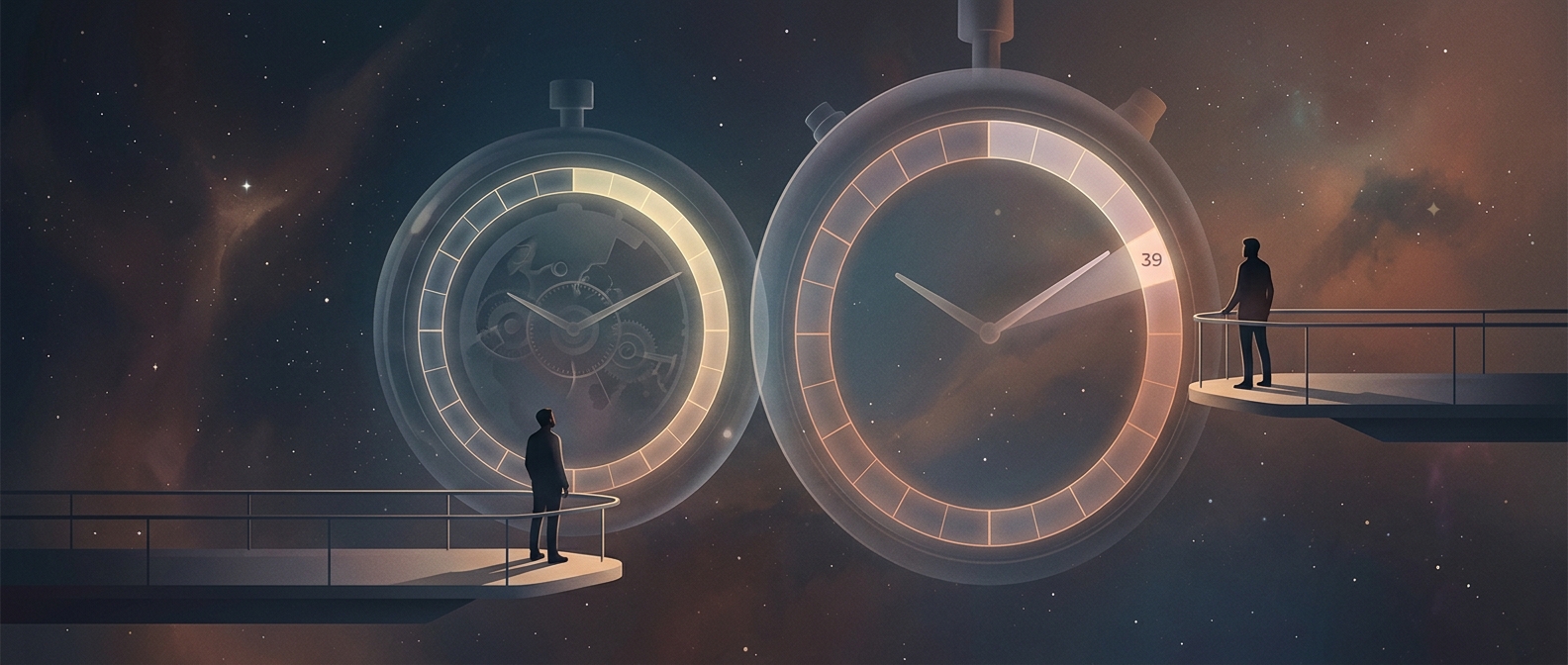
The key insight required both halves of the map: redshift showed how galaxies were moving, while distance revealed how that motion varied across the universe.