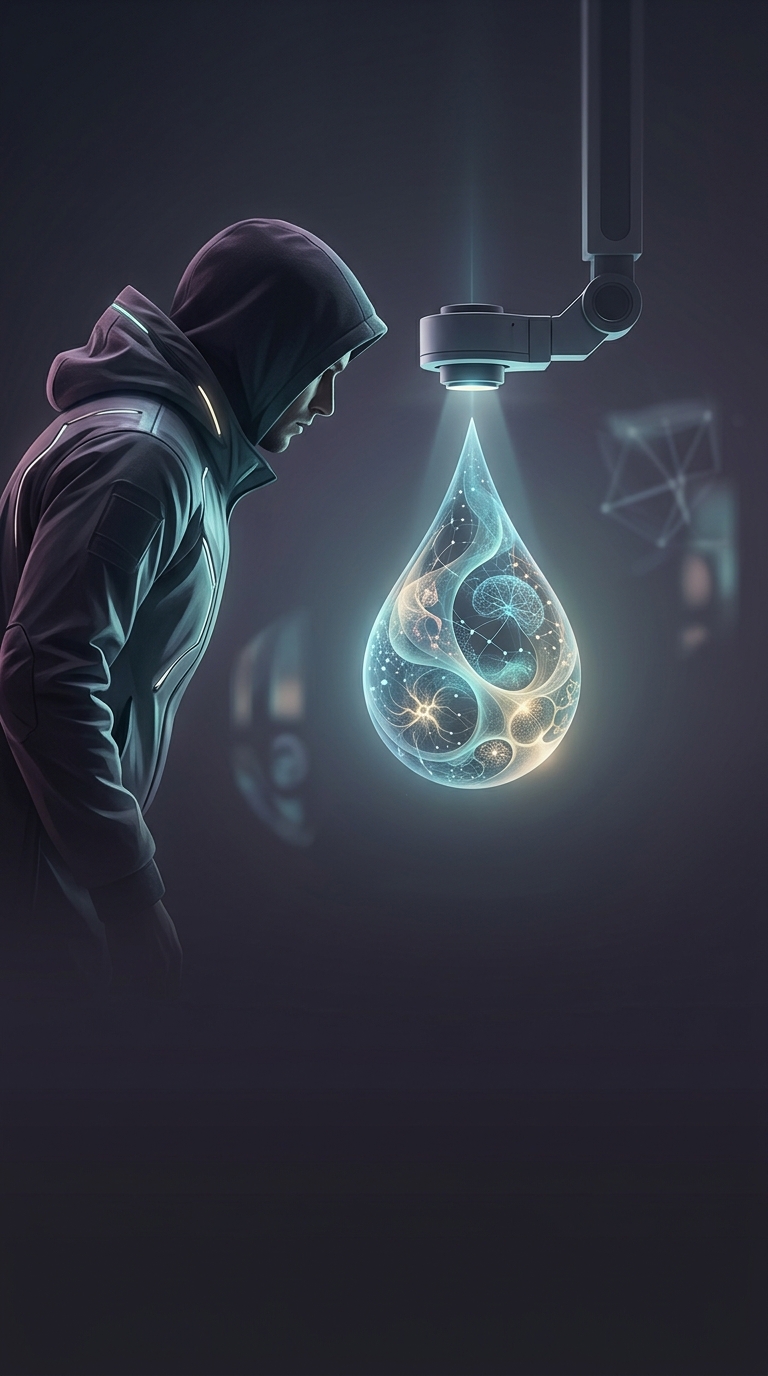
A Tear Can Leave a Tiny Landscape
Under a microscope, a tear is not just clear water. It carries dissolved salts, proteins, oils, and other substances from the eye. When a droplet dries on a surface, water evaporates and those ingredients gather into visible patterns: branching lines, crystals, and irregular patches.
The striking part is that the pattern is made partly by what the tear contains and partly by how it dries. A droplet’s size, the surface beneath it, temperature, and evaporation rate can all change the final image. The microscope is showing a drying residue—not a fixed design that was floating intact in the eye.
Why Tears Are Not All the Same
Tears serve different jobs. Basal tears continually lubricate the eye; reflex tears wash away irritants; emotional tears accompany strong feelings. Their ingredients can vary, and each type is produced under different conditions. That variation helps explain why dried samples may look different from one another.
But a pattern alone cannot reliably reveal what someone was feeling. The chemistry overlaps, and the drying process itself can reshape the result. A tear’s microscopic “artwork” is a record of both its mixture and its surroundings, not an emotional fingerprint.
That is what makes the view so surprising: an ordinary droplet can dry into a miniature map of branching crystals, even though the eye never contained that finished pattern.