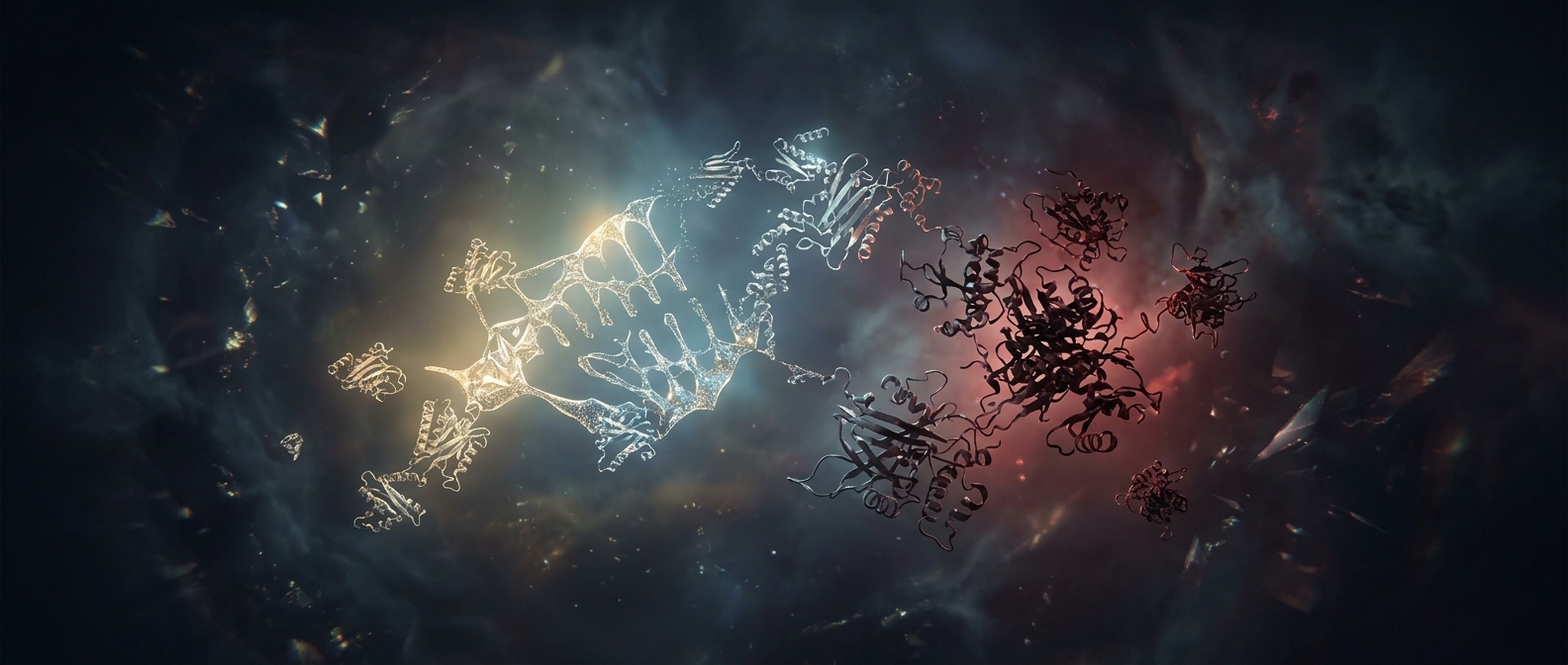
How a protein finds its working shape
A protein begins as a chain of amino acids, and the chemical properties of that chain guide it into a three-dimensional shape. The shape matters because it determines which molecules the protein can bind, what reactions it can help carry out, and where it can work inside a cell. A small change in the chain—or a disruption while it is folding—can alter that shape enough to interfere with the job.
When cells cannot fix the fold
Cells do not simply leave every faulty protein in place. Helper proteins called chaperones can give a new or stressed protein another chance to fold correctly. If that fails, cellular cleanup systems can break it down and recycle its components.
Those safeguards have limits. A misshapen protein may escape cleanup, stop doing its normal job, or expose surfaces that usually stay tucked inside. Those exposed surfaces can make proteins stick together, forming clumps that are difficult for the cell to handle. The clumps, and sometimes the loss of the protein’s normal function, can disrupt cellular processes.
A small error can become a larger problem
The risk is not just that one molecule becomes a useless tool. If a faulty protein encourages other proteins to misfold or join a growing clump, the disturbance can spread within a cell. This is one way protein-folding failures contribute to disease, although the details differ among diseases and proteins.
That is why the same cell needs both careful folding and effective cleanup: a tiny molecular change can matter when it alters not only what a protein does, but also how it behaves around its neighbors.