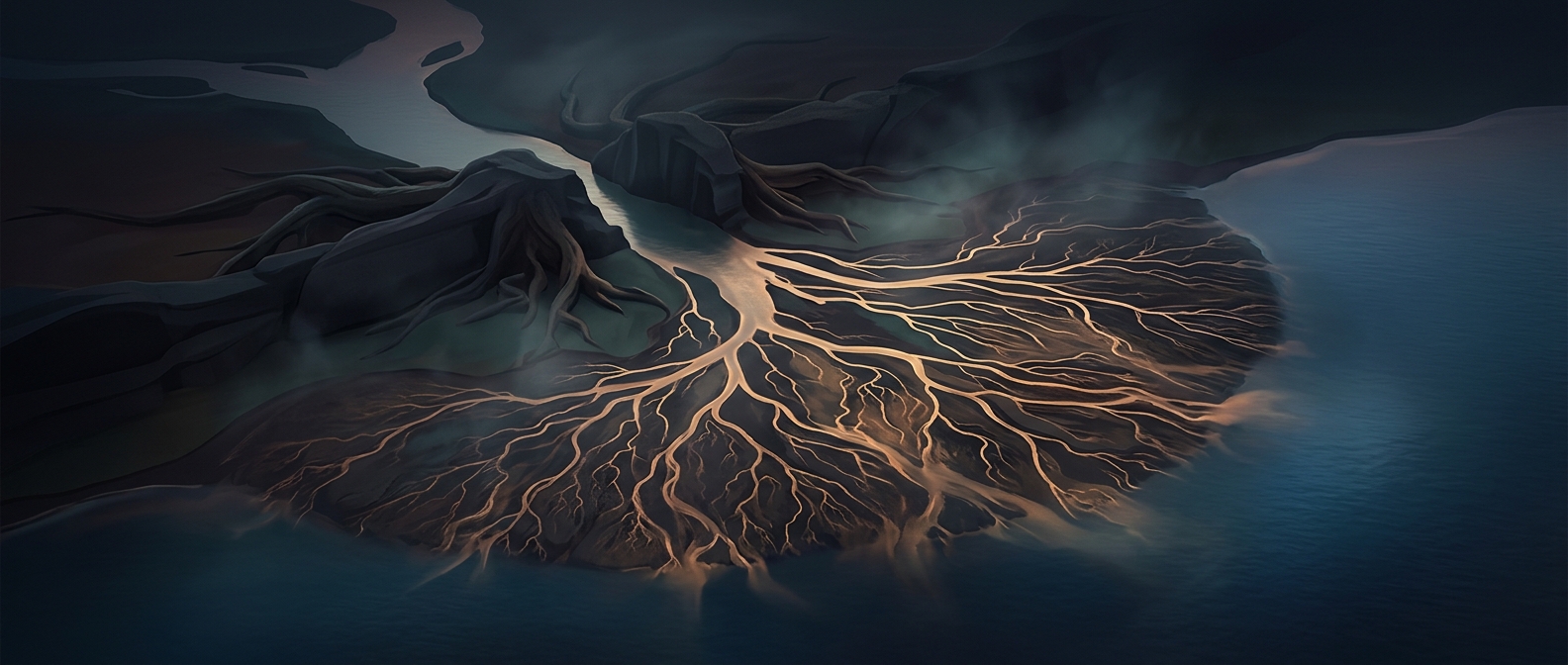
How a river mouth splits into channels
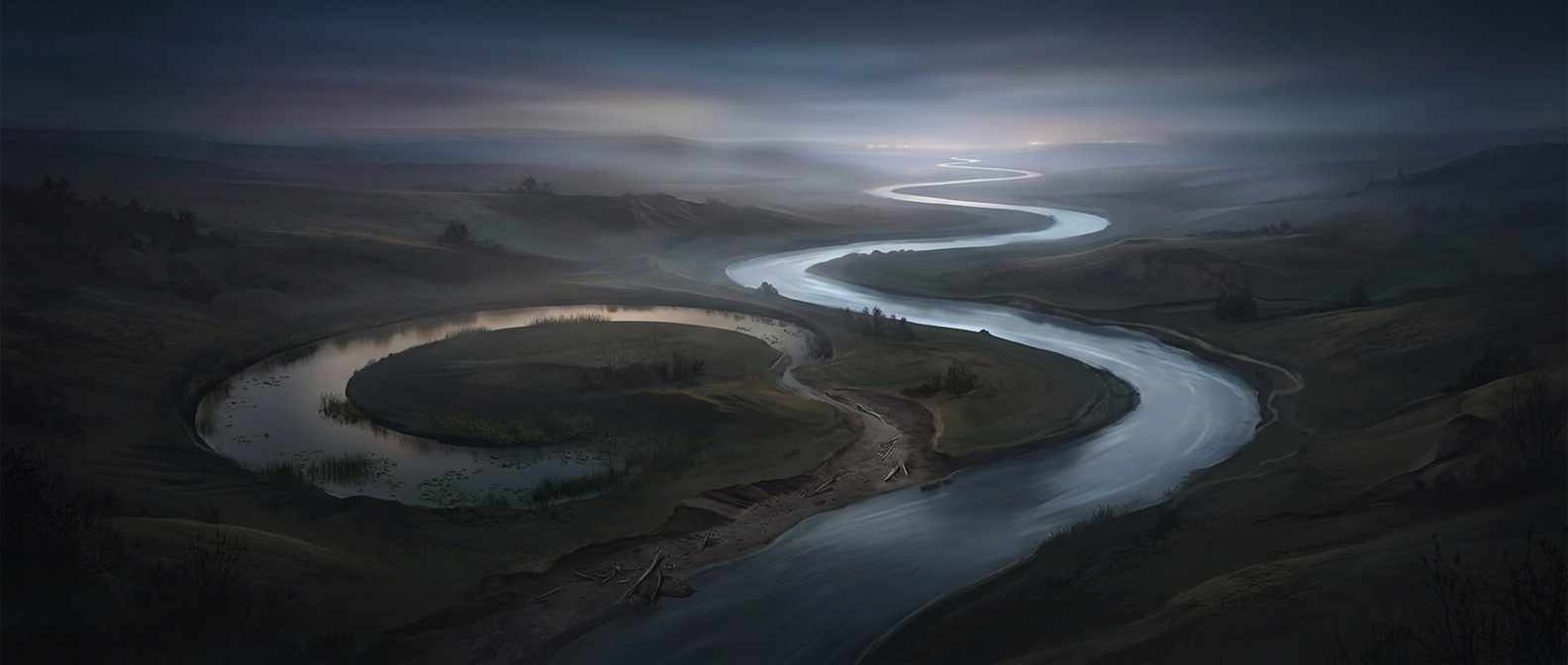
As river water enters a lake or sea, it spreads out and loses speed. Sand and silt settle, forming a shallow underwater mound called a mouth bar. The bar can obstruct the channel’s straight path, pushing the current around either side. Each new branch carries water—and more sediment—farther into the calmer basin.
The deposits do not all land in the same place. Heavier sand tends to settle close to the river mouth, while finer silt can travel farther before dropping out. Over time, this uneven buildup creates shallow ridges and low areas that steer the flow.
Why the river changes course
Sediment can also accumulate on the channel bed, gradually raising it. If the river becomes easier to flow through another route, some of the water may divert into that lower path. This shift is called avulsion: a river’s course changes abruptly rather than simply extending its existing channel.
A new branch may grow while an older one carries less water and gradually fills with sediment. The channels are therefore not a permanent set of pipes. They are a changing network shaped by the river’s repeated attempts to move water through a landscape it is continually building.
A pattern that records change
The branching form preserves traces of those changes: sediment layers mark where channels once flowed, and abandoned branches show where the river moved on. For people living on deltas, this shifting network matters too. A channel that once carried the main flow can become shallow, while a newer route takes more water—and may bring flooding or erosion to different parts of the delta.