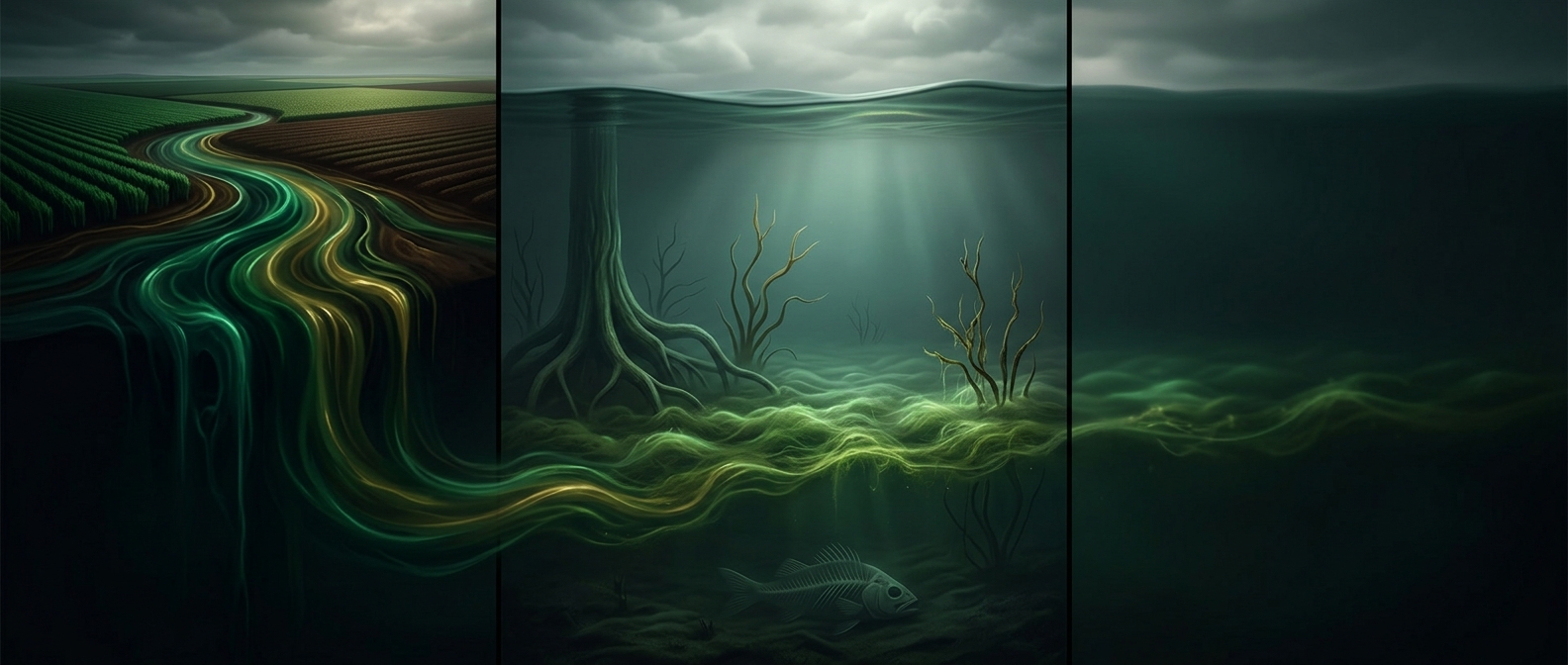
How runoff sets off an oxygen crash
Fertilizer runoff can carry nitrogen and phosphorus from fields into lakes. These nutrients act like extra food for algae, allowing a bloom to grow rapidly. The danger often comes later, when that growth collapses: the algae die and sink, delivering a large load of organic matter to the water and lake bottom.
The cleanup consumes oxygen
Bacteria and other microbes break down the dead algae. This decomposition is a normal part of a lake’s ecosystem, but a large bloom can leave far more material to decompose than usual. As microbes do that work, they use dissolved oxygen—the oxygen mixed into the water that fish and other aquatic animals need to breathe.
Oxygen enters lakes from the air and from photosynthesis by aquatic plants and algae. But replenishment may not keep pace with decomposition. In calm, stratified water, warmer surface layers can sit above cooler deep water, limiting how much oxygen reaches the bottom. The result can be hypoxia, or dangerously low oxygen, in parts of the lake.
Why the aftermath can be worse than the bloom
Fish may flee an oxygen-poor area if they can; animals that cannot escape, including many bottom-dwelling organisms, are more vulnerable. If oxygen falls far enough, a die-off can follow. The lake may look less dramatic once the algae disappear, even as decomposition continues below the surface.
That delay is what makes nutrient pollution easy to underestimate: the visible bloom is not the whole event. The algae’s decay can keep drawing oxygen from the water after the green surface has cleared.