Messages that crossed oceans as electrical pulses
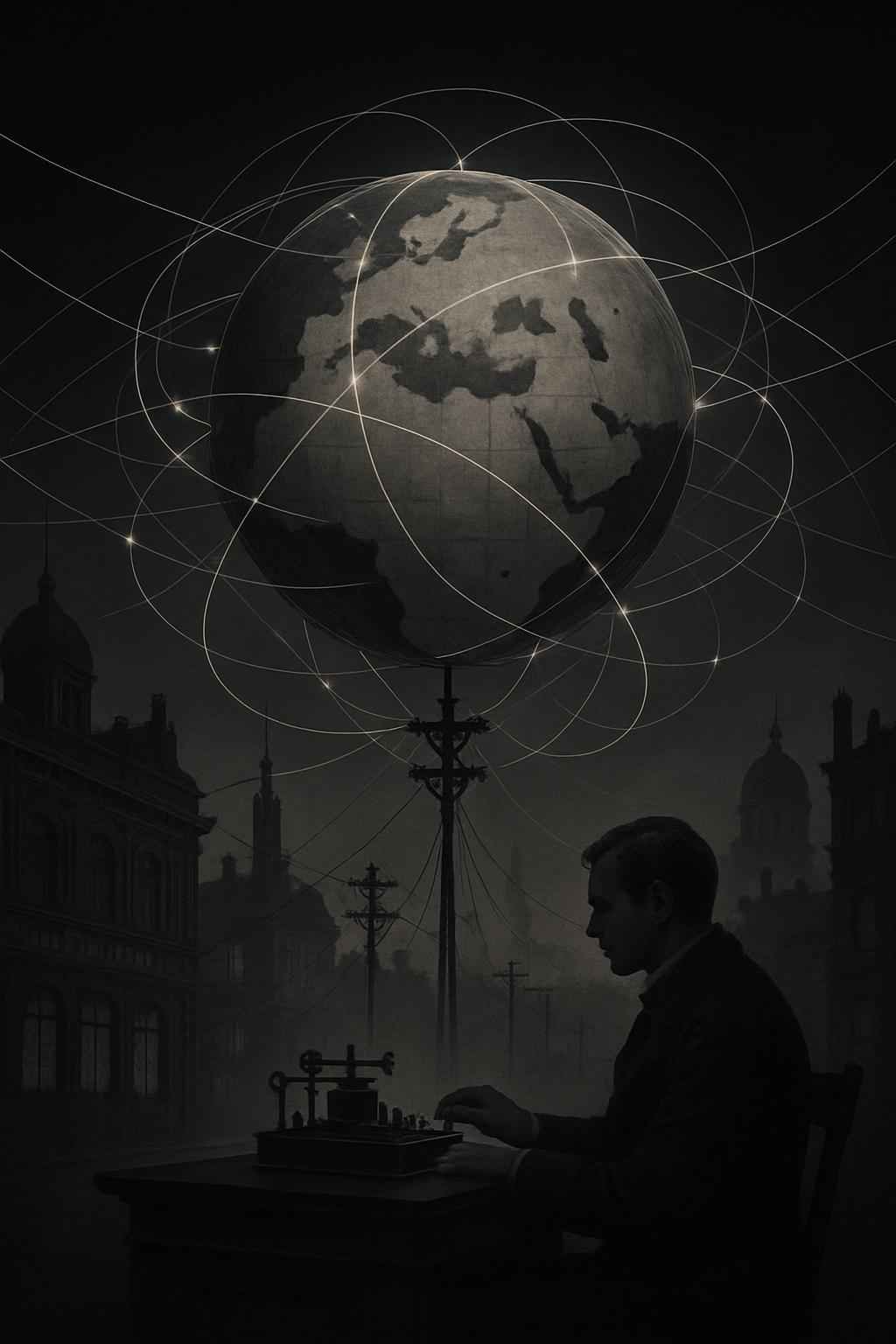
The telegraph did not send letters through a cable. An operator tapped a message into a code of short and long electrical signals, which traveled along a wire and were turned back into words at the far end. Across a working submarine cable, the signal could cover an ocean in minutes—a striking change from news carried by ship, which might take weeks.
Making that possible required more than laying wire on the seabed. The copper conductor had to be wrapped in insulation that could keep seawater out, and stations at either end needed operators and equipment to send and receive the signals. The cables linking Europe with India and North America joined distant telegraph lines into routes that could carry messages between cities.
A network with a fragile middle
A cable was not an invisible, indestructible connection. Its insulation could fail, or the conductor could break. When that happened, the route went quiet until repair crews located the damaged section, hauled it up from the seabed, spliced it, and lowered it again. On the ocean floor, a fault that looked like a simple line on a map could mean a demanding job for a repair ship.
That vulnerability made the network very different from the modern internet, which can often send data along alternate paths when one connection fails. A telegraph route might depend on a small number of physical cables and landing points. The speed of the message depended on a line that could be severed.
Distance became a business and political problem
For merchants, governments, and newspapers, faster messages changed what could be coordinated across continents. Prices, instructions, and urgent news no longer had to wait for the next ship. But access to that speed depended on cable capacity, operating stations, and the organizations that controlled the routes.
The telegraph’s global reach was therefore both a communications breakthrough and a physical system with bottlenecks. A message could race under an ocean; if the cable failed, the ocean was suddenly back between sender and receiver.