How “alpha” became the wrong picture of a wolf pack
The image of wolves constantly fighting for the top spot grew out of observations of captive groups, where unrelated animals were kept together in limited space. In that setting, wolves had to manage repeated competition with adults they had not grown up with. A visible dominance order could emerge—and it was tempting to treat that order as the natural blueprint for every pack.
David Mech helped spread that picture through his influential 1970 book The Wolf. But years of observing wild wolves led him to argue that “alpha” was a poor description of how a typical wild pack is organized.
In the wild, the pack is usually a family
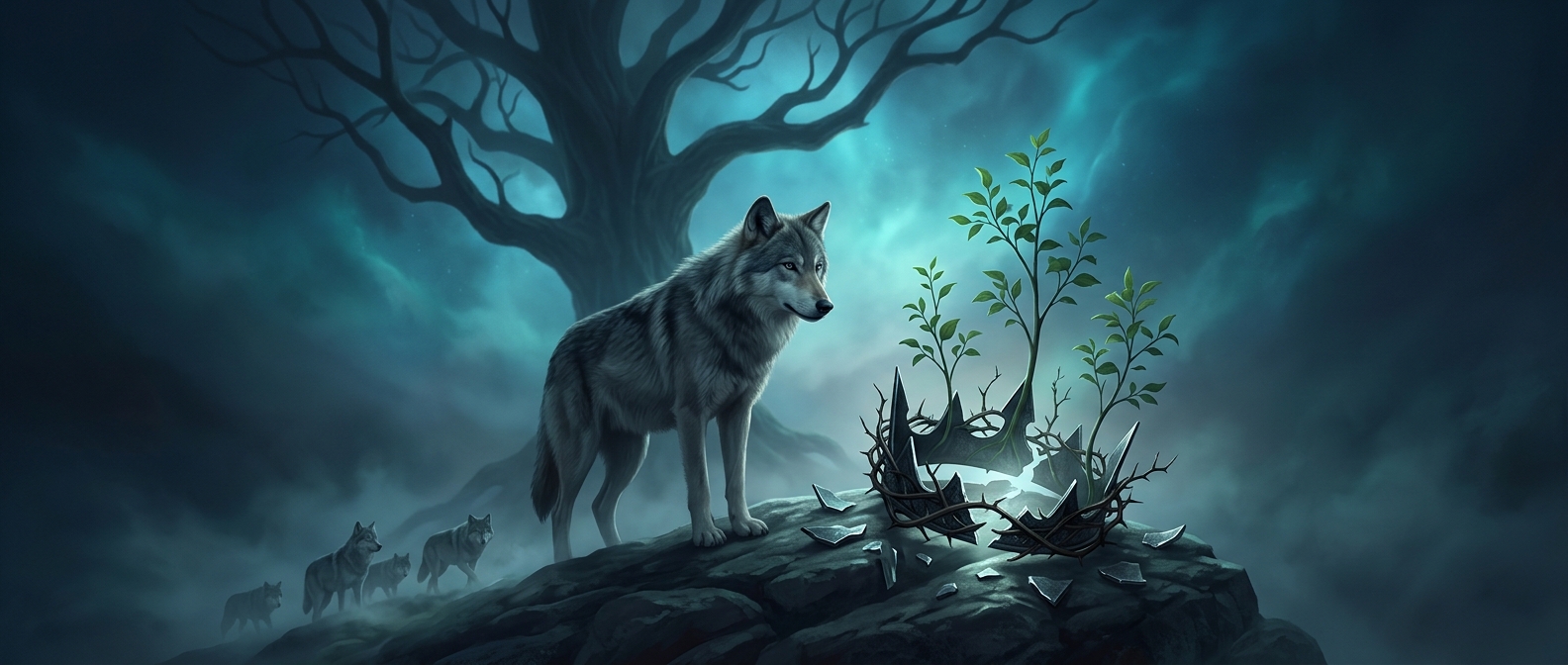
A wild pack often consists of two parents and their offspring from several years. The parents lead largely because they are the parents: they guide the group’s movement and activities, while the younger wolves learn and grow. This is different from a permanent contest in which unrelated adults seize rank through repeated clashes.
As young wolves mature, many leave to find mates and establish packs of their own. That dispersal helps explain how a pack can change without requiring a violent takeover. Leadership follows family life and reproduction more than a ladder that every wolf is trying to climb.
The word still obscures more than it explains
Wolves do compete, and dominance relationships can matter, especially in groups of unrelated animals. Mech’s correction was not that wolf behavior has no hierarchy; it was that findings from captive groups should not be mistaken for the usual structure of a wild family pack. In that context, “breeding male” and “breeding female” describe the leaders more plainly than “alpha.”
The distinction changes what a familiar scene means: a parent at the front of a traveling pack is not necessarily winning a coup. Often, the animal in front is simply leading its family.