How a steady wind makes a cylinder sway
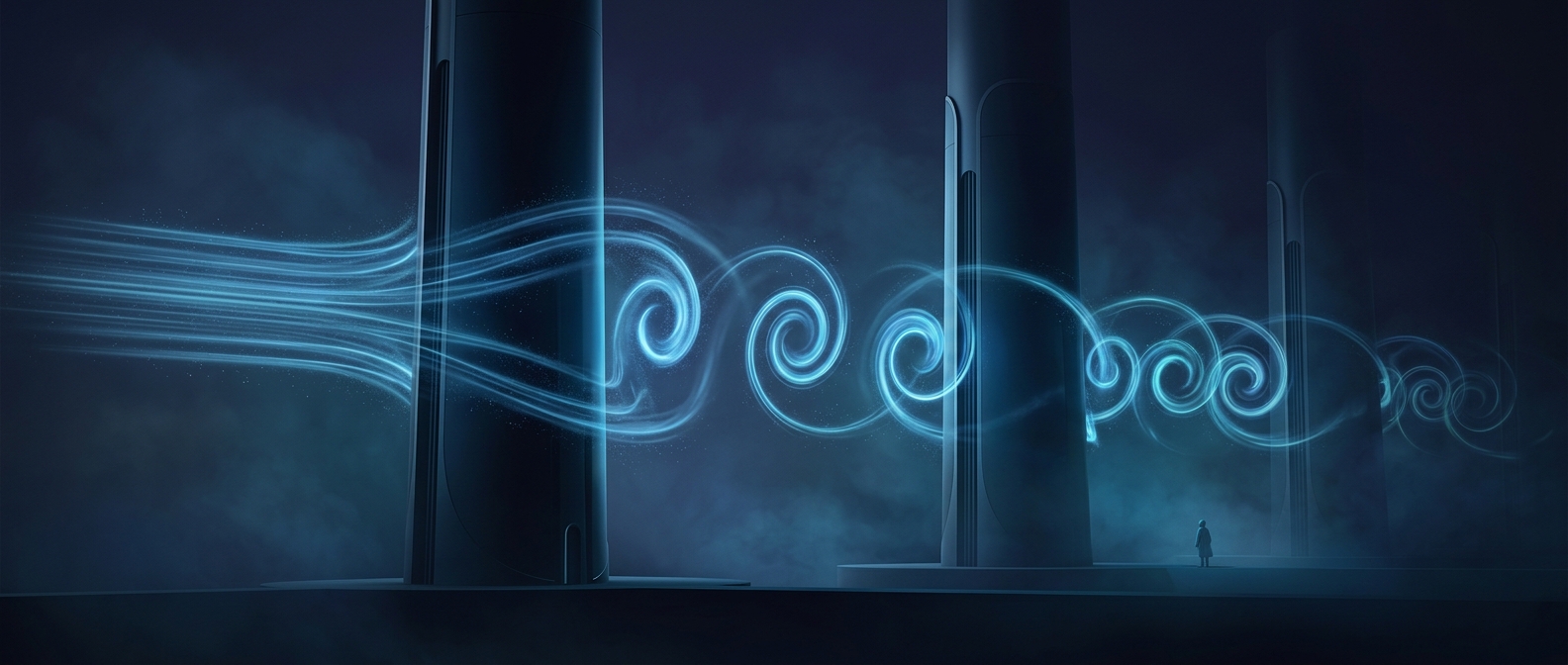
As air flows around a chimney, it separates from the surface and leaves a wake of slower, swirling air. The swirls tend to peel away from alternating sides, one after the other. Each departure changes the pressure on the chimney, giving it a small sideways push that switches direction.
Those repeating pushes are called vortex shedding. They come faster as the wind speeds up, and their rate also depends on the chimney’s width. A single push is slight, but a regular sequence can make the structure vibrate.
When the rhythm matches the structure
A tall chimney is not perfectly rigid: it can flex, then spring back. Like a plucked ruler, it has a preferred rate of vibration, called its natural frequency. If the wind’s repeating pushes approach that rate, the chimney can respond with larger movements. In a dangerous condition called resonance, each push arrives at a helpful moment in the chimney’s motion and adds energy to the sway.
The risk depends on more than wind strength. A gusty, turbulent flow may not maintain a steady rhythm, while a steadier crosswind can produce more regular shedding. Engineers therefore consider how the wind-generated rhythm may interact with the structure’s own flexibility.
Why chimneys wear spiral fins
The helical fins, or strakes, wrapped around many industrial chimneys disturb the airflow along the cylinder. Instead of letting a strong, organized swirl form across the whole structure at once, they make the wake less coherent and the pushes less synchronized. The fins do not eliminate wind forces; they reduce the regularity that can drive a damaging vibration.
That is why the raised spiral pattern is more than a surface detail: it changes the timing of the air’s wake, helping prevent a chimney from being nudged repeatedly in step with its own sway.