A telescope is also a time machine
Light moves extraordinarily fast, but it still takes time to cross space. A light-year is the distance light travels in one year, so when a star is 100 light-years away, its light has been on the way for about 100 years. The photons entering your eyes—or a telescope—carry information from when they left the star, not a live update of its present condition.
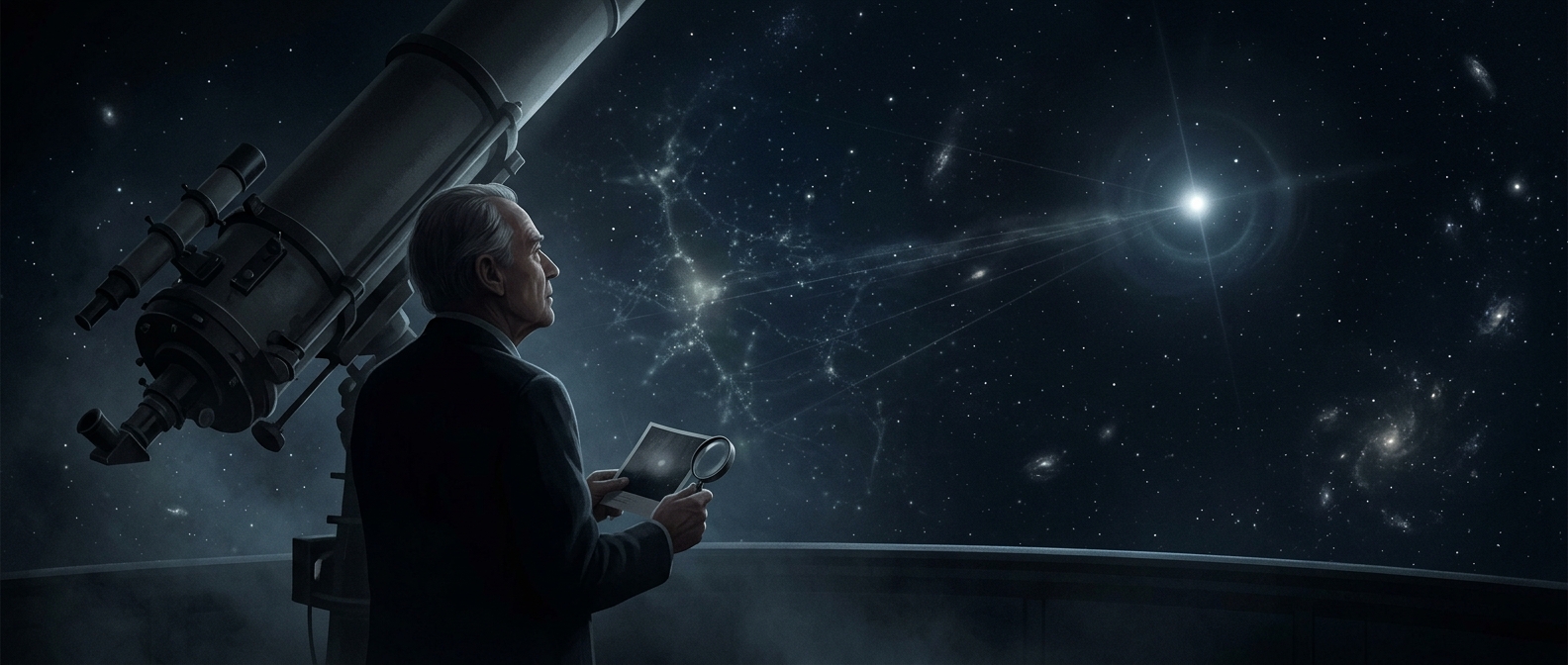
That delay gives the night sky depth in time as well as distance. Nearby stars appear as they were relatively recently; light from more remote stars may have traveled for thousands or millions of years. Looking farther away means seeing farther back, because the journey takes longer.
Why the delay matters
Astronomers cannot simply watch a distant object in real time. They study the light that arrives, using its brightness, color, and spectrum—the pattern of wavelengths it contains—to infer what the object was doing when that light began its trip. A star might have changed since then, but news of the change cannot reach us faster than light.
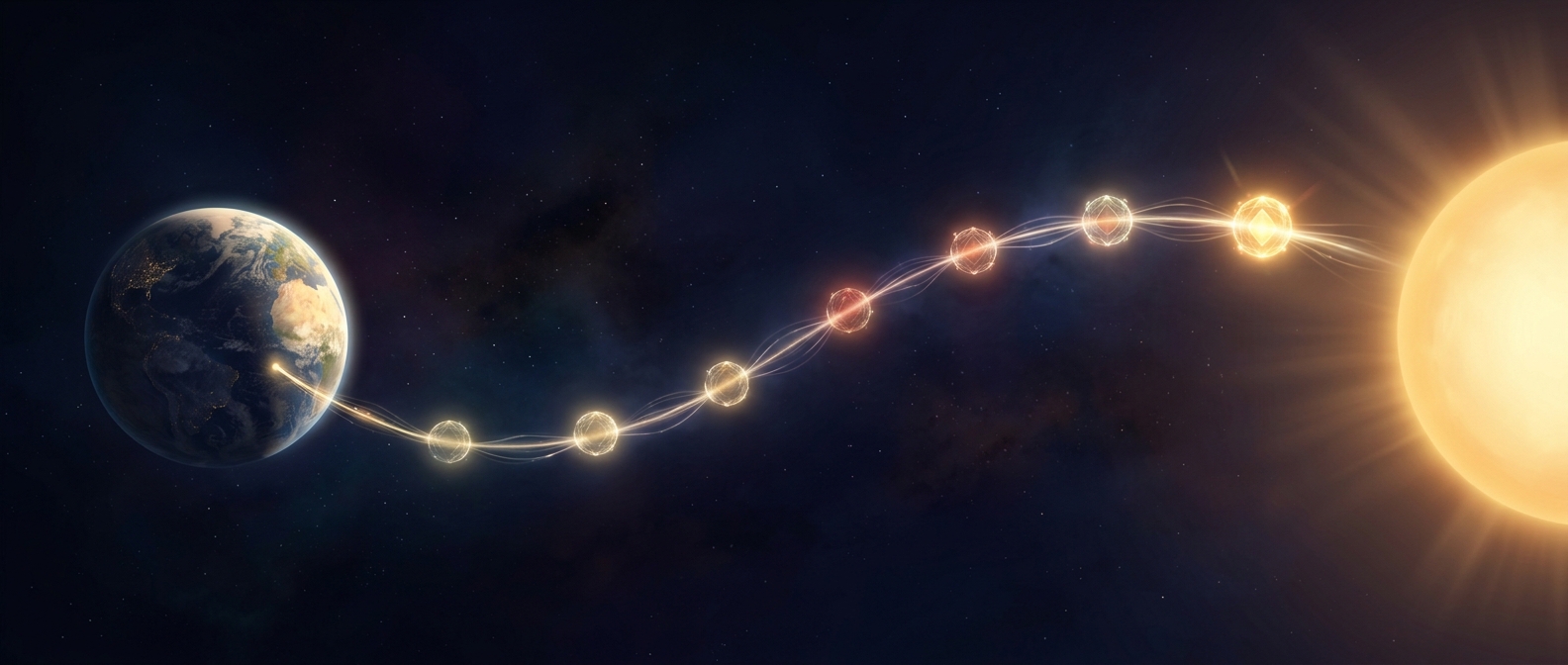
The same principle applies to the Sun: its light takes about eight minutes to reach Earth. If the Sun changed suddenly, we would continue to see its earlier light until the new light arrived. The sky is therefore not a single snapshot of the present. It is a collection of views from different moments, with each object's distance setting how old its light is when we see it.