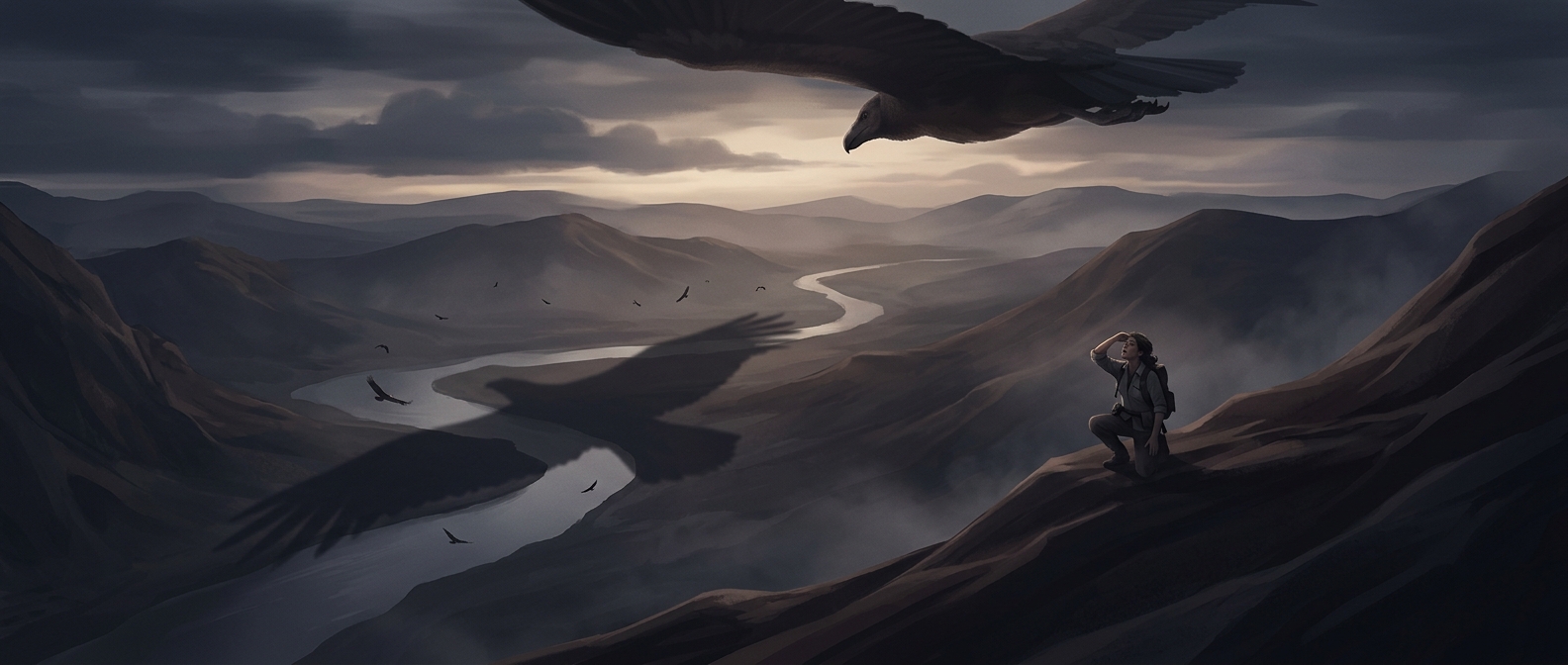
Why Argentavis needed rising air
Argentavis magnificens, an extinct bird from prehistoric South America, was so large that flight depended on using the air efficiently. Its broad wings could generate lift without constant flapping—but only once the bird was moving through the air fast enough.
That distinction matters. Soaring saves energy after takeoff; it does not make takeoff effortless. A heavy bird has to accelerate its body and wings before lift can support its weight. On the ground, that means a forceful launch and enough room to get airborne. A headwind could help by increasing airflow over the wings even before the bird built up as much speed over the ground.
Turning invisible air into lift
Once aloft, a bird can gain height by circling in a thermal: a column of warm air rising from the ground. It can also use air pushed upward by a hillside or other terrain. The rising current supplies some of the energy needed to stay up, while the bird steers and adjusts its wings to remain within it.
Argentavis’s enormous wings were suited to this kind of travel. But the air currents had to be strong and accessible enough for a bird of its size, and the bird still had to reach them. Its exact launch behavior is not known; a powerful takeoff, favorable wind, or a suitable slope may have helped.
The result was a striking tradeoff: a body built to cover distance with little flapping was also a body that could not simply spring into the sky from anywhere. For Argentavis, finding the right conditions to launch may have been as important as mastering the glide.