How sticky resin becomes an insect’s time capsule
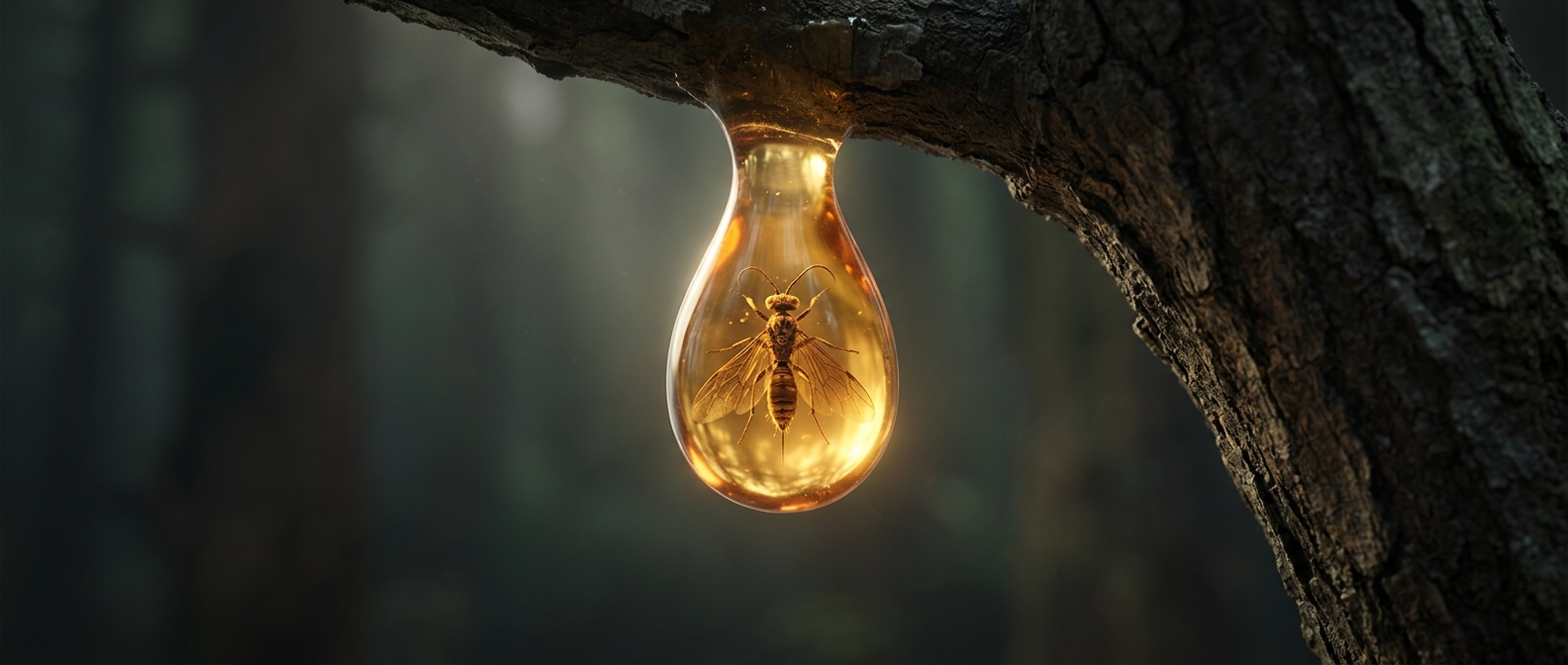
The material that traps insects is tree resin, not sap. Sap carries water and nutrients through a tree; resin is a thicker, sticky substance that can ooze from damaged bark. It can ensnare a small insect that lands on it or wanders across it. If more resin flows over the first layer, it may cover the insect before it can get free.
Fresh resin is not amber. Over long periods, buried resin changes as volatile ingredients escape and its molecules link into a more durable solid. Heat, pressure, and chemical change help transform it into amber, a process that can take millions of years. Burial also shields the resin from conditions that would otherwise break it down.
What amber preserves—and what it can’t
Because resin can coat an insect closely, it may preserve tiny surface features, such as the texture of a body or the pattern of its wings. The result gives researchers a view of organisms from the past that might otherwise have vanished without a trace.
But a clear, golden inclusion is not necessarily a complete, perfectly preserved animal. The body may decay before the resin fully seals it, or later changes may leave only an imprint or outline. Parts can also be obscured by bubbles, cracks, or cloudy material. Amber’s remarkable detail comes from the way resin can capture an organism quickly; its limits come from everything that happens before burial and during the long transformation afterward.