How a Prism Unpacks White Light
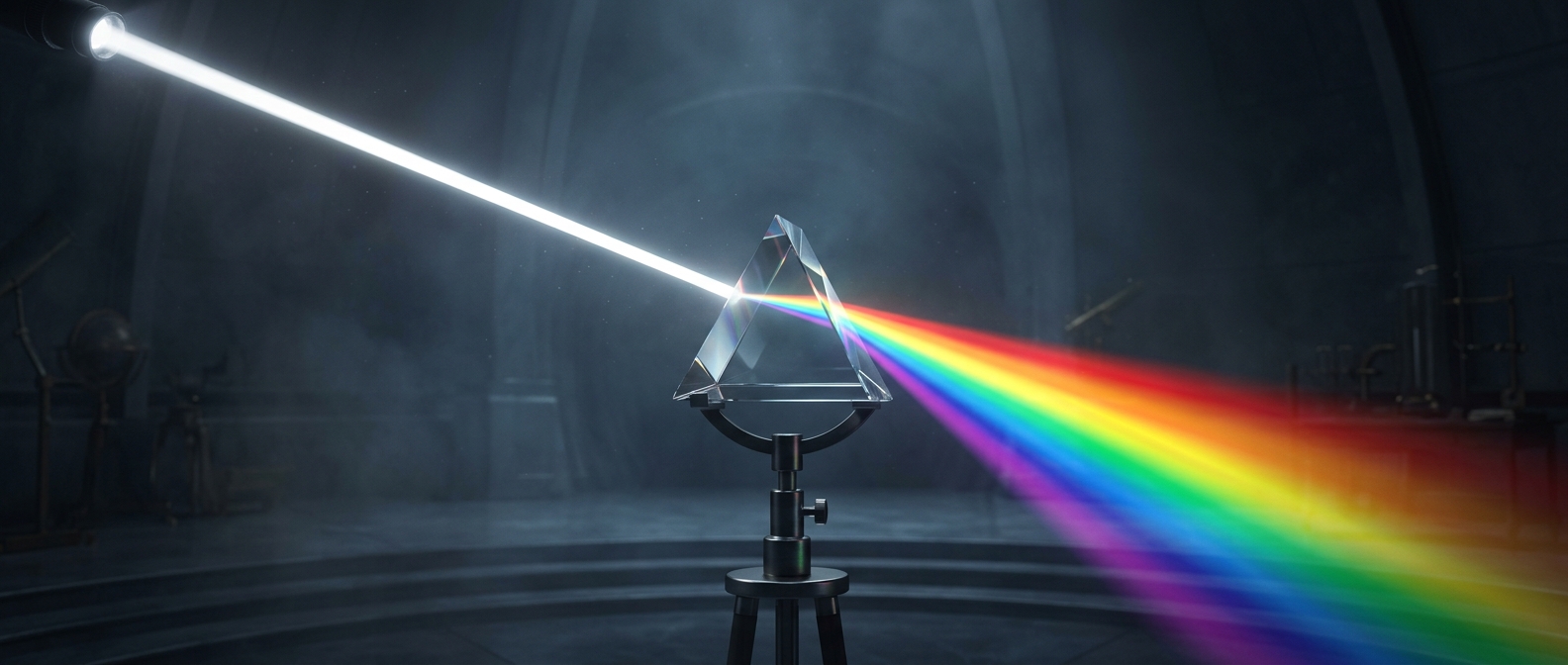
White light looks colorless because the visible wavelengths—the different wavelengths our eyes perceive as colors—arrive together and overlap. A prism reveals that mixture by sending each wavelength in a slightly different direction. It does not make colors; it separates light that was already carrying them.
Why the Colors Spread Apart
When light enters glass from air, it slows and changes direction. This change in direction is called refraction. The amount of slowing depends on the light’s wavelength: in ordinary glass, shorter visible wavelengths such as violet are refracted more than longer ones such as red.
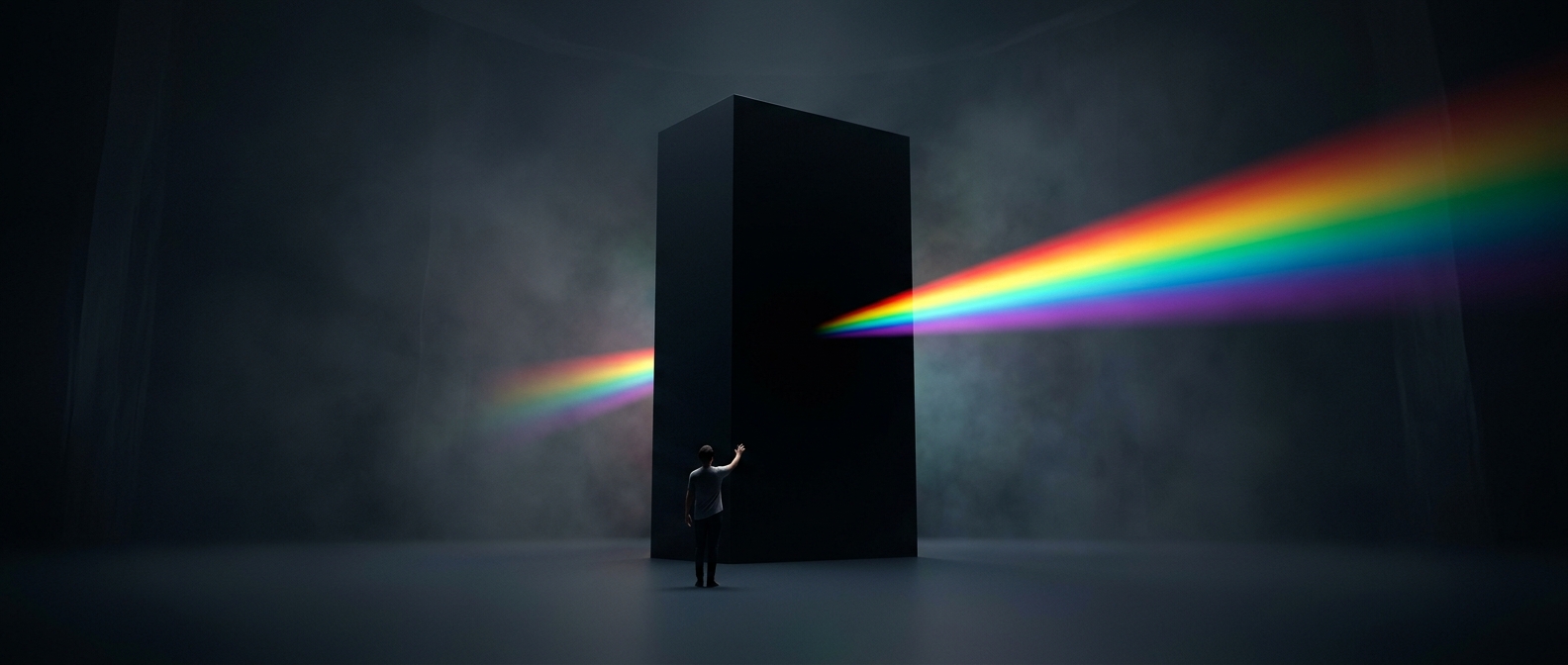
Because the prism’s two angled faces bend the light, those small differences add up. Red exits along one path, violet along another, and the colors between them fan out in order. The result is a spectrum—a spread of visible colors rather than a set of sharply divided bands.
The Rainbow Was in the Beam
Before the light reaches the prism, its colors travel together in the same beam. The prism changes their directions enough for an observer to see them separately. A second prism arranged to reverse the separation can bring the colors back together into white light, showing that the first prism rearranged the beam rather than producing new colors.
That is why a narrow beam through a prism can paint a colored strip on a wall: the glass has turned an invisible mixture into paths the eye can distinguish.