A second Paris, built for the night
The French plan was to make German aircrews mistake a decoy for the real city. At night, early bombers had few reliable ways to find a target: pilots and navigators often depended on visible landmarks and the pattern of lights below. Paris could be darkened to make it harder to pick out, while a deliberately illuminated imitation offered a misleading alternative.
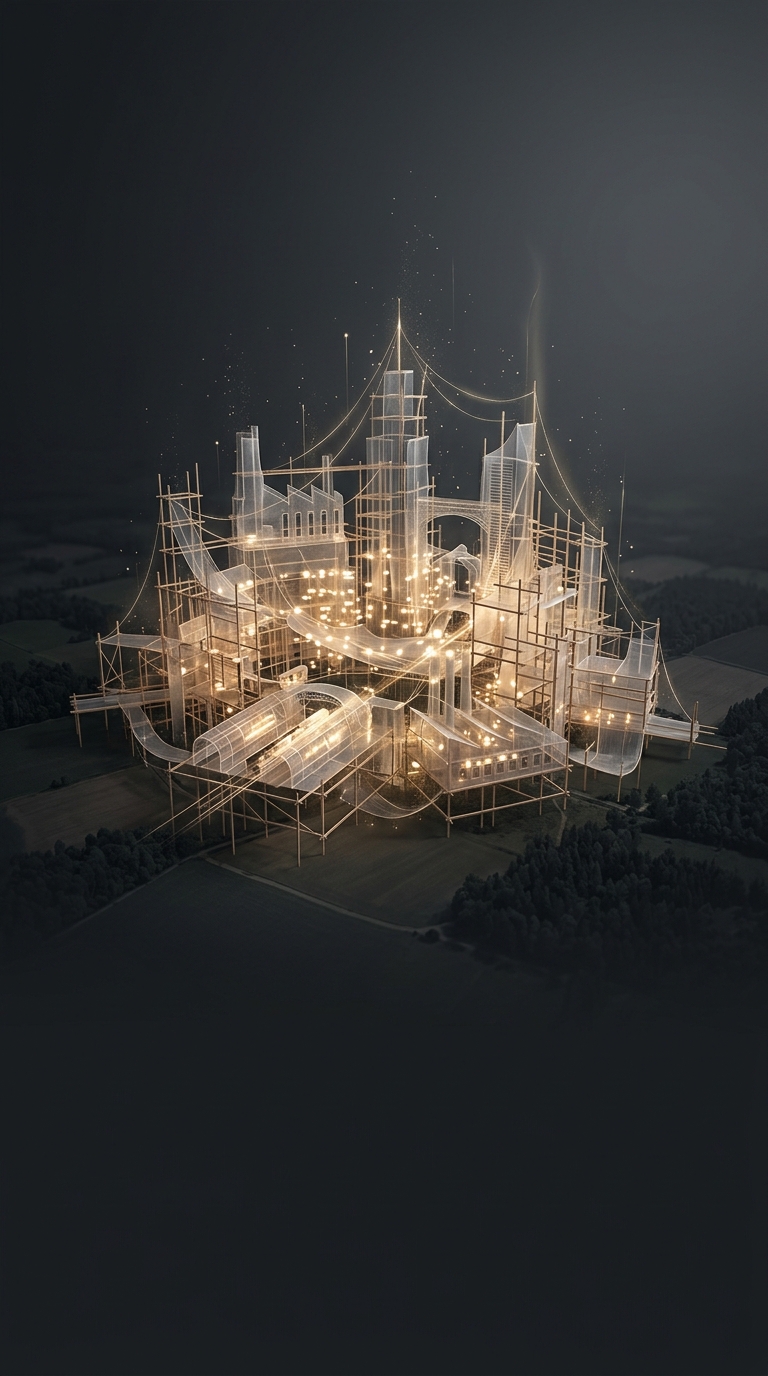
The scheme was not a full-scale duplicate with streets and buildings ready for inspection. It used wooden frameworks, painted surfaces, and carefully arranged lights to suggest the features an aircraft might recognize from above, including railway facilities and industrial areas. Some lights were meant to resemble the glow of a working city; others could simulate activity such as a train moving through a station.
The trick depended on what a pilot could see
From the ground, the structures would have looked like stage scenery. From an aircraft in darkness, the goal was different: create a convincing cluster of bright shapes in the right place, while the actual target was harder to distinguish. The decoy exploited the gap between seeing a pattern and knowing what produced it. A bomber crew did not need to believe it was looking at Paris in every detail—only to choose the wrong target long enough to attack it.
The project was being developed near the end of the war, and the armistice came before the elaborate deception could be fully put to the test. Its memorable scale came from a simple wartime insight: when a city’s lights helped attackers find it, the lights themselves could become part of the camouflage.