How a clear ring revealed an invisible weapon
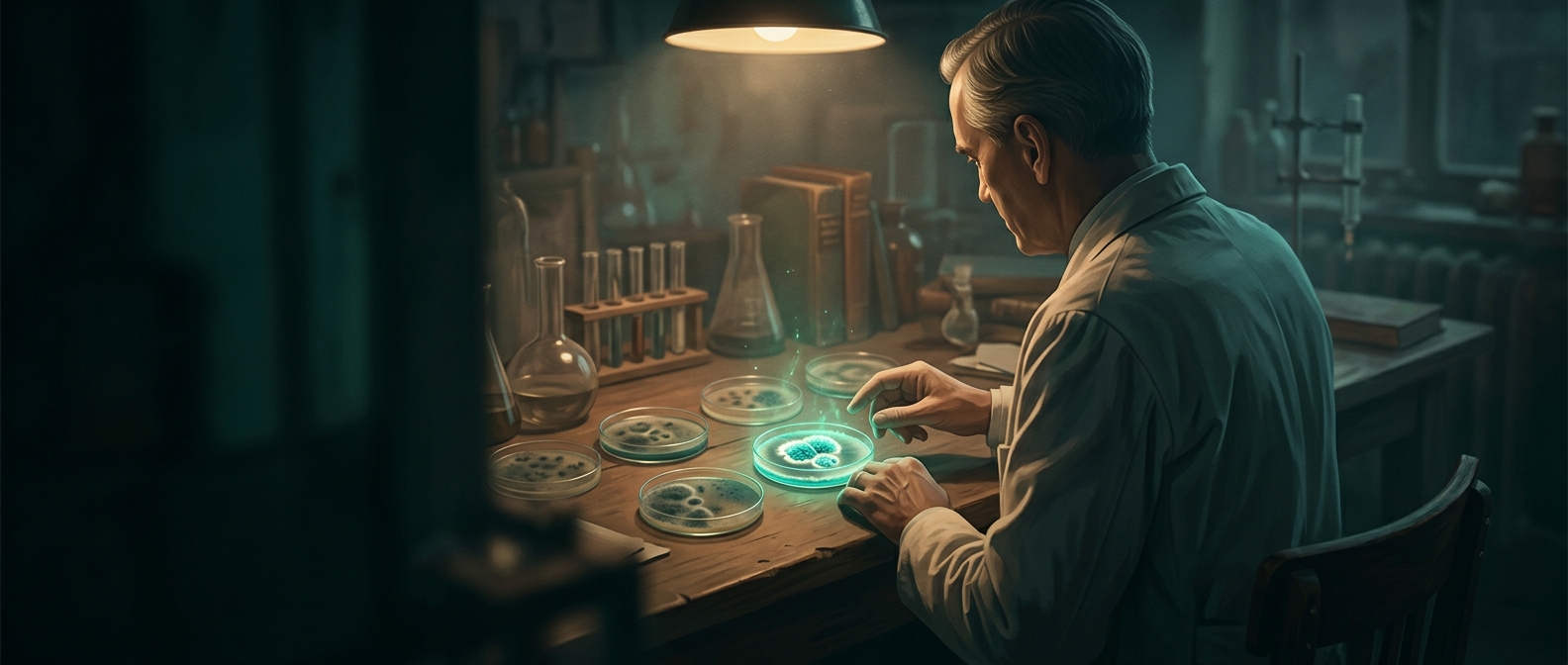
In 1928, Alexander Fleming noticed an unusual pattern on a laboratory dish: bacteria had grown across much of the surface, but not close to a patch of mold. The bare band around the mold was a clue that it was releasing a substance that hindered bacterial growth. The mold had changed its immediate surroundings without being visible in the clear space itself.
That observation suggested a way to fight infection, but it did not yet provide a medicine. A mold growing on a dish is not the same as a reliable treatment: researchers needed to identify and separate the active substance, then work out how to produce and use it safely.
From observation to treatment
Fleming called the substance penicillin, after the Penicillium mold. He recognized its antibacterial promise, but turning it into a practical drug required further work by other researchers. They developed methods to extract and purify it, and to make enough for treatment. The key advance was not just finding that the mold stopped bacteria; it was learning how to deliver that effect in a usable form.
Penicillin became an early antibiotic—a medicine that acts against bacteria. Its discovery therefore hinged on two different kinds of progress: spotting an unexpected pattern, then solving the difficult production and medical problems that the pattern raised. The empty ring was the first clue; the drug depended on the work that followed.