Blue light is only one part of the signal
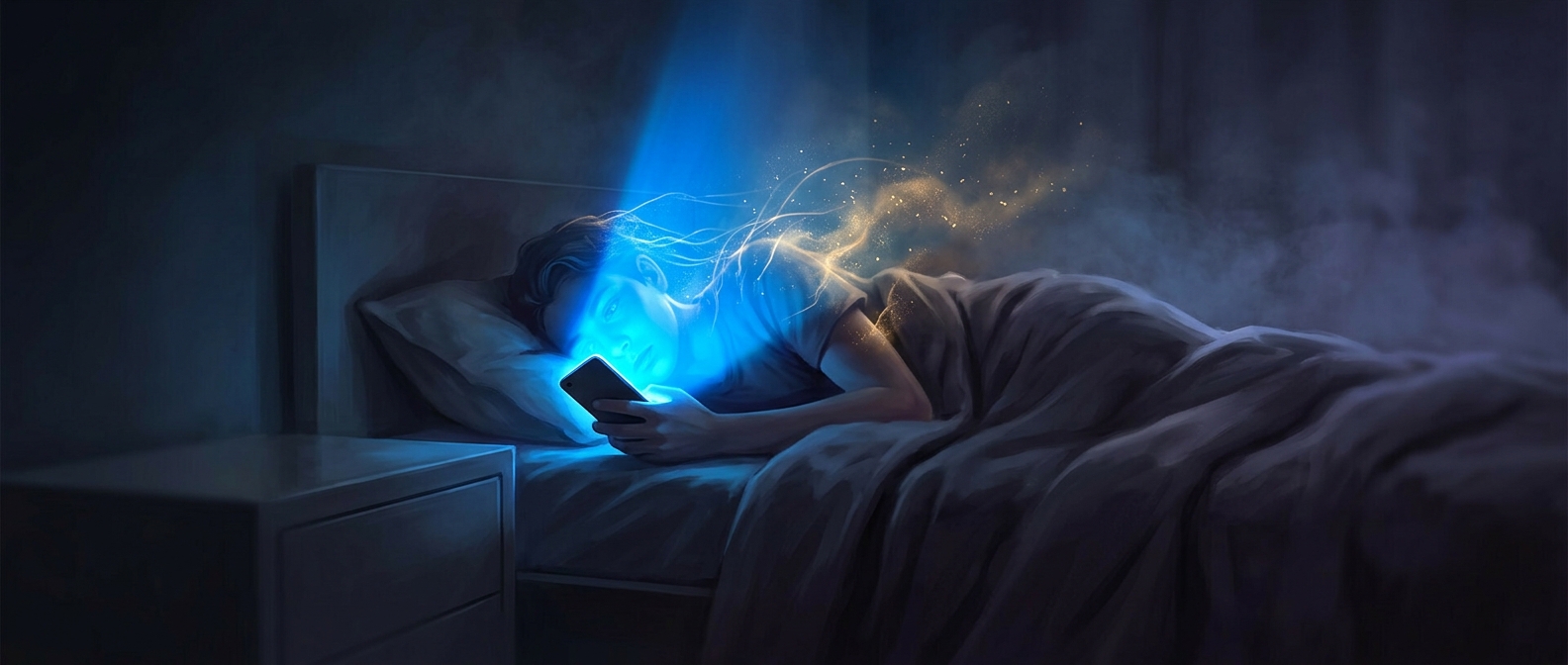
Light can affect sleep by acting on cells in the eye that help set the body’s internal clock. These cells are particularly responsive to short-wavelength light, often called blue light. In the evening, light reaching them can delay the body’s nightly timing and make it harder to feel sleepy at the usual hour.
Blue-light-blocking glasses filter some of that light. But they do not remove all light, and their effect depends on how much light they block, how bright the surroundings are, and when a person wears them. A dim room and reduced screen brightness can matter too; glasses are not a switch that cancels every signal telling the brain it is still daytime.
Sleep trouble has more than one cause
Even if evening light is part of the problem, it may not be the main one. Stress, an irregular sleep schedule, caffeine late in the day, pain, medications, and sleep disorders can all interfere with falling or staying asleep. Filtering blue wavelengths cannot address those causes, nor can it make up for too little time set aside for sleep.
That is why the glasses are not a dependable fix for persistent poor sleep. Research on whether they improve sleep has not established a consistent, substantial benefit for everyone. The idea has a plausible biological basis, but a plausible mechanism is not the same as proof that a product will solve a real-world problem.
Change the conditions, not just the lenses
For light-related sleep disruption, practical steps include keeping evenings dimmer, lowering screen brightness, and using a regular sleep and wake schedule. If sleep problems persist, treating them as a broader health issue is more useful than assuming blue light is the culprit. The key distinction is between reducing one possible influence on the body clock and fixing the many different reasons sleep can go wrong.