Economy
Discover facts about economy. Small discoveries that change the way you see familiar things.
Economy

Guaranteed mediocre results beat risky brilliance
The sure thing can win even when the alternative offers a much larger reward. A small risk of losing may feel heavier than the possibility of gaining more.
Discover more
Why keeping a smile on can be exhausting
A customer-facing worker may have to swallow frustration and keep smiling through the interaction. That performance takes effort even when the smile is part…
Discover more
Why shirking can look like hard work
A shirker doesn’t have to look idle; they can look busy while dodging the duties they were assigned. The effort they save is work someone else has to pick up.
Discover more
Assuming others agree is a massive miscalculation
A planner who likes one kind of service may build a system around it, even though other people need something different. The planner’s own preferences become…
Discover more
Human brains simply cannot process all variables
A decision can involve more possibilities than anyone can compare one by one. So people use mental shortcuts to narrow the choices; sometimes those shortcuts…
Discover more
Ignoring mental exhaustion ruins overall output
Mental exhaustion doesn’t just feel bad; it can make people work more slowly and judge less carefully. That combination raises the odds of mistakes.
Discover more STACKY FOR IPHONE
A bigger world.
One discovery
at a time.
Keep discovering with Stacky. Interesting facts in an app that is always within reach.
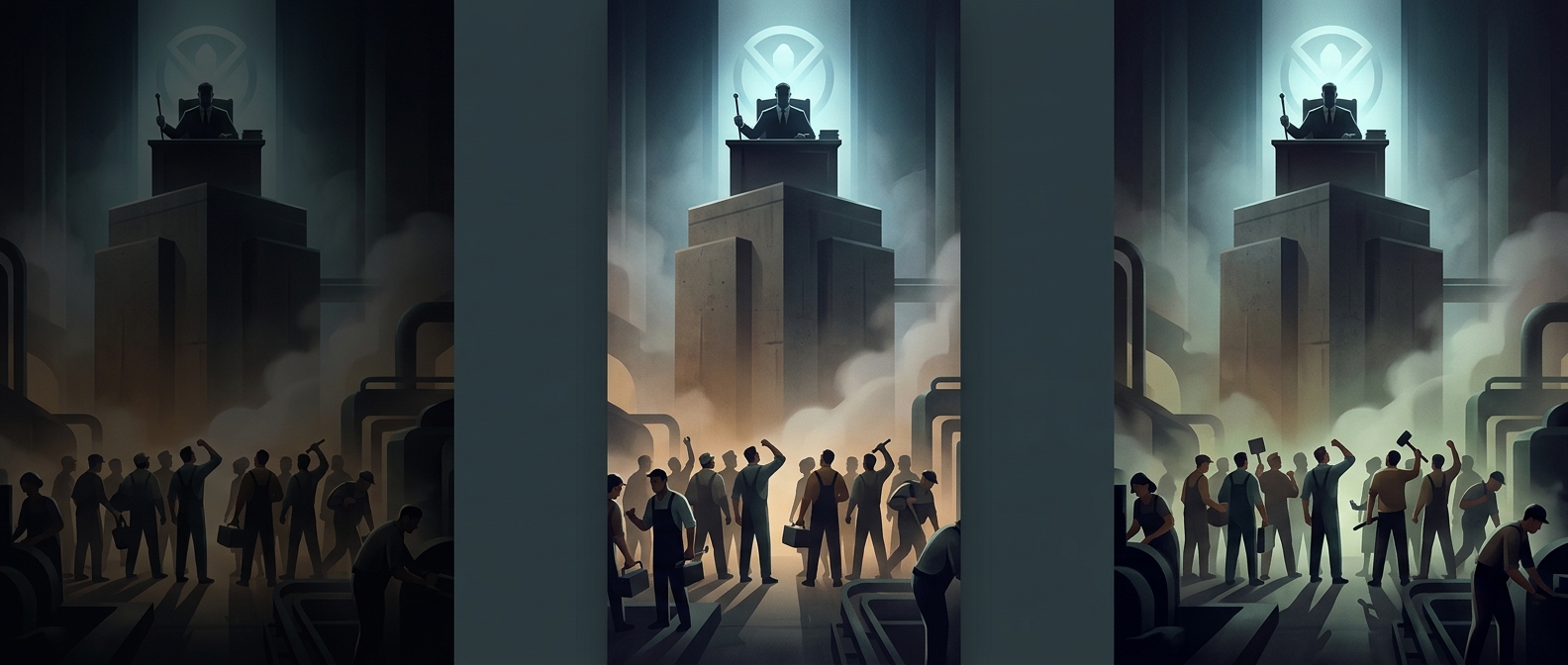
Bosses and workers naturally hate each other
An owner may want strong results, while an employee has other priorities. Because the owner can’t watch every task, it can be hard to make sure the worker’s…
Discover more
Why bureaucracy keeps growing
More layers of administration can mean more forms to fill out and more approvals to chase. Then the growing pile of procedures needs its own staff to manage it.
Discover more
Why unpaid work keeps communities running
A community service may have no paid staff to keep it going. When people donate their time, their work can fill that gap; without them, some public services…
Discover more
Showing up sick destroys company productivity
Coming to work sick can hurt twice: the employee works below capacity, and coworkers may catch the illness. One person’s reduced output can become a team…
Discover more
Doing the bare minimum preserves inner sanity
The extra effort often brings no extra pay. Quiet quitting means doing the work in the job description and saving the unpaid mental energy for yourself.
Discover more
Replacing frustrated workers drains resources
When an employee leaves, the company has to spend time and money recruiting and training a replacement. Keeping workers can cost less than repeatedly starting…
Discover more
Hostile environments naturally breed poor results
When employees are busy avoiding trouble, they have less room to suggest a better idea. Fear and intimidation can turn a team’s attention from solving…
Discover more
Having kids drains your personal resources
A parent’s day has only so many hours, and childcare takes up many of them. Time and money spent raising children are no longer available for other plans.
Discover more
Why childcare can erase the payoff from working
A second paycheck can look like extra income until the daycare invoice arrives. For some families, childcare absorbs the earnings that were supposed to make…
Discover more
America's shortest recorded recession lasted just two months
The NBER dates the 2020 downturn from the February peak to the April trough. Its depth and reach were so extreme that it qualified despite its brevity. Ending…
Discover more
An entire California town became an eBay listing
Bridgeville's 2002 auction drew a winning bid of about $1.8 million, but that deal fell through. The property finally sold in 2004 for $700,000 outside eBay.…
Discover more
A trillion dollars in American cash lives abroad
Federal Reserve staff estimated that foreigners held over $1 trillion in U.S. banknotes in early 2025—roughly half the total value in circulation. That is…
Discover more
American women currently control over a third of total household financial assets in the US
Yet many legacy wealth firms still pitch their services mainly to men. The mismatch is striking: women already control more than $31 trillion in U.S. assets,…
Discover more
The woman who ran a Ponzi scheme before Ponzi
In the 1880s, Sarah Howe promised unmarried women an extraordinary 8% return every month. Her “Ladies Deposit” bank paid early customers with deposits from…
Discover more
A movie trailer has to sell a story without telling the whole story
Editors rebuild footage into a short sequence of promises: a world, a conflict, a few memorable images. Music, pauses, and the order of shots can make the…
Discover more
Why sumo stables cost so much to run
A sumo stable has to house, feed, and train several very large athletes, day after day. Sponsors help pay those bills, so the wrestlers aren’t carrying the…
Discover more
Why chess grandmasters rarely get rich
A chess grandmaster can master thousands of opening variations and still lose money getting to a tournament. Outside the top tier, the prize may barely cover…
Discover more
Roller coaster engineering demands massive capital layouts
The track is only part of the bill. A single roller coaster can cost tens of millions once engineers design the structure, crews build the themed setting, and…
Discover more