Economy
Discover facts about economy. Small discoveries that change the way you see familiar things.
Economy

Revolutionary France tried to turn confiscated land into spending money
Assignats were initially linked to the value of nationalized church property. As more were issued and they circulated as money, their value collapsed. Land…
Discover more
How Latvians bought homes with privatization vouchers
The vouchers worked like a public handout you could trade: citizens received them according to how long they had lived in Latvia, then exchanged them for…
Discover more
The tariff fight that helped spark a global trade war
A tariff meant to raise the cost of imports helped trigger retaliation abroad. After the Smoot-Hawley Act raised duties on 20,000 goods in 1930, trading…
Discover more
Kondratiev’s economic waves outlived Stalin’s purge
Nikolai Kondratiev argued that capitalist economies move through long periods of expansion and decline rather than simply heading toward a final collapse. He…
Discover more
How central banks lost control of gold prices
Eight central banks spent their own gold reserves defending a price of $35 an ounce. In 1968, inflation and investor demand beat their selling—and the London…
Discover more
J.P. Morgan locked bankers in his library during a panic
A financial panic sent bankers to Morgan’s library, where he kept them until they agreed on a $25 million bailout for trust companies. The rescue began with a…
Discover more STACKY FOR IPHONE
A bigger world.
One discovery
at a time.
Keep discovering with Stacky. Interesting facts in an app that is always within reach.

The economist who proved communities can share resources
Elinor Ostrom studied communities sharing resources such as irrigation water and grazing land. People could build working rules, monitor use, and settle…
Discover more
The Liberty Dollar creator was convicted over private coins
Bernard von NotHaus was convicted in 2011 on charges involving coins intended to circulate as money and conspiracy. A prosecutor described the activity as a…
Discover more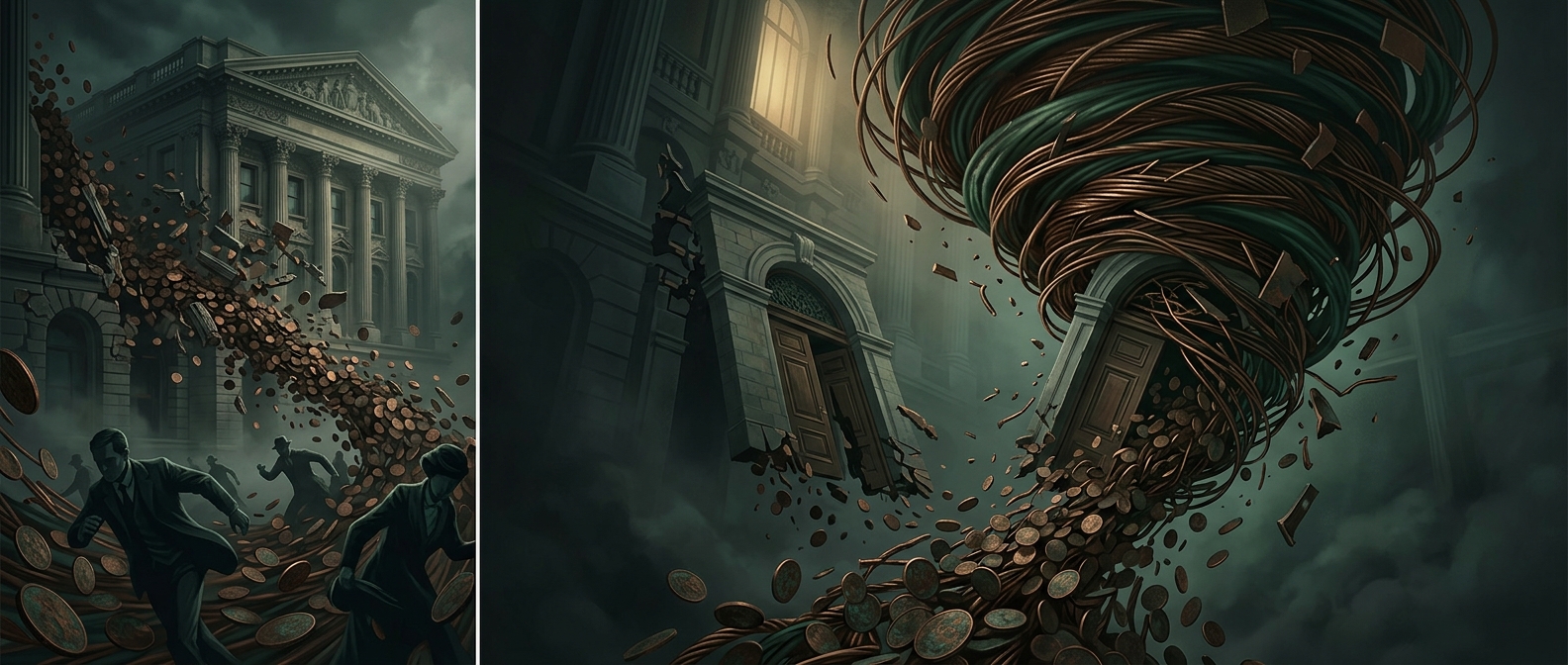
A failed copper-stock corner helped spread the Panic of 1907
The collapse of the United Copper speculation damaged confidence in connected financiers and banks. Withdrawals then spread to institutions including…
Discover more
Boston banks made rival banknotes come home to be paid
Under the Suffolk system, country banks kept deposits in Boston so their notes could be redeemed there at face value. Banks outside the arrangement risked…
Discover more
Mexican debt swap triggered global market panic
Investors lost confidence after a political assassination and moved their money out of Mexico. The rush to leave drained reserves, helping turn a political…
Discover more
Changing the meaning of 'principally' widened a banking loophole
In 1996, the Federal Reserve raised certain bank affiliates' permitted securities revenue share from 10% to 25%. It concluded that this still did not mean…
Discover more
A market trade does not require someone to be a fool
A seller may need cash now while a buyer can wait years. They can agree on a price without agreeing on when they need the money or how much risk they can…
Discover more
The historian who said money was never just barter
Del Mar looked past the familiar story of people swapping goods and asked who had the power to issue money. He documented states creating currencies and…
Discover more
When economists stopped counting only cash
The 1959 Radcliffe Report argued that watching cash and bank reserves alone missed borrowing and credit. A household or business could still spend using…
Discover more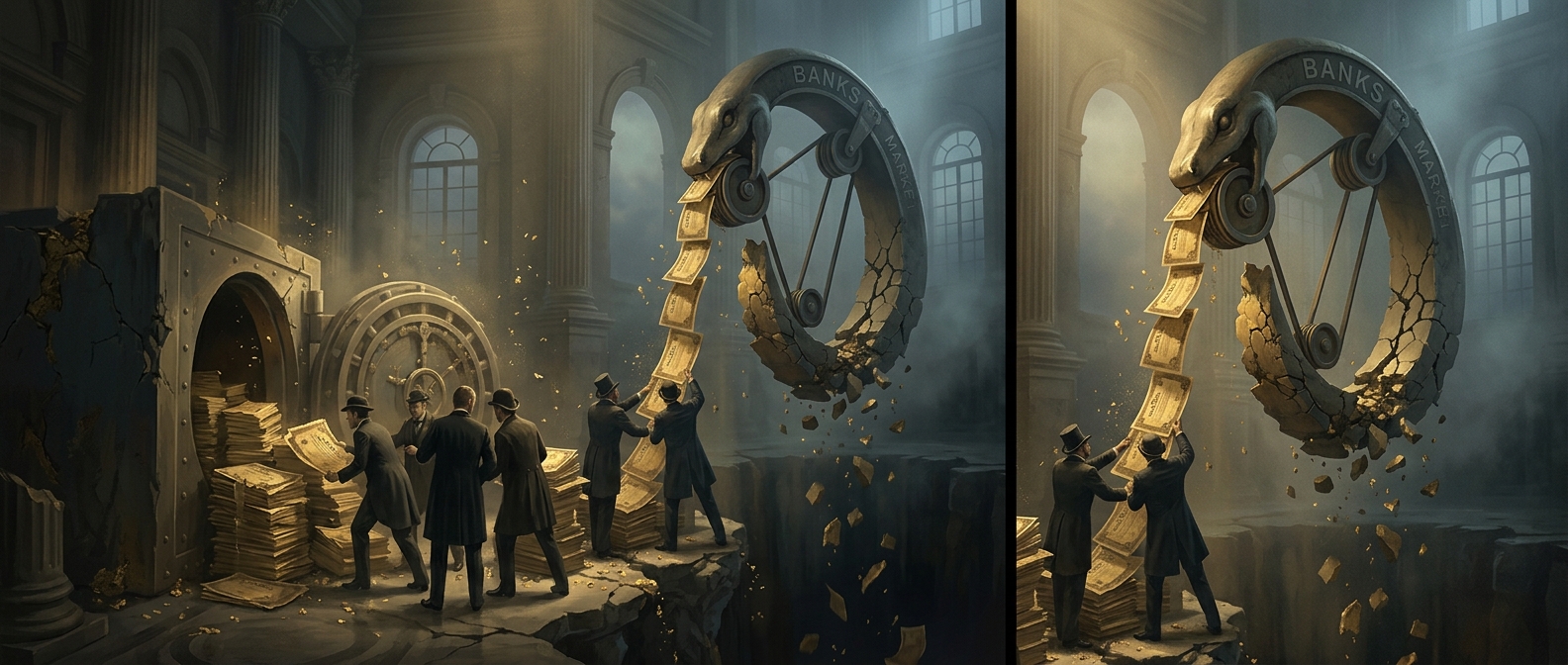
How Israel's banks manipulated their own shares
The banks were selling confidence in their own shares—and helping maintain the prices customers were being urged to pay. In 1983, the public tried to sell…
Discover more
Announcing your financial ruin ahead of schedule
Chile announced how much the peso would lose value, hoping people would plan around the schedule. Investors borrowed cheaper dollars to collect higher…
Discover more
Barter networks still need a way to track debt
In a Local Exchange Trading System, fixing a sink can earn credits you later spend on guitar lessons. You do not need the guitar teacher to want plumbing at…
Discover more
When the CFA franc suddenly lost half its value
In January 1994, the CFA franc's official value against the French franc was cut by 50% in a coordinated devaluation supported by France and the IMF. Exports…
Discover more
How polite memos steered Japan's economic boom
Japan’s boom-era bureaucrats didn’t need a legally binding order to get businesses to listen. They could cut a company’s import quota or delay its loan…
Discover more
The Chicago Plan tried to separate your money from bank lending
The Depression-era proposal called for full reserve backing of transaction deposits. Lending would need separate funding rather than being bundled with…
Discover more
When copper crosses were money
These were not coins for a pocket: Katanga crosses were copper ingots up to two pounds each. People used them for major deals, including land purchases, slave…
Discover more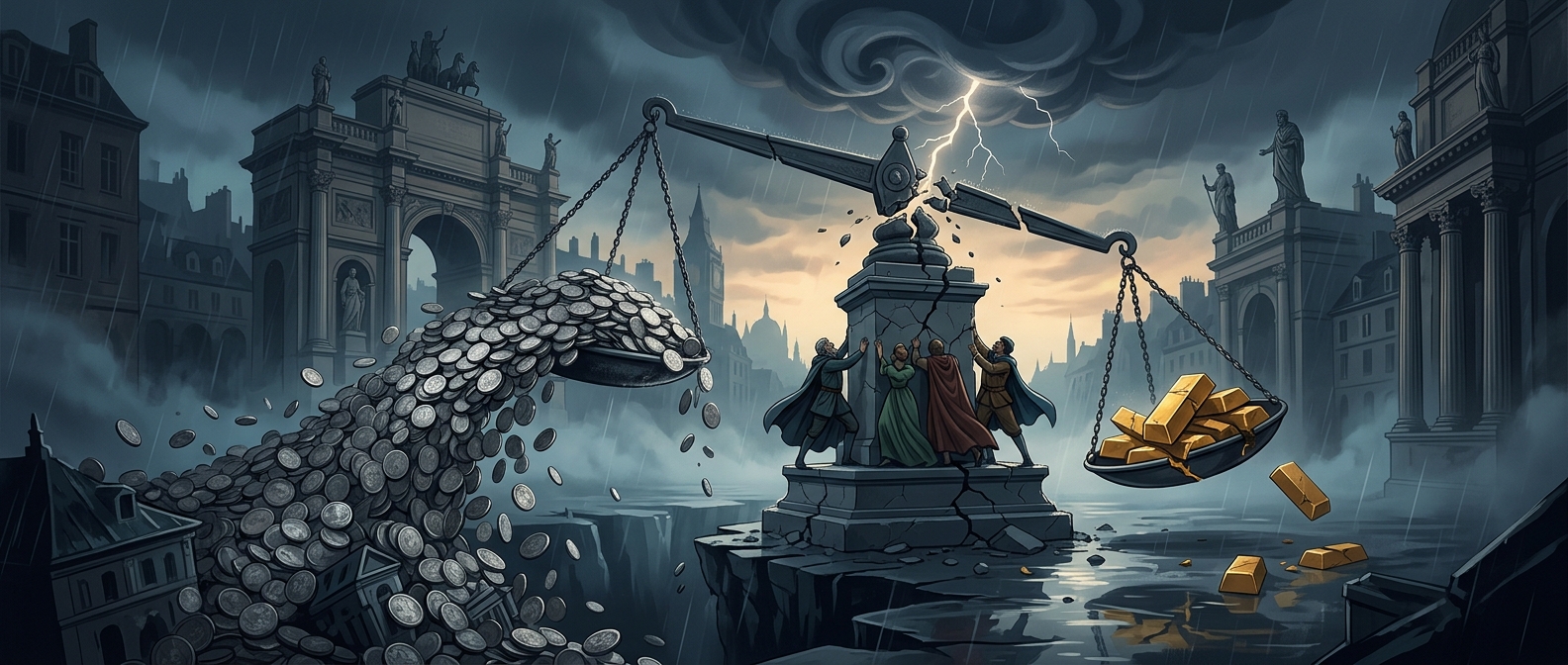
Europe tried a shared currency long before the euro
The members agreed to standardize gold and silver coins, but the value depended on the metal inside. The Papal States issued lighter silver coins, breaking…
Discover more
What if your town paid in hours
Residents could pay a neighbor in Ithaca HOURS instead of dollars: one HOUR counted as $10, about the local average hourly wage. People traded the local…
Discover more