Economy
Discover facts about economy. Small discoveries that change the way you see familiar things.
Economy

Government intervention supposedly cures economic recessions
If private spending collapses, the government can step in as a buyer, paying for goods and services while households and businesses cut back. That new…
Discover more
Single sellers dominate markets to maximize pure profits
With no rival offering the same thing, a company can raise prices and keep buyers who have no alternative. The leverage comes from being the only seller.
Discover more
The Templars let travelers move money without carrying the whole fortune
Their network could accept funds in one place and arrange payment elsewhere, reducing the need to transport valuables through dangerous territory. The crucial…
Discover more
Splitting chores based on pure comparative advantage works
The useful question isn’t who is best at every chore; it’s what each person gives up by doing one. A roommate who sacrifices less by cleaning should clean,…
Discover more
Intervention creates the exact crises it attempts preventing
The theory starts with cheap credit: if a central authority expands borrowing artificially, businesses may invest and spend as if the boom can last. When that…
Discover more
When a brand name becomes too popular to own
A company wants its name on everyone’s mind—but not so much that the public uses it as the generic word for the product. If that happens, the brand can lose…
Discover more STACKY FOR IPHONE
A bigger world.
One discovery
at a time.
Keep discovering with Stacky. Interesting facts in an app that is always within reach.

Why reading the news now takes multiple subscriptions
When online ads failed to bring in enough revenue, publishers started asking readers to pay directly. That's why a neighborhood news story may require yet…
Discover more
A severance payment does not automatically buy an employee's silence
In its 2023 McLaren Macomb decision, the US labor board rejected broadly worded confidentiality and non-disparagement clauses that required workers to waive…
Discover more
Why a billion-dollar startup may be losing millions
A billion-dollar valuation can come from investors paying that price for a small slice of a company. It doesn’t mean the startup has a billion dollars in the…
Discover more
Universal basic income experiments show promise
In these trials, people receive cash without having to prove they will spend it on a prescribed item. That gives recipients the choice to use the money where…
Discover more
How companies can put purpose before profits
In a benefit corporation, managers can weigh environmental goals even when they are not the most profitable option. The legal structure is designed to protect…
Discover more
Projection bias triggers hot cocoa hoarding in winter
In a blizzard, people can act as if the cold will last forever and stock up on hot cocoa. By July, those winter supplies may still be sitting in the cupboard.
Discover more
Mass production makes individual items aggressively cheaper
Making the first unit means paying to set up production. Once the line is running, that setup bill can be divided among many items, lowering each one's…
Discover more
A bigger dinner group can leave a smaller tip percentage
A 1975 study of 396 dining groups found that tips, relative to the bill, tended to fall as group size rose. The researchers linked this to shared…
Discover more
Economic blunders are usually stupidity instead of malice
When a company collapses, a clumsy decision may explain more than a secret scheme. Hanlon’s razor gives that suspicion a name: don’t assume malice when…
Discover more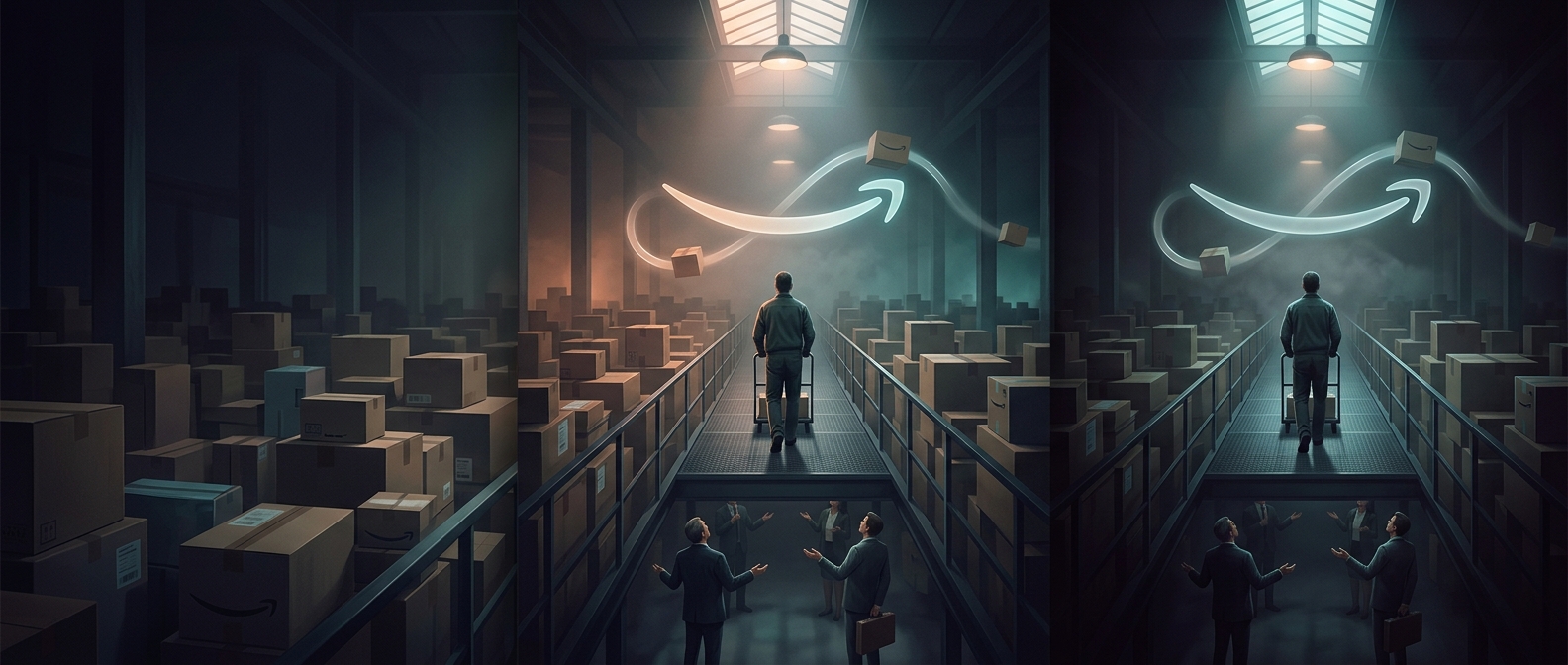
Amazon's first profitable year still left a very thin margin
In 2003, Amazon reported its first full-year net profit: about $35 million on $5.3 billion in sales. A huge flow of purchases didn't automatically become a…
Discover more
Orbital space launches require astronomical funding
A rocket has to burn huge amounts of chemical propellant just to escape Earth’s gravity. That makes every kilogram of cargo sent to orbit expensive.
Discover more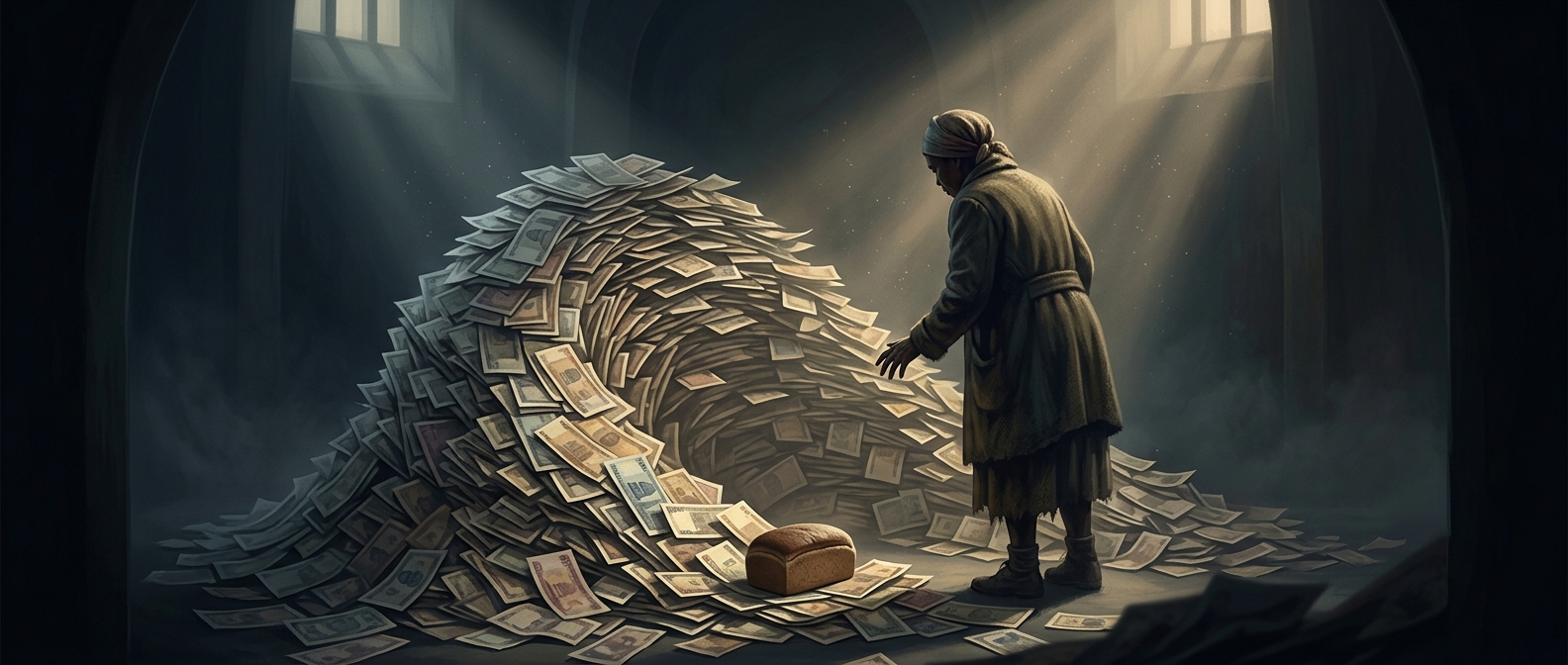
Zimbabwe put 100 trillion dollars on a single banknote
The enormous denomination belonged to its hyperinflation era, when adding zeros could not restore purchasing power. In the 2015 demonetization process, the…
Discover more
Domestic violence creates massive economic burdens
The costs keep spreading after the abuse itself: medical care, legal proceedings, and lives disrupted all require time and money. Those bills are part of the…
Discover more
Mattel started with picture frames
Elliot Handler used leftover scrap wood from picture frames to make tiny dollhouse chairs. The chairs sold so well they eventually outsold the frames, turning…
Discover more
Why café cards make daily coffees feel free
Preloading a café card separates each coffee from the moment you pay: the money is already gone, so handing over the card can feel free. That can make it…
Discover more
Non-disclosure agreements act as valuable corporate assets
During a merger, employees and partners may reveal information a rival would love to get. NDAs keep those shared business secrets from leaking to competitors.
Discover more
A dating profile has a seller who knows more than the buyer
The person writing it knows what the photos leave out and which claims are flattering. The reader has to infer the rest from limited signals. Economists call…
Discover more
Play-Doh's smell is a registered trademark
Play-Doh's protected scent is a particular sweet, musky, vanilla-like smell—not the broad smell of clay. The detail matters because the trademark claims a…
Discover more