History
Discover facts about history. Small discoveries that change the way you see familiar things.
History
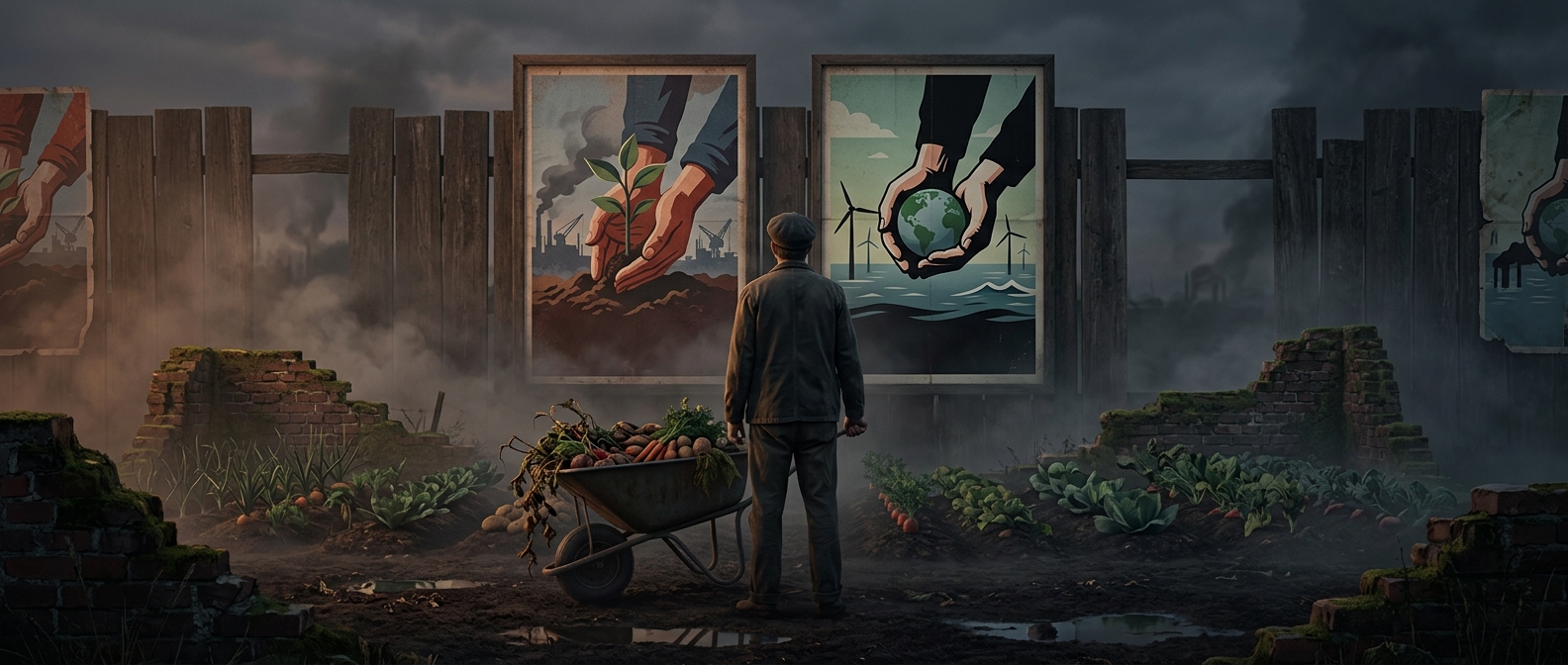
Why today's climate slogans echo wartime posters
Back in the 1940s, bold posters shouted from every wall, urging families to dig up their yards and plant carrots and cabbages for the war effort. These…
Discover morePirates weren’t just rum-drinking chaos—they created one of the earliest profit-sharing cooperatives, splitting treasure like true startups, except their venture capital was stolen from Spanish galleons.
Beneath the eye patches and cannon smoke, pirates were sly entrepreneurs of the seas. Forget boardrooms—they held meetings on rocking decks, where loot was…
Discover moreWhen the first astronauts landed on the moon, some cultures treated it like a cosmic trespass.
The moon had always been a realm of stories—an untouched silver lantern woven with bans, gods, and legends of wandering spirits. Then, one day in 1969, humans…
Discover moreRichard Nixon’s presidency imploded because of one thing: home-taped recordings.
It’s almost Shakespearean: Nixon wanted flawless memory, so he wired his office with recorders to catch every conversation. What better way to control history…
Discover moreSome symbols we wear as fashion were once rallying calls.
Symbols are like chameleons: they change color with the light of history. The swastika once decorated temples, textiles, and amulets, celebrated as a charm of…
Discover moreRoman women painted nails with sheep fat and blood, while men avoided kissing their wives after wine to check sobriety.
Beyond Caesars and coliseums, Rome thrummed with quirky rituals that feel oddly familiar today. Women brushed sheep fat mixed with blood onto their nails—not…
Discover more STACKY FOR IPHONE
A bigger world.
One discovery
at a time.
Keep discovering with Stacky. Interesting facts in an app that is always within reach.
Smallpox not only reshaped empires with death tolls, it influenced art and policy: rulers scarred from disease commissioned different portraits, and vaccination campaigns became political weapons.
Smallpox was more than a feverish menace—it rewrote the way the world looked at itself. Kings once disfigured by scars from the disease hired artists to paint…
Discover moreWorld War I soldiers received shoes so mismatched that thousands ended up barefoot in trenches—not from bombs, but from bureaucracy.
History often tells war through cannons and generals, but some of its most absurd tragedies came from paperwork and mismatched shoes. In World War I, soldiers…
Discover moreIn 1624, England banned workers from emigrating to protect its knowledge base—literally turning people into intellectual property; centuries later, nations still wrestle with…
In 1624, England treated human skill like gold locked in a chest—it made it illegal for workers to emigrate, essentially branding brilliant minds as national…
Discover moreToilet paper was invented in China centuries ago, but Europe didn’t embrace it until disgust gave way in the 1800s.
Toilet paper may feel like one of humanity’s most ordinary inventions, but its story is wildly inventive. Ancient China was centuries ahead, rolling out early…
Discover moreIn Renaissance Florence, artists were once outsiders, seen more as craftsmen than geniuses.
If you could step into Renaissance Florence, you might be surprised to find painters and sculptors lumped in with bricklayers and blacksmiths—hands-for-hire,…
Discover moreIn 14th‑century England, eating royal swans without permission carried the death penalty, because those birds symbolized monarchy itself.
Imagine looking at a swan gliding across a lake and thinking not of elegance, but of royal property — quite literally untouchable. In medieval England, swans…
Discover moreModern barbed wire fences trace back to 19th century patents for ranching—but during WWI, soldiers discovered its brutal military potential, and today its echo lingers in border…
Barbed wire began innocently enough: a clever way to keep cattle from wandering. But once war arrived, this humble ranching trick transformed into a weapon.…
Discover moreAn opera performance in 1830 Paris sparked a riot that spilled into political rebellion.
On that evening in Paris, velvet curtains parted and music poured out like fuel to a fire no one dared acknowledge. The opera’s story, filled with betrayal…
Discover moreByzantine Empire outlasted Rome by a thousand years, yet is nearly ignored outside textbooks: hidden inside its emperors and mosaics is the reminder that resilience often looks…
Rome’s ruins steal postcards, yet its eastern sibling, the Byzantine Empire, endured quietly for a millennium more—a thousand silent crackling candles beside…
Discover moreWhen Paris workers stormed the Bastille, their goal wasn’t treasure but gunpowder — the revolution wasn’t romantic at first but desperate logistics.
On July 14, 1789, the Bastille wasn’t a treasure trove but a weapons locker. Imagine the scene: desperate Parisians weren’t chasing glory, but the black dust…
Discover moreWorld War I trench soldiers crafted rings from enemy shell casings as keepsakes.
Imagine a soldier huddled in a muddy trench, surrounded by the chaos of battle, bending fragments of enemy shells into small, shining rings. These weren’t…
Discover moreIn 18th-century England, stealing a spoon could land you on a prison ship to Australia.
Imagine a life where pocketing a spoon might exile you to the other side of the planet. In 18th-century England, laws weren’t just about punishing theft—they…
Discover moreIn medieval villages, everyone shared a communal oven.
Step into a medieval village and follow the aroma of bread—everyone’s bread. Families shaped their loaves at home, but the baking happened together, in the…
Discover moreWhen Rosa Parks refused her seat, it wasn’t spontaneous—it was carefully planned by activists.
The image of Rosa Parks calmly refusing to move seems like a lightning bolt from nowhere, but in reality it was a spark carefully struck by skilled hands.…
Discover moreIn 14th-century England, a law required every man to practice archery on Sundays.
Picture Sundays in a medieval village: instead of a lazy afternoon, men line up with bows, required by law to practice arrows into the sky. At first glance,…
Discover moreBefore film, a toy called zoetrope let children watch animate illusions of running horses through spinning cylinders.
Picture a child in the 1800s squinting into a spinning drum with slits on its sides. Inside, a strip of drawings—static horses, stiff as statues—suddenly…
Discover moreWhen the French Revolution ignited, aristocrats fled leaving behind palaces where ordinary citizens picnicked on royal grounds for the first time.
Imagine strolling into the manicured gardens of Versailles carrying a loaf of bread and a bottle of wine, knowing mere months ago this land was untouchable to…
Discover moreVictorian women once wore cages of steel beneath dresses, the infamous crinolines, so wide they wouldn’t fit through doors.
Picture a skirt that could sweep an entire row of teacups off a table without its wearer moving an inch—that was the crinoline. Victorian women strutted…
Discover more