Psychology
Discover facts about psychology. Small discoveries that change the way you see familiar things.
Psychology

Your brain rotates objects like sluggish CAD software
When asked if two angled shapes match, you literally rotate a 3D model inside your mental space. Mental rotation takes measurable milliseconds; the more…
Discover more
Combining visuals and text accelerates comprehension
Dual-coding theory demonstrates that routing information through both visual and verbal channels cements the data exponentially faster. Relying entirely on…
Discover more
Your brain spots bad grammar before you do
Hearing the phrase 'The cats won't eating' triggers a massive electrical spike in the brain exactly 600 milliseconds later. This P600 response is the…
Discover more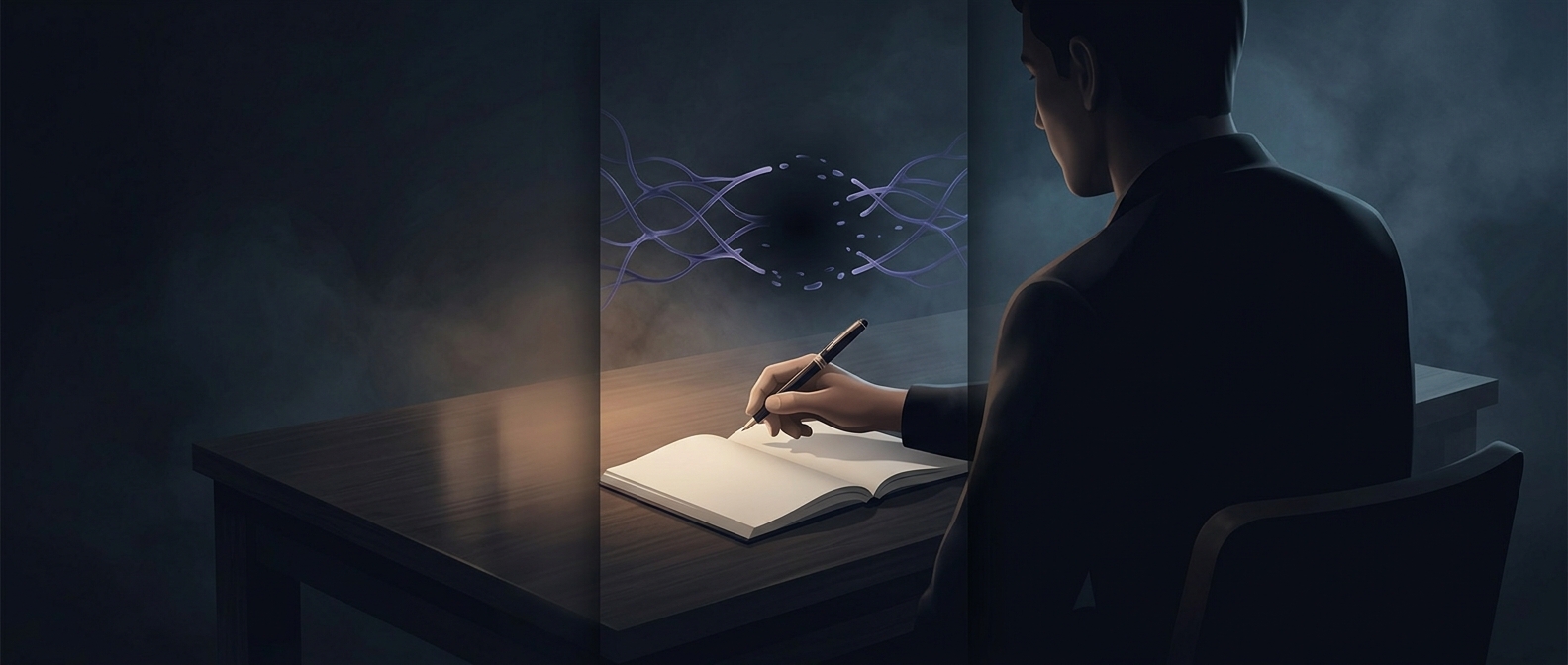
Dysgraphia can leave you unable to write
Dysgraphia disconnects the brain's linguistic outputs from fine motor coordination. A person can verbally dictate a flawless essay but physically struggle to…
Discover more
When speech sounds fluent but means nothing
Wernicke's aphasia allows patients to speak with perfect rhythm, intonation, and speed, but the words are absolute nonsense. The brain's grammar engine runs…
Discover more
Grammar comprehension relies on rigid syntax trees
Sentences are not processed as a flat line of words; they are built into complex, invisible hierarchical structures. Your linguistic centers instantly…
Discover more STACKY FOR IPHONE
A bigger world.
One discovery
at a time.
Keep discovering with Stacky. Interesting facts in an app that is always within reach.

Why dreams can follow you into wakefulness
Opening your eyes and seeing a giant spider on the ceiling is a classic hypnopompic hallucination. Your visual cortex wakes up slightly faster than your…
Discover more
Why trying to sleep can keep you awake
The harder you force yourself to rest, the more your nervous system stays wildly awake. Hyper-focusing on sleeping triggers a hyper-arousal state, flooding…
Discover more
Advanced reading ability can exist without comprehension
Hyperlexia allows an individual to effortlessly read highly complex, multi-syllabic text aloud perfectly. However, the linguistic processing completely…
Discover more
Morphemes represent the smallest units of meaning
The word 'unbreakable' is not one unit; it is aggressively split into 'un-', 'break', and '-able'. Your language centers slice words into microscopic…
Discover more
Grammatical structures alter human thought processes
The Sapir-Whorf hypothesis suggests that the language you speak rigidly dictates the concepts you can conceptualize. If your native tongue lacks a future…
Discover more
When a brain injury sounds like a foreign accent
Foreign accent syndrome alters the exact timing and placement of the tongue following a neurological strike. The resulting speech patterns sound exactly like…
Discover more
Brains categorize nouns and verbs in separate regions
Neurological mapping proves that action words and physical objects are not stored in the same database. A specific lesion can completely eradicate your…
Discover more
How bilingual brains switch languages mid-sentence
Code-switching requires the brain to violently hot-swap entire grammatical frameworks in a fraction of a second. The speaker toggles between vocabularies and…
Discover more
When half the world disappears from view
Hemispatial neglect causes patients to shave only half their face and eat off only half their plate. Their sensory organs function perfectly, but the brain…
Discover more
Circadian rhythms enforce an afternoon crash
That post-lunch exhaustion is not just from eating too many carbs. Your internal clock actively drops your core temperature and alertness around 2 PM,…
Discover more
Vowels are generated with an entirely open vocal tract
Every single vowel you speak requires zero physical obstruction of your breath. You are literally just vibrating your vocal cords and changing the shape of…
Discover more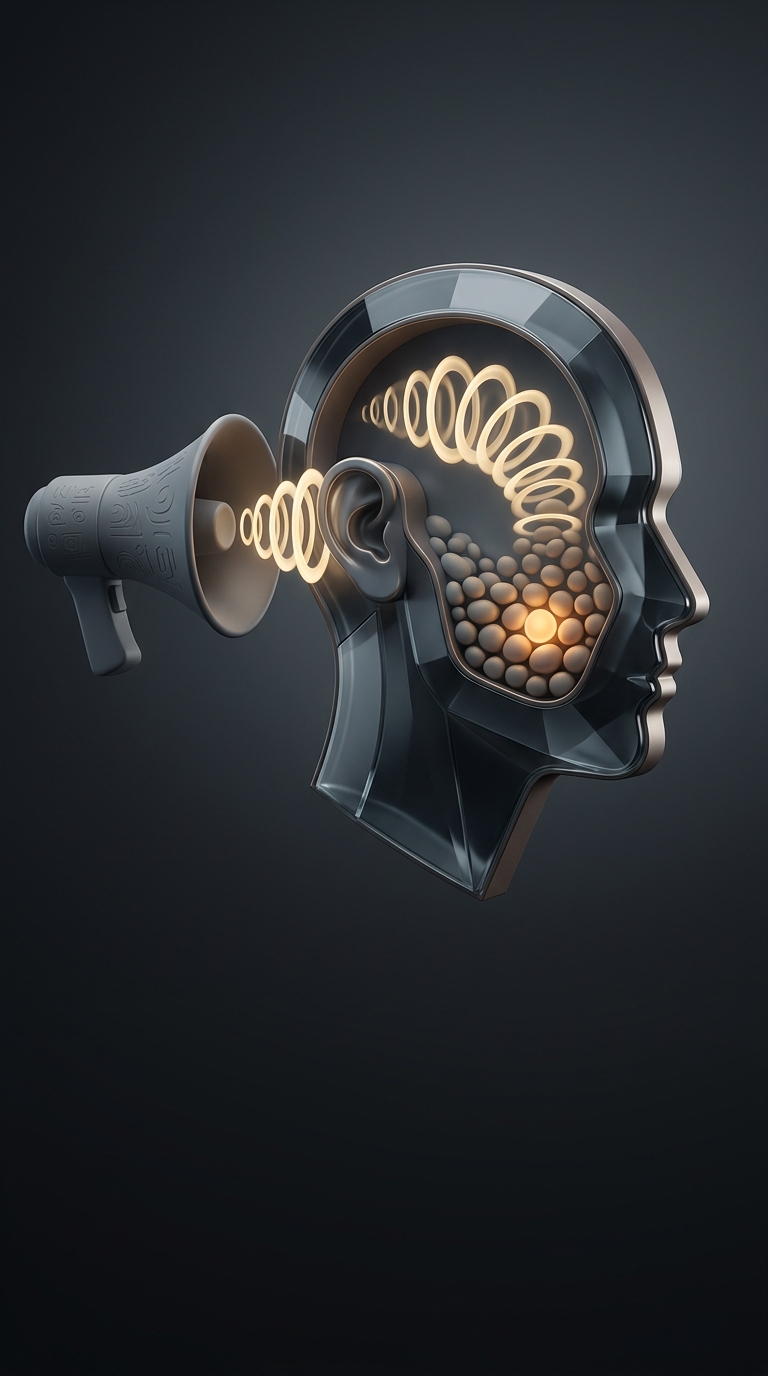
Hearing a piece of false information repeated multiple times dramatically increases the likelihood that you will eventually believe it, a terrifying vulnerability called the illusory truth effect.
Hearing a piece of false information repeated multiple times dramatically increases the likelihood that you will eventually believe it, a terrifying…
Discover more
Experiencing feelings of deep moral disgust or guilt creates an overwhelming physical desire to clean oneself, a psychosomatic phenomenon creatively named the Macbeth effect.
Experiencing feelings of deep moral disgust or guilt creates an overwhelming physical desire to clean oneself, a psychosomatic phenomenon creatively named the…
Discover more
Planning fallacy is a phenomenon in which predictions about how much time will be needed to complete a future task display an optimism bias and underestimate the time needed,…
Planning fallacy is a phenomenon in which predictions about how much time will be needed to complete a future task display an optimism bias and underestimate…
Discover more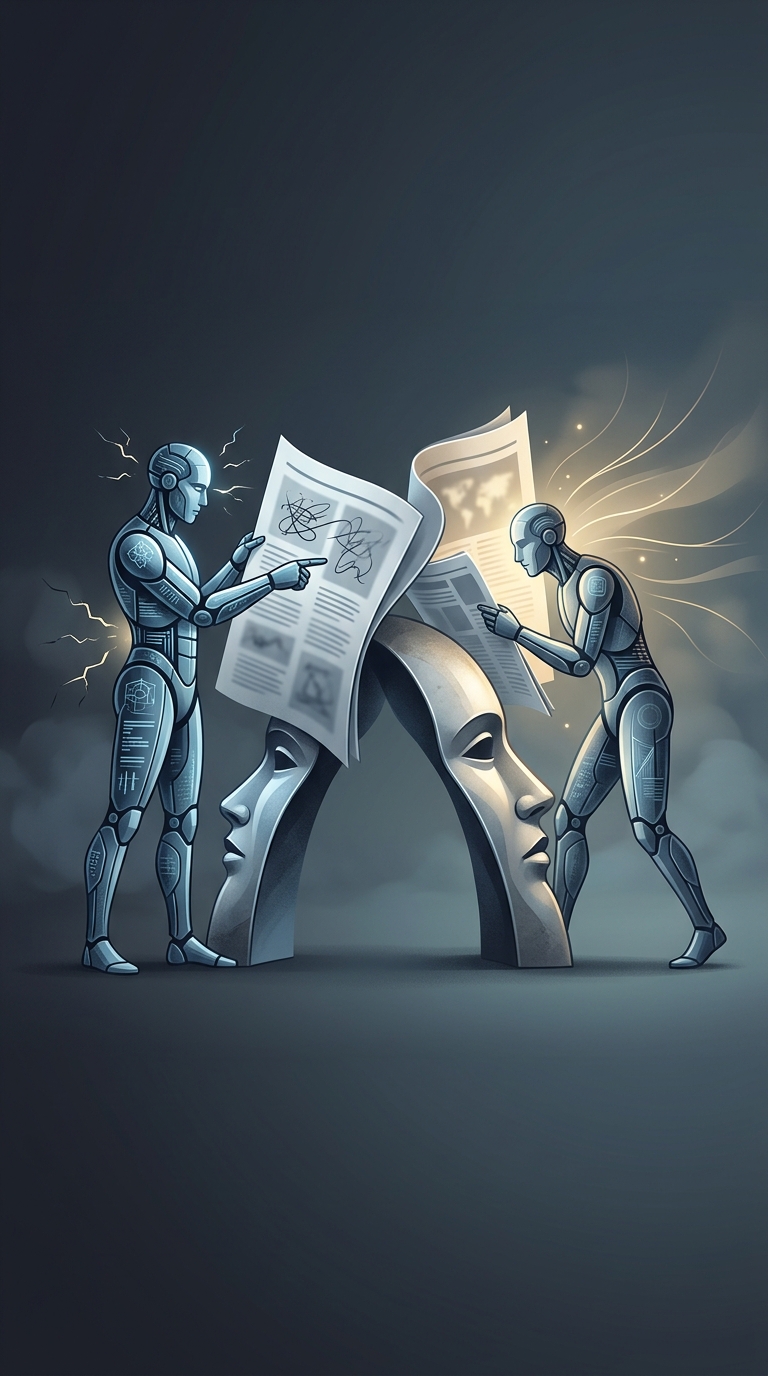
Gell-Mann amnesia effect describes the phenomenon where you read a news article about a subject you are an expert in, realize the journalist has absolutely no idea what they are…
Gell-Mann amnesia effect describes the phenomenon where you read a news article about a subject you are an expert in, realize the journalist has absolutely no…
Discover more
Work naturally expands to fill the exact amount of time that has been allotted for its completion, regardless of how simple the actual task might be.
Work naturally expands to fill the exact amount of time that has been allotted for its completion, regardless of how simple the actual task might be. Cyril…
Discover more
Individuals inherently put in significantly less effort when working in a group compared to when they are working entirely alone.
Individuals inherently put in significantly less effort when working in a group compared to when they are working entirely alone. Social loafing is the…
Discover more
Perceiving rhyming statements as significantly more truthful and accurate than non-rhyming statements is a cognitive bias called the rhyme-as-reason effect.
Perceiving rhyming statements as significantly more truthful and accurate than non-rhyming statements is a cognitive bias called the rhyme-as-reason effect.…
Discover more